弁当
bentoJapan's iconic single-portion packed meal — carried to school and work in a divided box, bento is both everyday sustenance and a miniature art form shaped by centuries of culinary tradition.
Meaning
弁当 (bento) refers to a single-portion, self-contained meal packed in a portable 弁当箱 (bento box) — a divided, lidded container designed to hold multiple dishes side by side without mixing. The box typically contains 白米 or another grain base, a protein, and several side dishes (おかず), arranged with care for both nutrition and visual balance.
The word first appeared in Japanese writings during the Azuchi-Momoyama period (1568–1600), likely borrowed from the Chinese biàndāng (便当), meaning "convenient" or "easy to handle." Within a century it had become an established feature of Japanese everyday life.
Usage
Bento culture spans every social setting in Japan:
毎朝、お母さんが子どもたちのために弁当を作る。 Every morning, the mother makes 弁当 for her children.
駅弁を買って新幹線の中で食べるのが旅の楽しみだ。 Buying an 駅弁 and eating it on the Shinkansen is one of the pleasures of travel.
The verb 詰める — "to pack tightly" — captures the essential act: each item is neatly nestled into its compartment so the contents stay put during transit.
Cultural Context
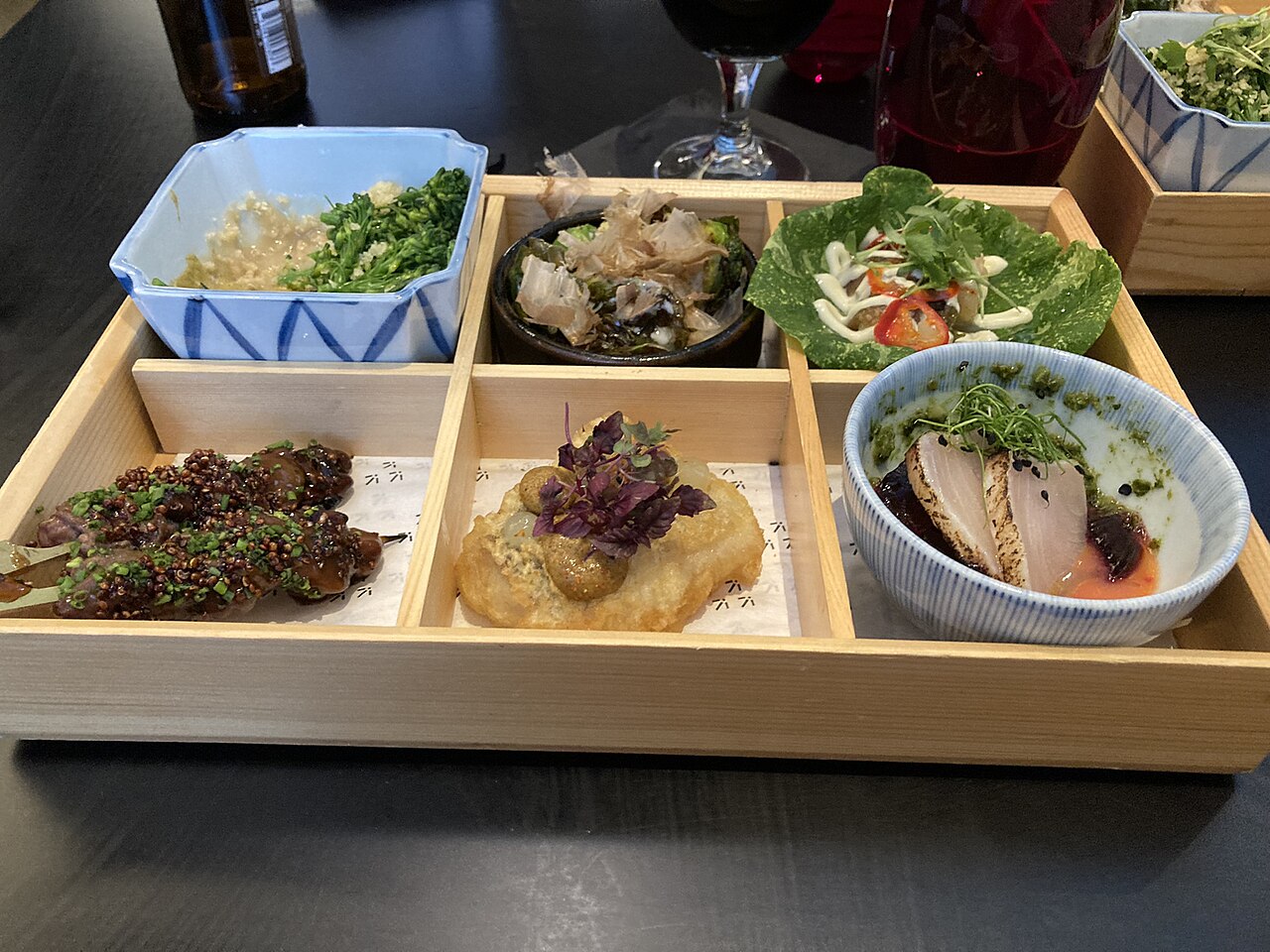
A carefully arranged bento lunch. Photo: Dclemens1971, CC BY 4.0, via Wikimedia Commons.
Bento carries deep social meaning in Japan. The act of waking early to prepare a handmade bento is widely understood as an expression of 愛情 — affection and devotion. These lovingly crafted meals are called 愛情弁当 (aijō bento) and are central to the cultural image of a caring parent or partner. Conversely, receiving a store-bought convenience-store bento on a day when peers have homemade ones can feel stigmatising — a phenomenon sometimes called 弁当格差 (bento disparity) or colloquially "bento shaming."
Historically, the 幕の内 bento (makunouchi bento) — literally "within the curtain" — was sold during the intervals (幕間, makuai) of Edo-period kabuki performances. Packed with bite-sized rice balls, tamagoyaki, fish, and pickled vegetables, it set the template for the elegant multi-dish bento eaten across Japan today.
Types of Bento
| Type | Japanese | Description |
|---|---|---|
| Makunouchi | 幕の内弁当 | Classic Edo-era style: rice balls, grilled fish, egg, and pickles |
| Hinomaru | 日の丸弁当 | Minimalist — white rice with a single 梅干し at the centre, evoking the Japanese flag |
| Ekiben | 駅弁 | Station bento, sold on platforms and Shinkansen; often features regional specialities |
| Kyara-ben | キャラ弁 | Character bento shaped and decorated to resemble anime, manga, or cute animal characters |
| Konbini bento | コンビニ弁当 | Convenience-store bento — inexpensive, microwave-ready, available 24 hours |
| Makunouchi (modern) | 幕の内 | Department-store or restaurant-grade bento served in lacquer or wappa boxes |
Kyara-ben: Bento as Canvas
キャラ弁 (kyara-ben, short for kyarakutā bento) is the practice of sculpting bento ingredients into characters from anime, manga, and popular culture. 彩り — colour harmony — is the guiding principle: red from tomatoes or ketchup, green from broccoli or edamame, yellow from 卵焼き (tamagoyaki), black from nori seaweed. A skilled kyara-ben maker can render a beloved character entirely in edible materials.
Kyara-ben gained mainstream visibility in the 2000s with the spread of digital cameras and later social media, where hashtags such as #キャラ弁 and #charaben attract millions of posts worldwide.
Ekiben: Regional Pride in a Box
The 駅弁 tradition dates to 1885, when Utsunomiya Station reportedly sold the first rice-ball bento to rail passengers. Today, Japan has over 2,000 distinct ekiben varieties, each showcasing local ingredients: sea-urchin bento from Hokkaido, kamameshi (pot rice) from Gunma, shūmai dumplings from Yokohama. Ekiben fairs at major department stores are popular seasonal events where collectors travel specifically to taste regional varieties.
The Design Philosophy
A well-made bento follows unwritten rules:
- Balance of colours: at least four or five distinct hues signal nutritional variety.
- Texture contrast: soft rice against crunchy pickles (漬物) and chewy protein.
- Compact presentation: food should fill the box completely so items do not shift — gaps are considered sloppy.
- Seasonal awareness: ingredients and decoration reflect the time of year (cherry blossoms in spring, maple leaves in autumn).
The bento box itself — whether a plain plastic school container, a lacquered wappa, or a sleek stainless-steel adult box — signals identity, taste, and care.
Global Spread
From the late 2000s onward, the bento aesthetic spread internationally through food blogs, Pinterest, and later TikTok and Instagram. The コンビニ bento — cheap, filling, visually arresting — became a symbol of Japan's convenience culture for foreign visitors. Internationally, the word "bento" now appears on menus, meal-prep content, and lunchbox products in dozens of countries, carrying its Japanese associations of care, balance, and beautiful arrangement.
Related Dictionary Words
bento; Japanese box lunch
lunch box; bento box
box lunch (containing rice and 10-15 small portions of fish, meat, and vegetables)
boxed lunch bought at a station (often a local specialty)
umeboshi; pickled dried ume; pickled dried plum
love; affection
to stuff into; to jam; to cram; to pack; to fill; to plug; to stop up