デパ地下
depachikaThe legendary underground food floors of Japanese department stores, packed with artisan sweets, prepared foods, and beautifully wrapped gifts.
What is Depachika?
デパ地下 (depachika) is a portmanteau of デパート (depāto, department store) and 地下 (chika, basement), literally meaning "department store basement." The term refers to the sprawling underground food halls found beneath nearly every major Japanese 百貨店 (department store), where some of the country's finest 食べ物 — prepared foods, sweets, fresh produce, and gourmet imports — are sold side by side under gleaming lights.
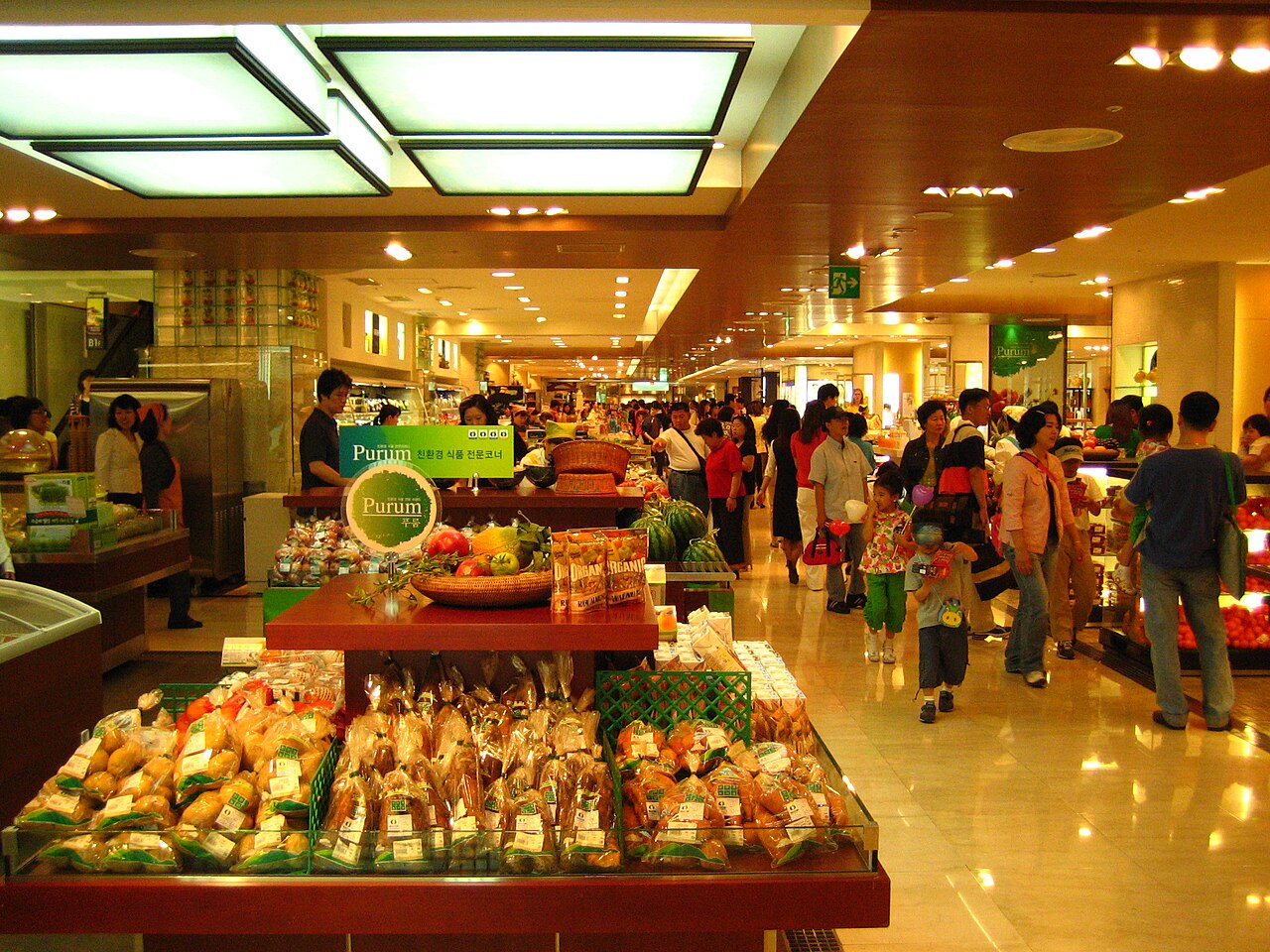
A typical depachika scene with rows of counters offering prepared foods, sweets, and packaged goods. Photo: ayustety, CC BY-SA 2.0, via Wikimedia Commons.
Unlike a Western food hall or supermarket basement, a depachika is curated with almost obsessive care. Each counter is staffed by trained sales associates, seasonal selections change regularly, and the presentation of even ordinary everyday food is elevated to an art form. Walking through one is an overwhelming sensory experience: the scent of freshly grilled yakitori mingles with the sweetness of custard cream puffs; macarons in pastel rows sit opposite hand-formed nigiri; imported wines are stacked beside Japanese craft sake.
The word depachika entered common usage in the 1980s and 1990s as these basement floors became cultural institutions in their own right — destinations people visit not just to shop, but to browse, sample, and be dazzled.
What You'll Find
A large depachika can span thousands of square meters and host dozens of vendor counters. Typical sections include:
| Section | Japanese | What to expect |
|---|---|---|
| Japanese sweets | 和菓子 wagashi | Seasonal mochi, yokan, dorayaki, daifuku |
| Western sweets | 洋菓子 yōgashi | Cakes, éclairs, chocolates, macarons |
| Prepared foods | 惣菜 sōzai | Salads, croquettes, stewed dishes, grilled meats |
| Bento | 弁当 | Artisan lacquerware-boxed lunches |
| Seafood / sushi | 鮮魚・寿司 | Sashimi, hand-rolled maki, smoked fish |
| Bread and pastries | パン pan | Artisan bakeries, often with long queues |
| Imported goods | 輸入食品 | French cheese, Belgian chocolate, Italian charcuterie |
| Alcohol | ワイン・日本酒 | Natural wine, craft sake, premium whisky |
Major luxury confectionery brands — both domestic (資生堂パーラー, 虎屋 Toraya) and international (Pierre Hermé, Ladurée, Godiva) — compete for counter space. The competition to secure a depachika slot is fierce; landing one is considered a mark of prestige for any food brand.
Free samples (shishoku 試食) are a beloved institution. Attendants offer small bites of cheese, sweets, or prepared foods, and no purchase is expected — though the implicit social contract of Japanese politeness often nudges visitors toward the register anyway.
The Gift-Giving Connection
Depachika's cultural significance is inseparable from Japan's deep-rooted gift-giving culture. The most important concept here is お土産 (omiyage) — the souvenir food gifts brought back from travels — and 贈り物 (okurimono), gifts for social occasions.
Japan has two major gift-giving seasons:
- お中元 (ochūgen) — midsummer gifts, typically sent in July
- お歳暮 (oseibo) — year-end gifts, sent in December
During these periods, depachika counters become a frenzy of elegantly wrapped boxes. Gift wrapping (包装 hōsō) is treated as seriously as the food itself: layers of tissue paper, department-store branded wrapping, and a decorative noshi ribbon are applied with the precision of origami. The wrapping paper of a Mitsukoshi or Takashimaya gift is itself a status signal — recipients recognize the brand immediately.
Many visitors specifically come to the depachika to select omiyage from a trip to Tokyo or Kyoto. Shinkansen stations and airports replicate elements of depachika culture in their own food souvenir halls, but purists insist that nothing compares to the real thing.
Famous Depachika
Several depachika have achieved legendary status:
伊勢丹新宿店 B1・B2 (Isetan Shinjuku, floors B1 and B2) is widely considered Japan's premier depachika. Its two basement floors cover an enormous range from premium sashimi and Kyoto confectioneries to a rotating selection of pop-up pastry counters. Queues for popular items — Pierre Hermé macarons, Éclair de Génie éclairs — form early and sell out by afternoon.
三越銀座店 (Mitsukoshi Ginza) channels the elegance of Ginza's luxury shopping district into its B1 and B2 floors. The flagship confectionery counters and the seasonal wagashi selection make it a destination in its own right.
高島屋日本橋店 (Takashimaya Nihonbashi) is one of Tokyo's oldest department stores, and its depachika has the heritage to match — traditional Kyoto sweets sit alongside cutting-edge European pâtisseries.
阪急うめだ本店 (Hankyu Umeda, Osaka) is Osaka's answer to Isetan Shinjuku and is equally revered, reflecting the city's reputation as Japan's food capital.
Tips for Visiting
A few notes for first-time depachika visitors:
Timing matters. The best selection is in the morning and early afternoon. Popular prepared foods and limited-edition sweets sell out fast. If you have a specific target, arrive early — especially on weekends.
Embrace the free samples. Staff actively offer shishoku (試食). It is perfectly normal to try without buying. A polite お願いします (onegaishimasu, "yes please") or a slight bow of thanks is sufficient.
Gift wrapping is free and expected. When buying gifts, tell the attendant お土産 (omiyage) or 贈り物 (okurimono) and whether it needs to travel or will be delivered. They will wrap it appropriately, often including a cool pack for perishables.
Budget generously. Prices are higher than supermarkets. A single elaborate wagashi piece might cost ¥500–¥800; a premium bento box ¥1,500–¥3,000. That said, value-conscious shoppers know to visit in the final 30–60 minutes before closing, when prepared foods are marked down with yellow discount stickers.
Seasonal editions are the highlight. Spring brings sakura-flavored everything; summer brings cool kakigōri-inspired sweets and chilled delicacies; autumn brings chestnut confections and new-harvest sake; winter brings Christmas cakes and oseibo gift boxes. The depachika calendar maps directly onto the Japanese seasonal and cultural calendar, making it a living snapshot of the nation's culinary identity.
For any visitor to Japan with even a passing interest in food, a morning spent wandering a major depachika — basket in hand, sample after sample — is among the most authentically Japanese experiences available.
Related Dictionary Words
department store
underground; below the ground
department store
wagashi; traditional Japanese confectionery
bento; Japanese box lunch
local specialty or souvenir bought as a gift while traveling (travelling)
sampling food; tasting; trying
packing; wrapping
present; gift