演歌
enkaA deeply emotional genre of Japanese popular music rooted in post-war melancholy, featuring melismatic vocals, pentatonic melodies, and poignant themes of lost love, loneliness, and hometown longing.
Meaning
演歌 (enka) is a genre of Japanese popular music known for its intensely emotional character, traditional melodic sensibility, and lyrical focus on the bittersweet passages of life — 別れ (parting), 孤独 (loneliness), 哀愁 (sorrow), and 望郷 (nostalgia for ones homeland). The word itself combines 演 (en, performance/expression) and 歌 (ka, song), literally meaning "expressive song."
Musicologically, enka is built on a minor pentatonic scale that draws from traditional Japanese musical modes, giving its melodies an immediately recognizable quality — simultaneously ancient and achingly modern. The vocal style is highly ornamented, employing a rapid vibrato technique known as kobushi (小節), in which a singer bends and waves individual notes in quick succession, wringing maximum emotion from a single syllable.
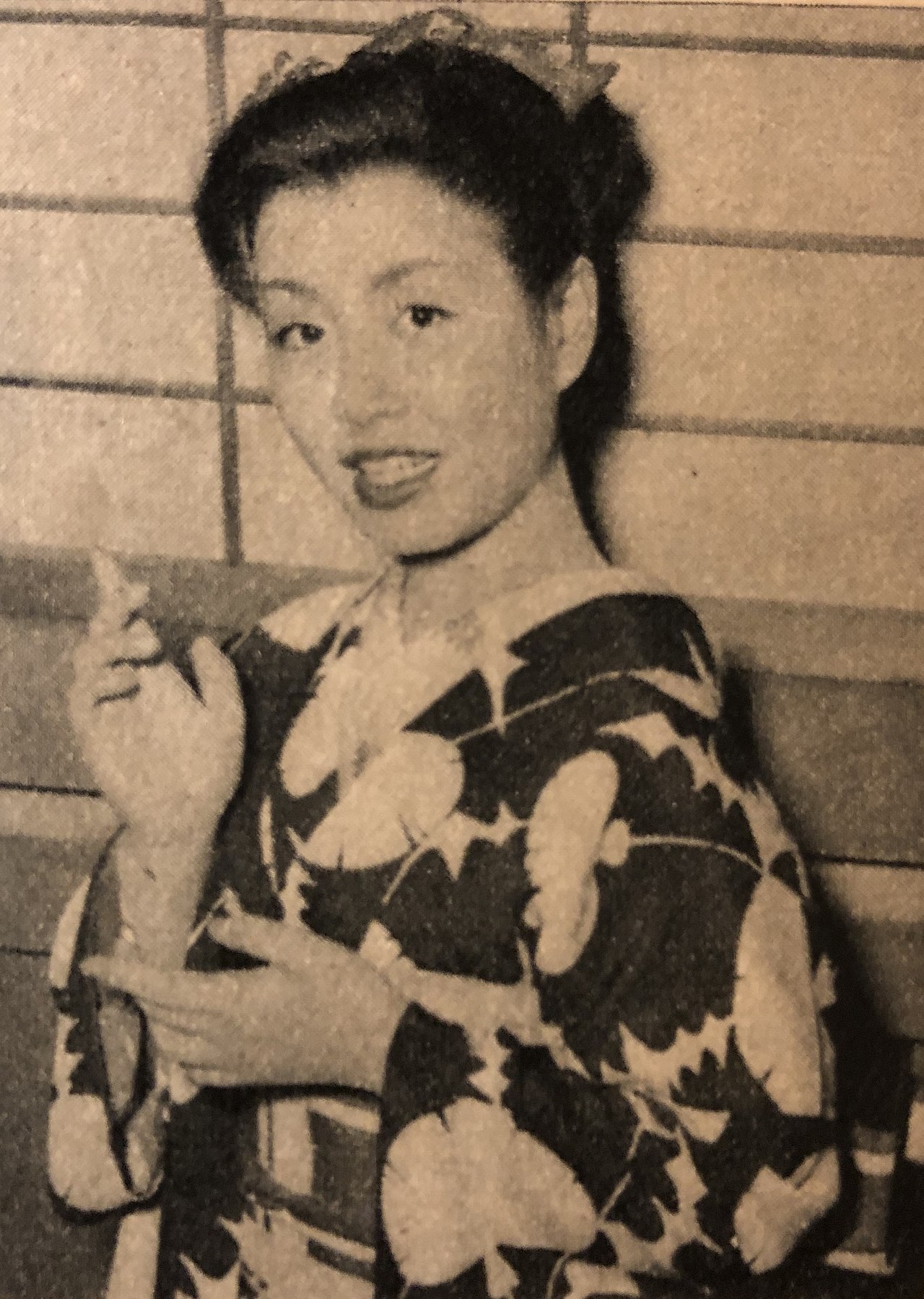
美空ひばり (Misora Hibari), the undisputed queen of enka. Public domain, via Wikimedia Commons.
Origins and Golden Age
Enkas roots lie in the social upheaval that followed World War II. In the late 1940s and 1950s, Japan was rebuilding from devastation, and millions of people had been uprooted from their rural 故郷 (hometowns) to work in industrial cities. 流行歌 (popular songs) of the era absorbed both Western pop influences and older Japanese 民謡 (folk song) traditions, gradually crystallizing into what would become recognizable as enka by the 1960s.
The golden age of enka spans roughly 1965 to 1985. During this period, the genre dominated Japanese record sales, defined the national soundscape, and produced its most celebrated icons. Themes drawn from everyday suffering — a woman waiting at a 港 (harbor) for a fisherman who may never return, a salesman drinking alone at an 酒場 far from home, the 雪 (snow) falling on a forgotten village — resonated deeply with a generation that had lived through genuine hardship.
The social context was also geographic: Japans rapid industrialization drove mass migration from rural communities to the cities of Tokyo, Osaka, and Nagoya. Enka gave voice to the emotional cost of that migration — the 哀愁 of being severed from ones roots.
Iconic Singers
美空ひばり (Misora Hibari, 1937–1989)
No figure looms larger in enka than 美空ひばり (Misora Hibari). She began performing at age nine in the ruins of post-war Yokohama, and by her early teens was already a national sensation. Over a career spanning four decades, she recorded more than 1,500 songs and sold over 68 million records. Her voice — a crystalline instrument capable of both delicate pathos and soaring power — became the benchmark against which all enka singers were measured.
Her 1989 single 川の流れのように ("Like the Flow of a River"), released months before her death, is widely regarded as the definitive enka song: a meditation on a life lived like water moving downstream, accepting every turn the current brings.
北島三郎 (Kitajima Saburo, born 1936)
Saburo Kitajima (北島三郎) is nicknamed Sabu-chan and has been a dominant force in enka for over six decades. Known for his powerful baritone and commanding stage presence, he has appeared at NHKs prestigious Kōhaku Uta Gassen (紅白歌合戦) year-end broadcast more than 50 times. His signature song まつり ("Festival") is one of the most performed enka pieces at karaoke nationwide.
氷川きよし (Hikawa Kiyoshi, born 1977)
Kiyoshi Hikawa represents enkas most successful modern crossover. Debuting in 2000, he brought a youthful face and pop star appeal to the genre, attracting younger audiences who had largely dismissed enka as their grandparents music. His early hits like 箱根八里の半次郎 sold millions and placed him on Kōhaku for over 20 consecutive years. In recent years, Hikawa has dramatically reinvented himself, adopting an androgynous J-pop identity — yet his contribution to enkas survival is undeniable.
Distinctive Elements
Kobushi (小節) — The Ornamental Vibrato
The heart of enka vocal technique is kobushi (小節), a rapid, oscillating pitch ornament applied to the end of phrases or held notes. Unlike Western vibrato, which fluctuates the pitch evenly, kobushi involves a more exaggerated, almost yodeling dip and rise that can encompass a wide interval. Learning to produce an authentic kobushi is considered essential to mastering enka; it is what distinguishes a technically competent singer from one who truly communicates the genres emotional depth.
Kimono Stage Costumes
At major concerts and on television appearances, enka performers almost invariably wear 着物 (kimono). For female singers, this typically means a formal furisode-style kimono in rich, saturated colors — deep burgundy, midnight blue, or forest green — often with intricate embroidered patterns. Male singers typically wear haori hakama (formal kimono jacket and divided skirt) or, in more casual settings, a casual yukata. The kimono is not merely aesthetic; it is a deliberate statement connecting enka to Japanese tradition and distinguishing it from Western-influenced pop genres.
Yūgen (幽玄) — The Aesthetic of Profound Mystery
Enkas emotional atmosphere draws from the classical Japanese aesthetic concept of yūgen — a sense of profound, mysterious beauty tinged with melancholy. Where Western pop seeks catharsis or uplift, enka sits with sadness, sometimes extending it, finding beauty in the act of grieving itself. A good enka performance does not resolve its emotional tensions; it deepens them. This is closely related to the broader Japanese aesthetic of mono no aware — the bittersweet awareness of impermanence.
Venue Culture
スナック (Snack Bars)
The spiritual home of enka is the スナック (sunakku, snack bar) — a small, dimly lit bar-restaurant, usually seating fewer than twenty people, typically run by a middle-aged female proprietor called a mama-san. Unlike larger bars, a snack offers a sense of intimate community. Patrons sing karaoke, drink 酒, and talk with the mama-san about their troubles. Enka dominates the snacks karaoke repertoire. For older Japanese men in particular, the snack is where enka is not a nostalgic relic but a living emotional practice.
Karaoke
演歌 is inseparable from karaoke culture. When karaoke machines spread through Japan in the 1970s and 1980s, enka was the dominant popular genre, and its demanding vocal style — all those kobushi ornaments and sustained notes — made it the ultimate karaoke challenge. Today, even young Japanese who profess no interest in enka will grudgingly respect a person who can perform it well. Singing enka at karaoke carries a connotation of otona no aji (大人の味, "adult taste") — a sophisticated, hard-won appreciation.
NHK Kōhaku Uta Gassen (紅白歌合戦)
Every New Years Eve, NHK broadcasts Kōhaku Uta Gassen (Red and White Song Battle), Japans most-watched television program. For decades, enka dominated the lineup. While the balance has shifted toward J-pop and K-pop in recent years, enka artists still command prominent slots — often the emotionally climactic moments of the broadcast. A Kōhaku appearance is the highest public honor a Japanese singer can receive, and for enka artists, it is proof that the genres cultural authority endures.
Modern Revival and J-Enka
From the 1990s onward, enkas commercial dominance faded as J-pop, hip-hop, and later K-pop captured younger audiences. Record sales declined steeply, and the demographic of core enka fans aged visibly. Yet the genre has proven stubbornly resilient through several mechanisms.
J-Enka (Jエンカ) is a loose fusion movement in which contemporary pop artists incorporate enka elements — the pentatonic scale, kobushi-style ornamentation, lyrical themes of longing — into otherwise modern productions. Artists like Jero (an African-American singer who debuted in Japan in 2008 wearing hip-hop clothing while singing traditional enka) proved that the form could transcend its perceived demographic. Jeros novelty attracted media attention, but his voice — genuine, technically accomplished enka — earned lasting respect.
Anime and game soundtracks have discovered enkas emotional power. Series like Showa Genroku Rakugo Shinjuu and games set in historical Japan frequently use enka-adjacent arrangements to evoke period atmosphere, introducing the genres textures to audiences who would never search for it deliberately.
Social media virality occasionally brings individual enka pieces to wider attention. An elderly singers Kōhaku performance, a child prodigy performing kobushi flawlessly, or a foreign singers enka rendition can accumulate millions of views, each instance proving that the emotional core of enka translates across cultural and generational boundaries.
Younger Japanese and Enka
For most Japanese people under 40, enka occupies an ambivalent cultural space. It is simultaneously:
- Deeply familiar — heard at family gatherings, from grandparents television sets, in taxis and at festival grounds
- Deliberately unfashionable — associated with an older Japan that many young people feel no personal connection to
- Secretly respected — recognized as technically demanding and emotionally authentic in a way that disposable pop is not
The Japanese word most commonly applied to enka by younger people is 演歌っぽい (enka-ppoi, "enka-ish"), used to describe anything that feels old-fashioned, rural, or excessively sentimental. Yet the same young person who uses this term dismissively may find themselves moved to 涙 by a great enka performance — confronted with grief or nostalgia they didnt know they carried.
This paradox — the genre that everyone underestimates and nobody can fully abandon — may be enkas defining characteristic, and its best argument for longevity.
Related Terms
| Term | Reading | Meaning |
|---|---|---|
| 小節 | こぶし | Ornamental vocal vibrato technique |
| 幽玄 | ゆうげん | Aesthetic of profound, mysterious beauty |
| 望郷 | ぼうきょう | Longing for ones hometown |
| 哀愁 | あいしゅう | Sorrow, pathos, melancholy |
| 紅白歌合戦 | こうはくうたがっせん | NHK New Years Eve song competition |
| スナック | すなっく | Small intimate bar where enka is sung |
| こぶし回し | こぶしまわし | The technique of performing kobushi ornamentation |
Related Dictionary Words
enka; traditional-style Japanese popular ballad
bar; measure
kimono; Japanese traditional clothing (esp. full-length)
hometown; birthplace; native place; one's old home
homesickness; nostalgia
folk song; popular song
popular song; hit song
pathos; sorrow; grief
solitude; loneliness; isolation