福袋
fukubukuroFukubukuro are sealed "lucky bags" of mystery merchandise that Japanese stores sell at a steep discount every New Year, prized for holding far more value than their price and for the thrill of not knowing what's inside.
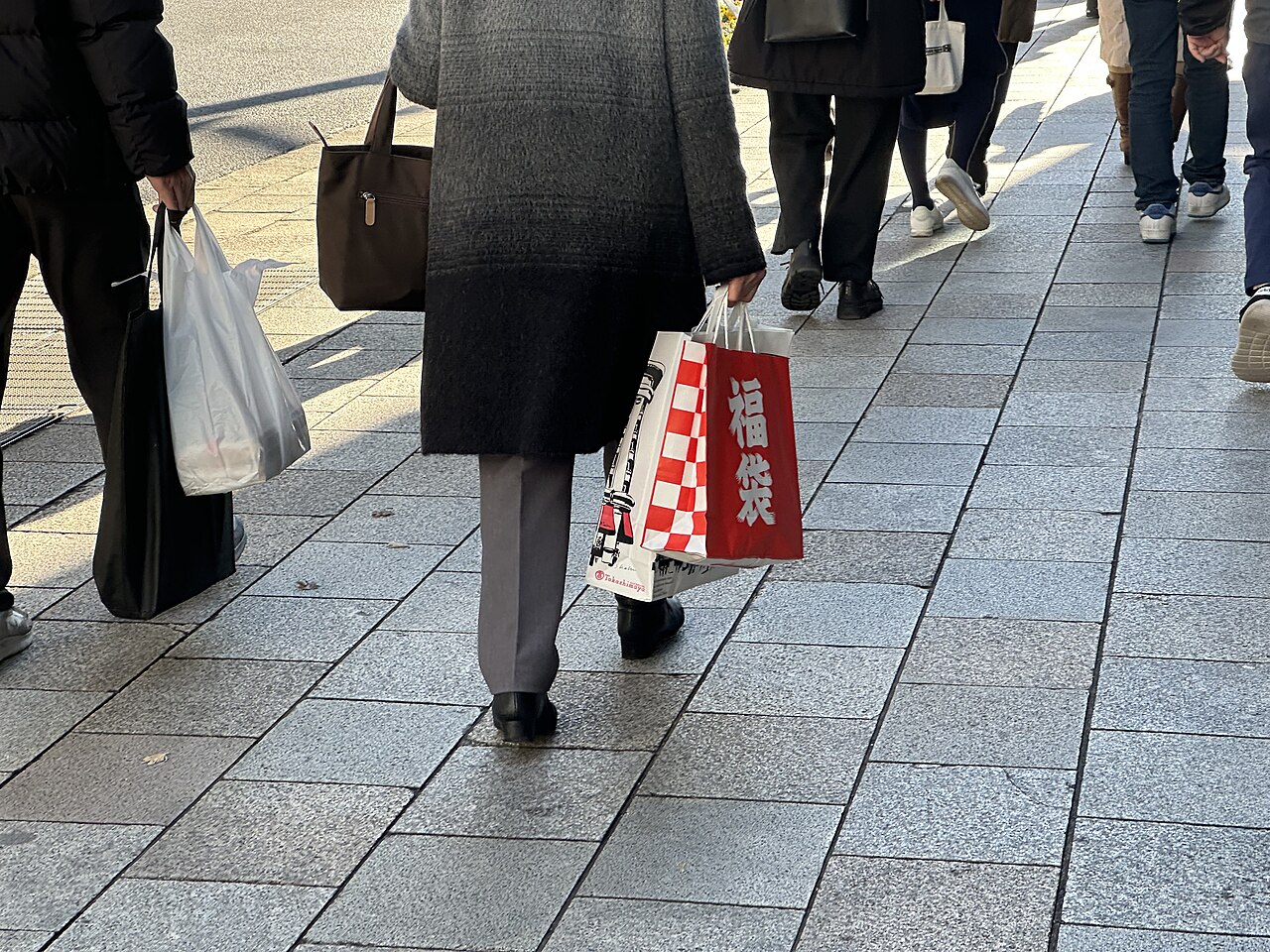
Assorted fukubukuro on display during the New Year shopping season. Photo: Nesnad, CC0, via Wikimedia Commons.
Meaning
福袋 (fukubukuro) literally combines 福 ("fortune" or "luck") and 袋 ("bag"), and is usually translated as "lucky bag" or "grab bag." It refers to a sealed bag of mystery merchandise sold by Japanese stores at a fixed, heavily discounted price — commonly stuffed with goods worth two to three times what the customer pays. The catch, and the entire point, is that shoppers cannot see the contents before buying; the bag might contain clothing, electronics, cosmetics, snacks, or a single big-ticket item, and buyers won't know until they get home and open it.
Fukubukuro are sold almost exclusively around 正月 (New Year), Japan's biggest retail season, with the vast majority appearing on 元旦 (New Year's Day, January 1) and the days immediately after.
Usage
The word is used both for the physical bag and the shopping event itself.
元旦に福袋を買うために朝早く並んだ。 Gantan ni fukubukuro o kau tame ni asa hayaku narabita. "I lined up early in the morning on New Year's Day to buy a lucky bag."
このデパートの福袋はいつも中身がすごくお得だよ。 Kono depaato no fukubukuro wa itsumo nakami ga sugoku otoku da yo. "This department store's lucky bags always have amazingly good-value contents."
Related shopping vocabulary that shows up alongside fukubukuro season includes 初売り (hatsu-uri, a store's "first sale" of the new year), 行列 (gyouretsu, the queues that form outside stores before opening), and 中身 (nakami, "contents" — the word everyone is dying to know before they pay).
Cultural Context
Edo-period origins
The most widely cited origin story traces fukubukuro to kimono and textile merchants in the Edo period (1603–1868). Leftover fabric scraps and unsold cloth were bundled into bags and sold off cheaply at winter clearance sales rather than thrown away — an early form of inventory clearance dressed up as a treat for customers. One popular version credits Echigoya, a Nihonbashi kimono-fabric shop that later grew into the Mitsukoshi department store chain, with selling these "Ebisu-bukuro" (named for Ebisu, the god of fortune and commerce) as a way to move excess stock. A rival account gives the credit to Daimaruya, ancestor of the Daimaru department store. Whichever store did it first, the practice caught on among competing kimono houses, and by the Meiji era (1868–1912) it had been widely adopted.
From clearance sale to modern retail tradition
As department stores rose to dominate Japanese retail in the early 20th century, chains such as Mitsukoshi, Matsuya, and Matsuzakaya standardized the practice into what's recognizable today as fukubukuro: sealed, unopenable bags at a flat price, sold as an event rather than a clearance. It became tightly bound to 正月 shopping, when stores reopen after the holiday with "first sale" promotions and customers are already in a gift-giving, fresh-start mood tied to 縁起 (good omens) for the year ahead.
Modern department store and brand culture
Fukubukuro season is now one of the biggest retail spectacles of the Japanese calendar. Long lines of shoppers form outside department stores, malls, and flagship boutiques hours before dawn on January 1–2, and some of the most sought-after bags require entering an online lottery weeks in advance rather than simply queueing.
| Brand | Notable fukubukuro tradition |
|---|---|
| Department stores (Mitsukoshi, Takashimaya, Isetan) | The original format — clothing, accessories, and housewares bundled by brand or category |
| Starbucks Japan | Annual lucky bags with a reusable tumbler/mug, drink tickets, and coffee beans; sold via online lottery due to demand |
| Apple Japan | Sold "lucky bags" containing a discounted Mac or iPad plus accessories from 2007–2015; a hunted secondary market emerged, with bags resold online for hundreds of dollars over retail before Apple discontinued the practice to standardize its global store policy |
| Uniqlo / GU | Ran popular lucky bags for years, though in recent years has shifted toward New Year's sales events instead of sealed bags |
| Camera and electronics retailers (Yodobashi Camera, Bic Camera) | Bags built around a themed product category, sometimes containing a genuinely high-value camera or gadget |
The thrill of not knowing
Part of what keeps fukubukuro popular is simple gambling psychology: shoppers accept the risk of an underwhelming bag for the chance of pulling something worth far more than they paid. Stores lean into this by keeping contents secret until the bag is opened (sometimes literally sealed with tape), and unboxing videos of fukubukuro hauls are a recurring genre on Japanese social media and YouTube every January. Even when the exact items are a surprise, most reputable stores guarantee the bag's total resale value clears the purchase price, which keeps the tradition feeling more like a treat than a gamble — a modern echo of the original Edo-period clearance sales, now dressed up as one of the most anticipated shopping days of the year.
See Also
Related Dictionary Words
lucky-dip bag; grab bag; mystery package (with a variety of articles possibly worth more than the purchase price)
first business conducted by retailers in the New Year
line; queue; procession; parade
New Year's Day; first day of the year
New Year (esp. first three days)
contents; interior; filling
omen; sign of luck
bag; sack; pouch