ギャル
gyaruA Japanese fashion subculture born in 1990s Shibuya that rejected traditional beauty standards through tanned skin, bleached hair, heavy makeup, and bold street fashion.
Meaning
ギャル is a Japanese transliteration of the English slang word gal, meaning a lively, fashion-conscious young 女性. In Japan the term evolved into the name of one of the country's most visually striking and culturally defiant youth movements, centred on bold personal style as a form of self-expression and social rebellion.
Cultural Context
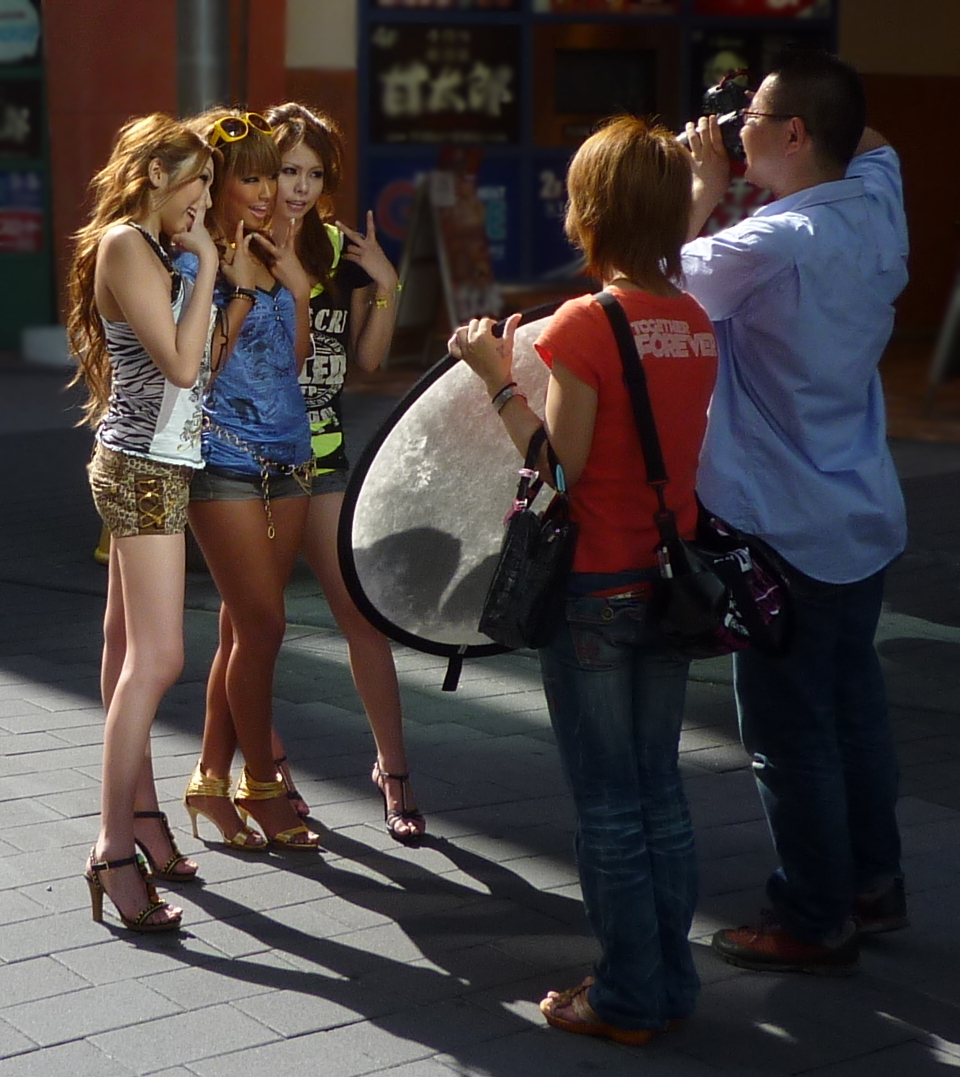
Classic gyaru look photographed in Ikebukuro, Tokyo, 2009. Photo: Nesnad, CC BY-SA 3.0, via Wikimedia Commons.
The word gal first entered Japanese in the early 1970s as a general term for energetic young women, but the gyaru subculture as the world came to know it crystallised in the early 1990s in 渋谷, the youth-fashion heartland of Tokyo. Its rise coincided with Japan's economic bubble and its aftermath, a period when 若者 were renegotiating their relationship with the conservative ideals their parents' generation had accepted.
Japanese 文化 had long privileged pale skin, dark hair, and modest, restrained femininity. Gyaru turned that aesthetic on its head: deep 日焼け, bleached or dyed hair, heavy 化粧, false eyelashes, long acrylic nails, and outfits that were deliberately 派手. Wearing a tan in a society that associated pale skin with beauty and status was not merely a fashion choice — it was a statement.
The movement was amplified by specialist 雑誌 aimed squarely at this demographic. egg (エッグ), launched in 1995, became the bible of gyaru culture, alongside Popteen and Ranzuki. These publications documented and spread gyaru trends beyond Tokyo, turning a Shibuya street style into a nationwide phenomenon.
Substyles
Gyaru is an umbrella term. Beneath it flourished a wide range of distinct substyles:
| Substyle | Japanese | Description |
|---|---|---|
| Kogyaru | コギャル | The original wave — high-school-age girls in shortened school uniforms, ルーズソックス, lightly tanned skin, and chestnut-dyed hair |
| Ganguro | ガングロ | Extreme tanning, platinum-blonde or white hair, dramatic white and black eye makeup, platform shoes |
| Yamanba / Mamba | ヤマンバ | Even more intense than ganguro — neon-coloured hair, white face paint with multicoloured highlights, named after a mountain witch (山姥) from folklore |
| Hime Gyaru | 姫ギャル | Princess gal — pastel colours, elaborate curled hair, lace and ribbons; softer and more feminine |
| Gyaru-o | ギャル男 | The male counterpart — tanned skin, bleached hair, and flashy fashion |
| Agejo | アゲ嬢 | Sophisticated, nightlife-oriented style with dramatic hair and glamorous clothing |
Usage
The word ギャル is used both as a label for the subculture and as a descriptor for individual women who participate in it.
彼女はギャルファッションが大好きで、毎日カラフルなコーデをしている。 She loves gyaru fashion and puts together a colourful outfit every day.
90年代の渋谷はギャルの聖地と呼ばれていた。 Shibuya in the 1990s was called the sacred ground of gyaru.
Gyaru-go: The Dialect
Gyaru developed their own slang register known as ギャル語 (gyaru-go, literally gal language). It involved:
- Playful abbreviations and portmanteau words
- Exaggerated expressions of emotion
- Novel repurposing of existing words
Several gyaru-go words have since entered mainstream Japanese:
| Gyaru-go | Meaning | Status today |
|---|---|---|
| マジ (maji) | Seriously, really | Mainstream everyday slang |
| やばい (yabai) | Amazing / terrible (context-dependent) | Near-universal youth slang |
| アゲポヨ (agepoyo) | Hyped, excited | Dated, but fondly remembered |
| めっちゃ (meccha) | Super, very | Widespread in casual speech |
Gyaru also pioneered ギャル文字 (gyaru-moji), a style of deliberately distorted text writing where hiragana strokes were replaced with symbols, Greek letters, and other characters to create messages only initiated readers could decode — an early form of online in-group identity marking.
Decline and Revival
Gyaru culture reached its commercial peak around 2000–2008. The economic pressures of the late 2000s, the rise of sōshoku-kei (herbivore-type) aesthetics, and shifts in social media changed the landscape. egg magazine ceased publication in 2014. By the mid-2010s gyaru had largely retreated from mainstream visibility.
However, the subculture never fully disappeared. Online communities on Twitter, TikTok, and Instagram have fuelled a Reiwa-era gyaru revival since the early 2020s, with a new generation embracing the style both as nostalgia and as a continued statement of self-determination. The Japanese government's Ministry of Foreign Affairs has even recognised gyaru fashion alongside Lolita fashion as a facet of Japan's global cool cultural exports.
Legacy
Gyaru's cultural impact extends well beyond fashion. It challenged rigid Japanese beauty standards at a time when doing so carried social cost, creating space for broader conversations about female autonomy, individuality, and the right to occupy public space loudly and visibly. Many slang words, makeup techniques, and street-fashion ideas that are now ordinary originated within or were popularised by gyaru culture.
For researchers of Japanese popular culture, gyaru represents a case study in how youth subcultures can generate genuine social friction, absorb commercial attention, and leave a lasting imprint on the mainstream — all within the span of roughly two decades.
Related Dictionary Words
gyaru; (young) woman adhering to a fashion style usually characterized by dyed hair and gaudy clothing
loose-fitting white socks (worn by schoolgirls); baggy socks
yamanba; manba; girl or young woman adhering to a fashion trend often characterized by extremely gaudy and colourful facial make up, heavily tanned skin and hair dyed in a bright hue
sunburn; suntan; tan
showy; loud; flashy; gaudy
make-up; makeup; cosmetics