メイド
meidoThe Japanese word for "maid," central to maid cafe culture and otaku aesthetics.
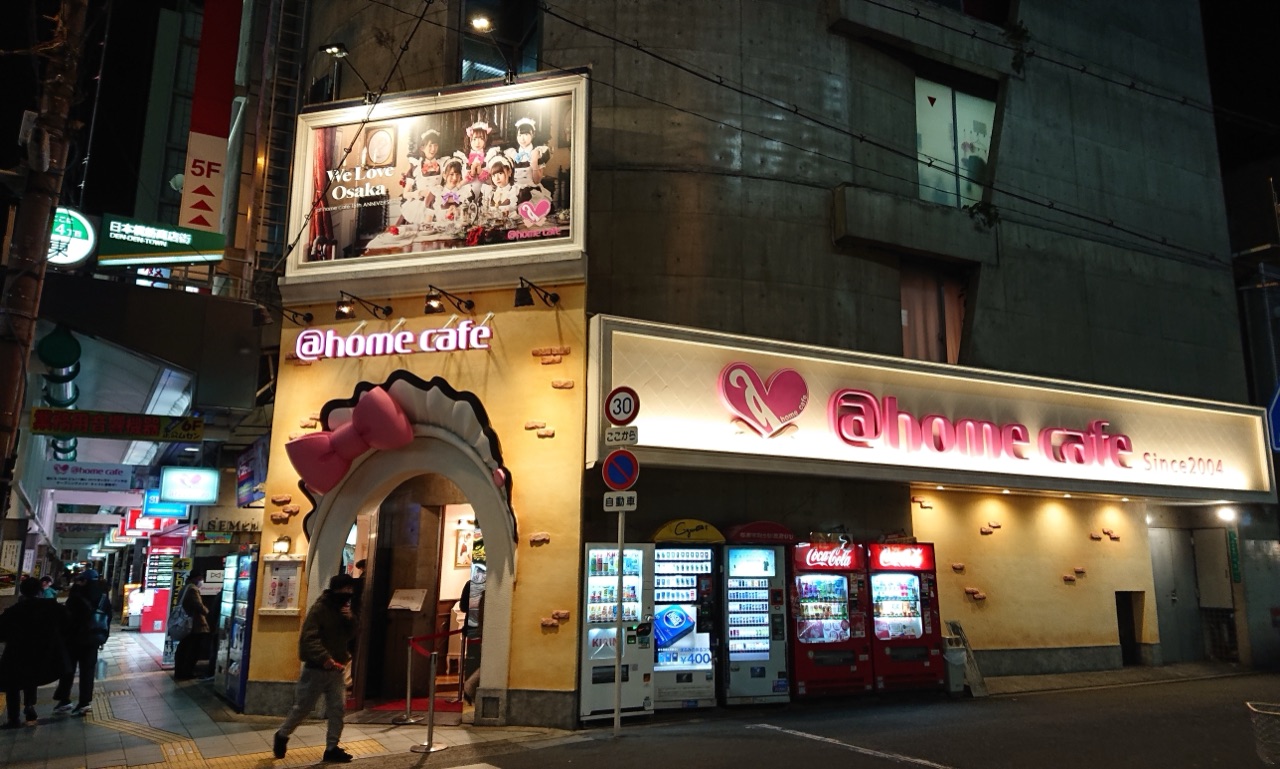
A maid café (@home café, Osaka) — the setting where the メイド role-play persona is most visible. Photo: Miyuki Meinaka, CC BY-SA 4.0, via Wikimedia Commons.
Meaning
メイド (meido) is the Japanese rendering of the English word "maid." While it can refer to household servants in general, in modern Japanese pop culture it predominantly refers to the iconic maid cafe staff and the associated aesthetic.
The Maid Aesthetic
The typical maid cafe maid wears:
- Black and white dress - Classic Victorian-inspired maid uniform
- Frilly apron - White with lace trim
- Headdress - A frilly headband or cap
- Knee-high socks or stockings - Often white
- Mary Jane shoes - Black, low-heeled
Types of Maids in Pop Culture
Japanese media features various maid archetypes:
- クラシックメイド (classic maid) - Traditional uniform
- ゴスロリメイド (gothic lolita maid) - Darker, more elaborate
- 戦闘メイド (combat maid) - Maids who can fight (anime trope)
- メイドロボ (maid robot) - Android maids in sci-fi
Maid Cafes (メイドカフェ)
Maid cafes originated in Akihabara, Tokyo in 2001. The first permanent maid cafe, Cure Maid Café, opened in March 2001. The concept quickly spread throughout Japan and internationally.
Cultural Significance
The maid has become an iconic figure in otaku culture, appearing in countless anime, manga, and video games. The appeal combines:
- Nostalgic fantasy of being served
- Cute (kawaii) aesthetics
- Role-play and escapism
- Moe elements