オムライス
omuriceA beloved Japanese comfort food of ketchup-seasoned fried rice wrapped or draped in a thin egg omelet, born from the yoshoku tradition of Japanese-adapted Western cuisine.
Meaning
オムライス — romanized as omurice and occasionally written omuraisu — is a dish of ライス seasoned with ケチャップ and typically stir-fried with chicken, onion, and vegetables, then encased in or topped with a thin egg オムレツ. The name is a contraction of the Japanese pronunciation of omelette and rice, making it a textbook example of 和製英語 — a Western-sounding word coined entirely within Japan.
The dish sits squarely within the 洋食 (yōshoku) tradition: a genre of Japanese cuisine that adapted Western flavors and techniques during the Meiji and Taisho eras to suit Japanese palates. Alongside hayashi rice, napolitan spaghetti, and cream croquettes, omurice became one of the defining dishes of this uniquely Japanese take on Western food.
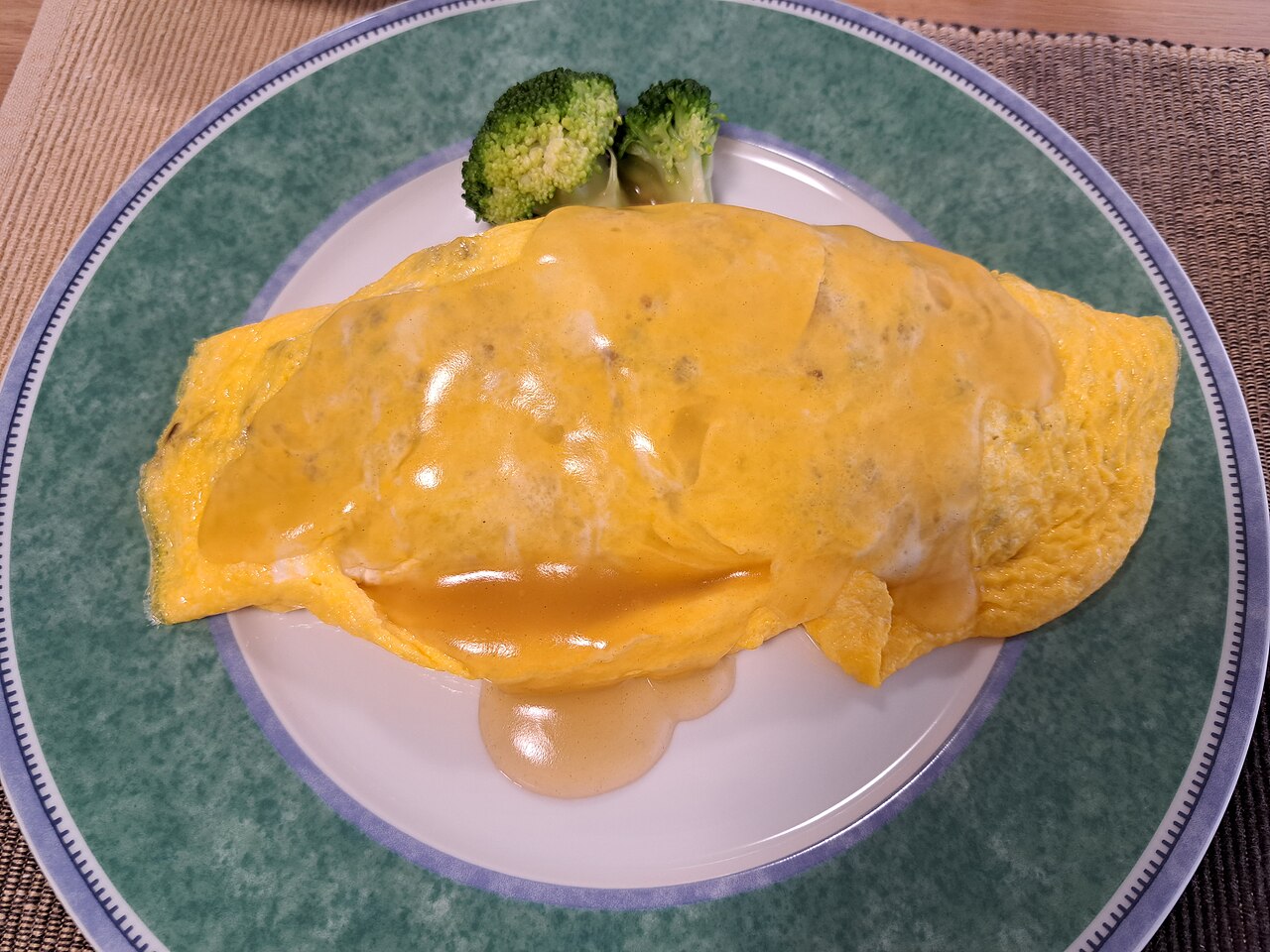
Classic domed omurice with ketchup. Photo: RuinDig/Yuki Uchida, CC BY 4.0, via Wikimedia Commons.
Origins and History
The exact birthplace of omurice is contested — as it often is for beloved national dishes — but two origin stories have endured.
The more frequently cited account points to Renga-tei (煉瓦亭), a 洋食 restaurant that opened in 銀座, Tokyo, in 1895. According to this tradition, kitchen staff began improvising a quick meal from leftover rice mixed into beaten eggs, and the dish gradually evolved from there into something worth putting on the menu. Renga-tei is also credited with originating tonkatsu and other yoshoku staples, lending this story considerable credibility.
A rival claim traces omurice to Hokkyokusei (北極星), a Western restaurant in Namba, Osaka, where in 1925 a cook reportedly prepared a special rice-stuffed omelet to comfort a regular customer with a weak stomach. Hokkyokusei still operates today and proudly maintains its claim as the dish's birthplace.
Both stories share a common thread: omurice began as an act of care — a cook improvising something nourishing and comforting for people they wanted to look after. That spirit of warmth is baked into the dish's identity.
When omurice first appeared, ケチャップ had not yet become widely available in Japan, so early versions used demi-glace or tomato-based sauces. As Western condiments became more accessible in the mid-20th century, ketchup came to define the dish — its sweet, tangy, umami-rich profile turned out to pair perfectly with fried rice and egg.
The Two Great Styles
Over more than a century, omurice has evolved into two main preparations that each have their devoted adherents.
The Classic Domed Style (俵型, tawara-gata)
In this traditional approach, ketchup fried rice is mounded into a firm football or barrel shape on the plate, then covered with a firmly cooked, golden-yellow omelet. The egg is tucked underneath and smoothed over the rice like a blanket. Some restaurants perform the theatrical step of scoring the top of the omelet with a knife tableside, allowing it to fold open over the rice in a dramatic reveal. This is the omurice of 昭和-era diners and nostalgic 喫茶店.
The Soft Fluffy Style (とろとろ, torotoro)
The torotoro style has captured international attention largely thanks to Chef Motokichi Yukimura of Kichi Kichi Omurice in Kyoto. In his preparation — which went viral on YouTube and drew visitors from around the world — 卵 is cooked at high heat in a フライパン until it forms a barely-set, trembling mass of soft curds. This molten omelet is draped over a mound of ketchup rice, then slit open with a single confident slash of a knife. The egg flows over the rice in slow, liquid waves: golden, silky, and breathtaking. The restaurant, which Yukimura has run since 1978, became almost impossibly difficult to book as his videos spread worldwide.
とろとろのたまごが、ふわっとご飯を包む。 The silky, trembling egg gently envelops the rice.
The Ketchup Question
Non-Japanese visitors sometimes raise an eyebrow at the role of ケチャップ in omurice. In much of the Western world, ketchup is a table condiment — a condiment for chips, a topping for burgers. But in the yōshoku tradition, it functions as a cooking ingredient: a balanced source of sweetness, acidity, and umami that transforms plain rice into something vibrant and complex.
When ketchup arrived in Japan it was a novelty, and the Japanese embraced it not as a dipping sauce but as a flavor base. Mixed into the pan with チキン, onion, and rice, it caramelizes and deepens, its sharpness mellowing into something genuinely savory. A squeeze on top of the finished dish adds brightness. The result is far greater than the sum of its parts.
Variations
While ketchup rice is the classic base, omurice exists in a range of regional and restaurant variations:
| Style | Sauce / Base | Notes |
|---|---|---|
| 定番 (teiban) | Ketchup rice | The standard; sweet, tangy, universally loved |
| デミグラス | Demi-glace rice | Rich brown sauce poured over; more formal |
| クリームソース | Cream sauce | Lighter, popular in family restaurants |
| カレー | Curry rice | Ketchup replaced with Japanese curry |
| バター醤油 | Butter-soy rice | A savory, less sweet variation |
Family レストラン chains such as Gusto, Denny's Japan, and Royal Host maintain omurice as permanent menu fixtures, each with their own house style. The dish also appears frequently in the school 給食 rotation, introducing it to new generations of 子供.
Omurice in Japanese Popular Culture
Few dishes carry the emotional weight of omurice in Japanese popular culture. Its associations — warmth, childhood, a parent's or lover's care — make it a natural vehicle for sentiment in storytelling.
The dish appears memorably in several beloved anime and dramas:
- Clannad — The heroine Nagisa Furukawa's fondness for simple, homemade food including omurice is woven into her characterization as someone who embodies domestic warmth and fragile hope.
- Shokugeki no Soma (Food Wars!) — Omurice features in competitive cooking challenges, its techniques dissected and elevated in the series' characteristic style.
- Midnight Diner (深夜食堂) — The anthology drama set in a Tokyo late-night diner regularly features omurice as the kind of humble, 懐かしい dish that unlocks a character's memories and emotions.
Beyond fiction, omurice has become a staple of the Japanese omakase casual restaurant — the neighborhood yōshoku spot where the chef knows the regulars' orders. The image of a chef drawing a heart in ketchup on the egg's surface before serving it is instantly recognizable across Japan, and has been reproduced in countless anime, commercials, and social media posts.
「オムライスを作ってあげるよ」 "I'll make you some omurice."
These five words, in Japanese pop culture, carry the weight of an act of love.
Making Omurice at Home
Omurice is prized as home 料理 because it is forgiving, fast, and endlessly customizable. The basic technique:
- Prepare the rice base: Stir-fry diced chicken and onion in butter until cooked through. Add day-old cooked rice and season generously with ketchup, salt, and pepper. The rice should be evenly coated and slightly sticky.
- Shape and plate: Mound the rice onto a plate in an oval or football shape.
- Make the omelet: Beat eggs with a pinch of salt. Heat butter in a pan until foaming, add the eggs, and stir rapidly. For the classic style, cook until just set and shape around the rice; for the torotoro style, pull the pan from heat while the egg is still molten and drape it immediately.
- Finish: Squeeze ketchup over the top in a zigzag or, for the classic touch, draw a heart.
The dish can be prepared in under twenty minutes, which contributes to its place in the weeknight 家庭 cooking repertoire.
Related Dictionary Words
omurice; fried rice wrapped in or topped with omelette
Western food; Western dish; Western cooking
ketchup; catsup
eggs; egg; spawn; roe
rice (esp. when served on a plate)
Japanese word constructed of elements from one or more English terms; pseudo-English word or phrase coined in Japan; wasei eigo
provision of lunch (e.g. at office, school, etc.); providing a meal; lunch service
cooking; cookery; cuisine; food; dish