声優
seiyuuJapanese voice actors who lend their voices to anime, games, and other media, and who have become major cultural figures with devoted fan followings comparable to pop stars.
Meaning
声優 (seiyuu) literally combines 声 (koe, "voice") with 優 (yū, from 俳優, "performer" or "actor"), yielding the meaning "voice performer." In practice the term refers to professional voice actors who provide performances for アニメ, ゲーム, dubbed foreign films, commercials, audio dramas, and narration. While every country has dubbing professionals, Japan's seiyuu occupy a uniquely elevated cultural position: they are celebrities in their own right, with ファン bases, chart-topping music careers, and sold-out concert tours.
The Profession
Voice acting as a distinct trade emerged in Japan alongside the postwar broadcast industry. Early radio dramas in the 1950s required full-time vocal performers, and as television animation grew through the 1960s, studios began hiring dedicated voice casts. The term seiyuu itself only entered common usage in the 1970s, propelled by the cultural explosion around Space Battleship Yamato (1974), whose cast attracted the first generation of anime-focused fan mail addressed specifically to the actors behind the characters.
Today, roughly 1,790 seiyuu are listed in the industry directory Seiyū Meikan (2025 figure), though the working conditions at entry level remain demanding. A beginning seiyuu typically earns very little per session, supplementing income through commercial narration and stage work. The elite tier — the handful of voices instantly recognizable to any anime fan — command premium fees and media schedules as dense as any pop star.
Training routes include specialized voice acting schools (養成所, yōseijo) attached to major talent agencies such as Pro-Fit, I'm Enterprise, and Mausu Promotions. Students spend years drilling breath control, diction, emotional range, and the physical posture required for standing microphone work before being assigned even minor supporting roles.
Cultural Context
The seiyuu phenomenon is inseparable from Japan's broader オタク fan culture. Because anime characters are often drawn in stylized, non-realistic ways, audiences project their emotional investment onto the voice — the seiyuu is the character in a way that a live-action actor never quite is. This creates an unusually intimate parasocial bond: fans follow a seiyuu precisely because hearing their voice in a new show or game feels like a reunion with an old friend.
Several forces accelerated this from a niche hobby to a mainstream cultural force:
The idol crossover. From the mid-2000s onward, agencies began positioning top seiyuu as アイドル-adjacent figures — releasing solo albums, staging コンサートs, managing fan club memberships, and booking variety TV appearances. Nana Mizuki became the first seiyuu to perform at the NHK Kōhaku Uta Gassen (2009), the country's most-watched music broadcast. Her chart success demonstrated that a seiyuu could sustain a parallel 歌手 career at the highest commercial level.
The internet era. ラジオ programs hosted by seiyuu have been a fixture since the 1990s, initially on AM/FM stations tied to specific anime. The web radio era (and later NicoNico live streams) removed broadcast constraints entirely: seiyuu now run irregular streams where they read fan letters, play games, and discuss recording sessions in an informal register that amplifies the sense of personal access.
The Seiyu Awards. Established in 2007 and held annually in Tokyo, the Seiyu Awards (声優アワード) are the industry's premier recognition ceremony. Categories cover lead and supporting roles in anime, game performances, and — added in 2019 — an Influencer Award acknowledging seiyuu who have built substantial social media presences. Winning a leading award can redefine a career overnight.
The 2.5D Phenomenon
Perhaps the most striking development in seiyuu culture is the rise of what industry professionals call 2.5次元 (2.5-jigen, "2.5 dimensions") — live events where voice actors appear as their characters, collapsing the boundary between the 2D world of the キャラクター and the 3D world of the audience.
The concept crystallized around multimedia franchises such as THE IDOLM@STER and Love Live!, where seiyuu cast as fictional idol groups began performing the characters' songs in concert, wearing the characters' stage costumes. For fans, attending such an event means watching the voice and the personality they know from countless hours of anime occupy a physical 舞台 in front of them — an experience that defies easy categorization as either a music concert or theatrical performance.
Animelo Summer Live, launched in 2005 at Saitama Super Arena, has become the flagship event of this world, regularly selling out three-day runs to crowds exceeding 80,000 people. ライブ tours by voice cast units such as Aqours (Love Live! Sunshine!!), μ's, and the various Ensemble Stars! units now fill arenas across Japan and, increasingly, overseas.
2.5D theatre — butai (stage plays) adapted directly from manga and anime — represents a parallel strand. Here seiyuu and stage actors perform scripted adaptations of popular franchises with sets and costumes drawn straight from the source material, occupying a theatrical niche that has grown from a curiosity to a ¥10 billion+ annual segment.
Notable Seiyuu
A few figures illustrate the breadth of the field:
| Name | Known for | Distinction |
|---|---|---|
| Masako Nozawa | Son Goku in Dragon Ball | Active since the 1960s; one of the longest-running character associations in anime |
| Megumi Hayashibara | Rei Ayanami (Evangelion), Faye Valentine (Cowboy Bebop) | Defined the "seiyuu singer" model in the 1990s |
| Nana Mizuki | Hinata (Naruto), Fate (Magical Lyrical Nanoha) | First seiyuu to perform at Kōhaku Uta Gassen (2009) |
| Hiroshi Kamiya | Levi (Attack on Titan), Trafalgar Law (One Piece) | Consistently ranks among fans' most-requested voices |
| Yūki Kaji | Eren (Attack on Titan), Meliodas (Seven Deadly Sins) | Known for intense vocal performances |
| Yoshitsugu Matsuoka | Kirito (Sword Art Online), Bell (Is It Wrong…) | Face of the isekai generation of protagonists |
Seiyuu Fan Culture
Fan activity around seiyuu extends well beyond simply watching their shows. Common practices include:
- Seiyuu-go (声優語): following a seiyuu's full body of work across anime, games, live events, and social media rather than following a franchise
- Web radio and NicoNico streams: subscribing to regular programs for informal parasocial interaction
- Fan club membership (ファンクラブ): paid memberships granting priority ticket access, exclusive merchandise, and birthday messages
- Handshake events (握手会, akushukai): in-person meet-and-greet sessions modelled on idol culture where fans briefly interact with the seiyuu
- Cast call culture: fans cheering or crying out specific seiyuu names during 演技 announcements at conventions
The singer dimension has also grown: many seiyuu release character songs (キャラクターソング) where they sing in the voice and persona of the character, as well as solo material performed as themselves. These two strands of a single career — the fictional character and the human performer — coexist with surprisingly little friction for both the artist and the audience.
The Industry Today
Japan's broader anime industry reached a record JPY 3.84 trillion ($25 billion) in market value in 2024, and the seiyuu are central to that ecosystem. Demand is expanding further into esports commentary, virtual YouTubers (VTubers), and AI voice synthesis, though the last raises genuine professional concerns within the industry about the future value of individual vocal performance.
The annual Seiyu Awards ceremony, the density of seiyuu-centred variety programming, and the continued growth of 2.5D live events all signal that rather than fading as streaming distributes anime globally, the seiyuu phenomenon is intensifying — carried to new audiences who may encounter a favourite voice actor's concert before they ever watch the anime that made them famous.
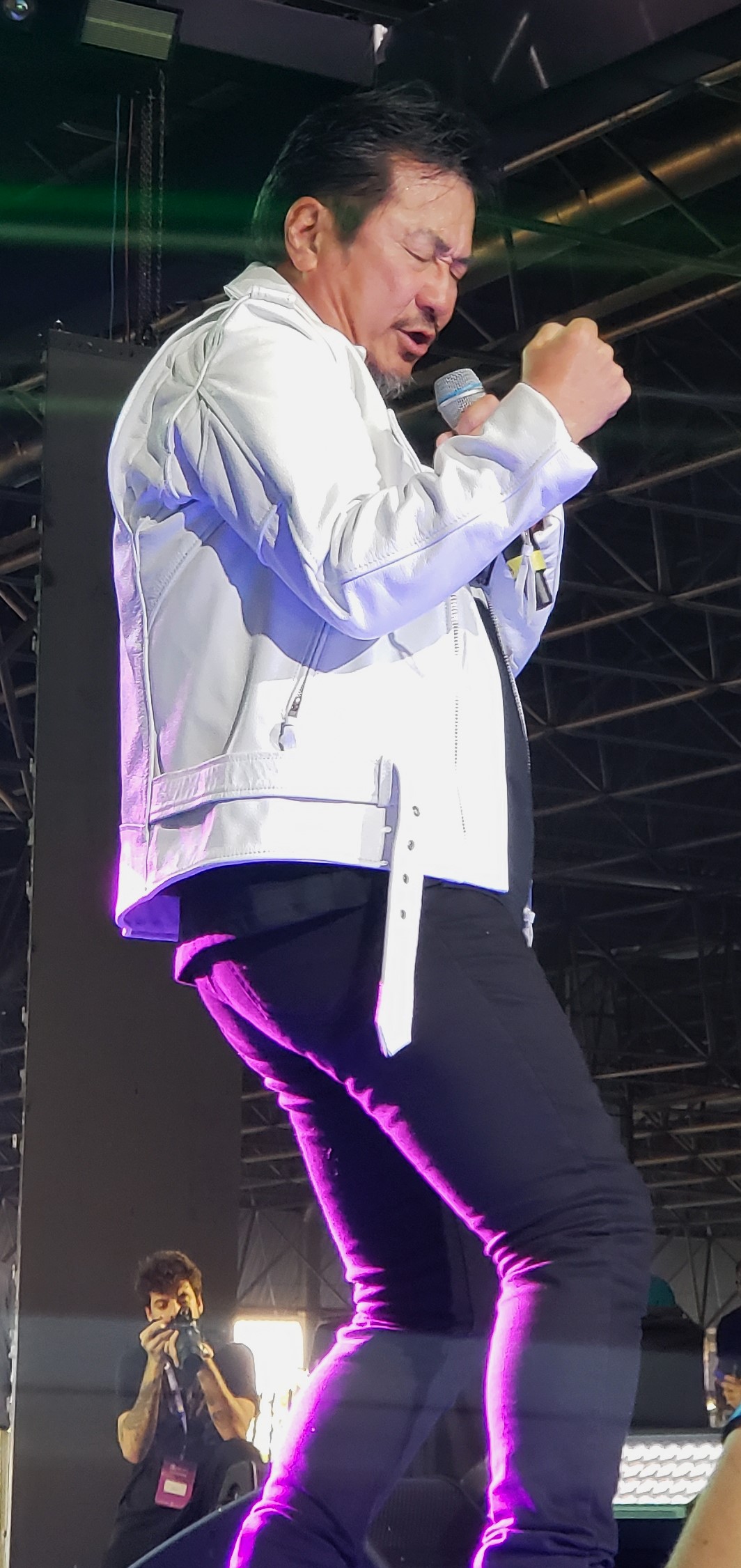
Seiyuu Hiroki Takahashi at Anime Summit 2024, illustrating the convention and live-event circuit central to seiyuu fan culture. Photo: Macacaosapao, CC0, via Wikimedia Commons.
Related Dictionary Words
voice actor or actress (radio, animation, etc.)
animation; animated film; animated cartoon; anime
performer (usu. in a boy band or girl group) with an image cultivated to foster a dedicated fan following; Japanese idol
fan; enthusiast; lover (of)
radio
concert
live (broadcasting, music, etc.)
stage (of a theatre, concert hall, etc.)