中古
chuukoChuuko (中古) means "secondhand/used," and names Japan's uniquely trusted and thriving thrift, resale, and pre-owned goods culture.
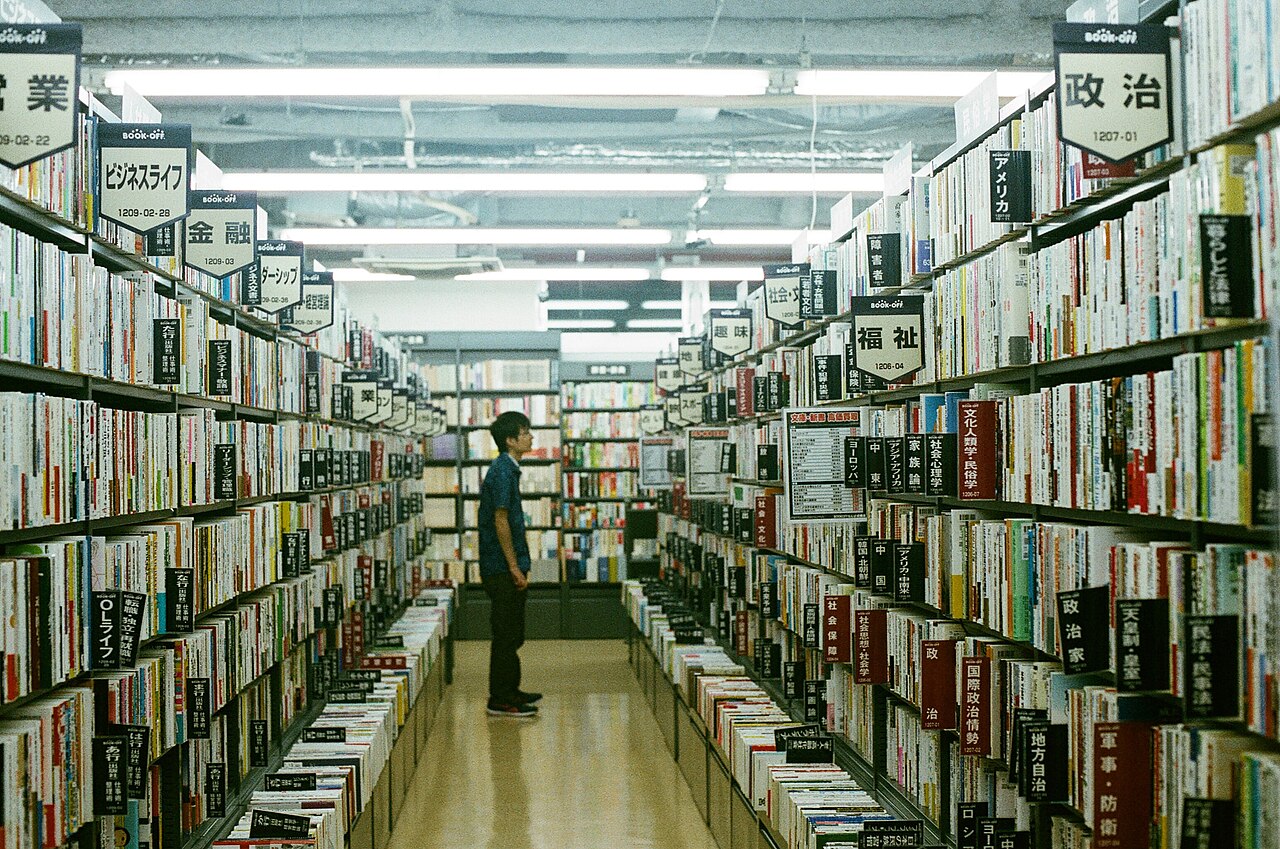
A Book Off storefront in Osaka. Photo: Toomore Chiang, CC BY 3.0, via Wikimedia Commons.
Meaning
中古 (chuuko) is a Japanese word that simply means "secondhand" or "used." Literally combining 中 ("middle") and 古 ("old"), it sits between 新品 (新品, "brand new") and truly antique or worn-out goods — it describes an item that has had a previous owner but is still in good, usable condition.
The term appears constantly in everyday retail vocabulary:
- 中古品 (chuukohin) — "secondhand goods," the general category label used on price tags, store signage, and online marketplaces.
- 中古屋 (chuuko-ya) — a "secondhand shop," the generic name for any store that buys and resells used items, from electronics to furniture.
- 中古車 (chuuko-sha) — a used car, one of the largest secondhand markets in Japan.
- 中古本 / 古本 (chuuko-bon / furuhon) — secondhand books, sold at dedicated used bookstores.
Unlike in many countries where "used" can carry a whiff of stigma, in Japan chuuko is a completely mainstream, respectable shopping category — discussed as openly as buying new, and often as a smart, discerning choice rather than a compromise.
Usage
Chuuko is used descriptively, not as slang — it shows up in store names, classified ads, and casual conversation alike.
この時計は中古ですが、状態がとてもいいです。 Kono tokei wa chuuko desu ga, joutai ga totemo ii desu. "This watch is secondhand, but it's in very good condition."
中古品でもいいから、安いカメラが欲しい。 Chuukohin demo ii kara, yasui kamera ga hoshii. "A secondhand one is fine — I just want a cheap camera."
大学生のとき、教科書はいつも中古で買っていた。 Daigakusei no toki, kyoukasho wa itsumo chuuko de katte ita. "When I was a university student, I always bought my textbooks secondhand."
On resale apps and marketplaces, sellers routinely grade condition using set vocabulary such as 未使用に近い ("like new / almost unused"), 目立った傷や汚れなし ("no noticeable scratches or stains"), and やや傷や汚れあり ("some visible wear") — a shorthand buyers instantly understand.
Cultural Context
Why secondhand carries less stigma in Japan
Japan's chuuko market is unusually large and unusually trusted, and that trust is not accidental — it's built on infrastructure most other countries' thrift markets lack:
- Rigorous condition grading. Major chains grade every item on a strict, standardized scale (often A/B/C or a points system) before it ever reaches the shelf. A customer buying "used" merchandise can expect a precise, honest description of its state, not a guessing game.
- Authentication against counterfeits and stolen goods. Japan's Act on Secondhand Articles Dealers (古物営業法) requires secondhand dealers to be licensed, verify seller identity, and keep records — originally to deter the resale of stolen property. In practice this also means shoppers can buy used luxury bags, watches, and collectibles with real confidence in their authenticity.
- Meticulous physical care. Japanese consumer habits around keeping original boxes, manuals, and packaging (especially for electronics, toys, and collectibles) mean secondhand items frequently arrive in far better shape than their age would suggest elsewhere.
This combination — legal accountability, careful grading, and a culture that already treats objects with care — turns "used" into a genuinely reliable, even prestige-adjacent, way to shop rather than a last resort.
Major players and formats
| Store / Format | Specialty |
|---|---|
| Book Off (ブックオフ) | Books, manga, CDs, DVDs, and video games; a ubiquitous nationwide chain famous for cheap, well-sorted used media |
| Mandarake (まんだらけ) | Anime, manga, and otaku collectibles — figures, cel art, doujinshi, and rare out-of-print items, centered in Akihabara and Nakano Broadway |
| 2nd Street (セカンドストリート) | Clothing, shoes, and accessories, from streetwear to designer brands, with hundreds of branches |
| Kind Otokomae (キンオトコマエ) | One of many reuse chains specializing in men's and casual secondhand clothing |
| Hard Off / Off House | Sister brands of Book Off specializing in used electronics, instruments, and household goods |
| Flea markets (フリーマーケット, furima) | Weekend outdoor markets — held at temples, parks, and event halls — where individuals sell directly to shoppers |
Akihabara and Nakano Broadway in Tokyo function as entire secondhand micro-districts, stacking multiple floors of specialist chuuko-ya on top of each other — one floor for retro video games, another for 骨董 toys, another for idol goods.
The resale app boom
The past decade has pushed chuuko further into the mainstream through smartphone フリマアプリ (flea-market apps), above all Mercari (メルカリ), launched in 2013. Mercari turned peer-to-peer reselling — once limited to physical flea markets or classified ads — into something anyone can do from their phone in a few minutes: photograph an item, set a price, ship it via a convenience-store drop-off. Competing platforms like Yahoo! Auctions (Yahoo!オークション) and Rakuma serve the same market.
This app-driven wave is closely tied to rising sustainability awareness, particularly among younger generations who increasingly see buying and reselling used goods as an ordinary, even preferable, part of a shopping cycle rather than a niche or last-resort activity. Selling an outgrown item on Mercari before buying something new has become a completely normal step in Japanese consumer behavior, reinforcing the same values already embedded in older institutions like Book Off and neighborhood flea markets.
Connection to mottainai
Japan's secondhand culture also resonates with the older concept of もったいない (mottainai) — a sense of regret at wasting something still useful. Where mottainai is a value about not discarding things prematurely, chuuko culture is the retail infrastructure that makes acting on that value easy: a dense, trustworthy, well-organized marketplace for giving objects — and money — a second life.
Related Terms
- 新品 (shinhin) — brand new goods, the counterpart to chuuko
- 古着 (furugi) — secondhand/vintage clothing specifically
- リサイクル (recycle) — used generally for recycling, sometimes overlapping with reuse shops (リサイクルショップ)
- リユース (reuse) — the broader "reuse" framing often used in sustainability messaging around chuuko
- 掘り出し物 (horidashimono) — a "great find" or hidden gem, the thrill of unearthing a bargain that keeps chuuko shoppers coming back
Related Dictionary Words
used; second-hand; old
secondhand article; secondhand goods; used item
old clothes; secondhand clothing
pawnshop
recycling
flea market
secondhand book
antique; curio
(lucky) find; bargain; good buy; treasure trove
economising; saving
brand-new article; new item
reuse