同人
doujinSelf-published fan works and the creative community culture around independent manga, games, and music in Japan.
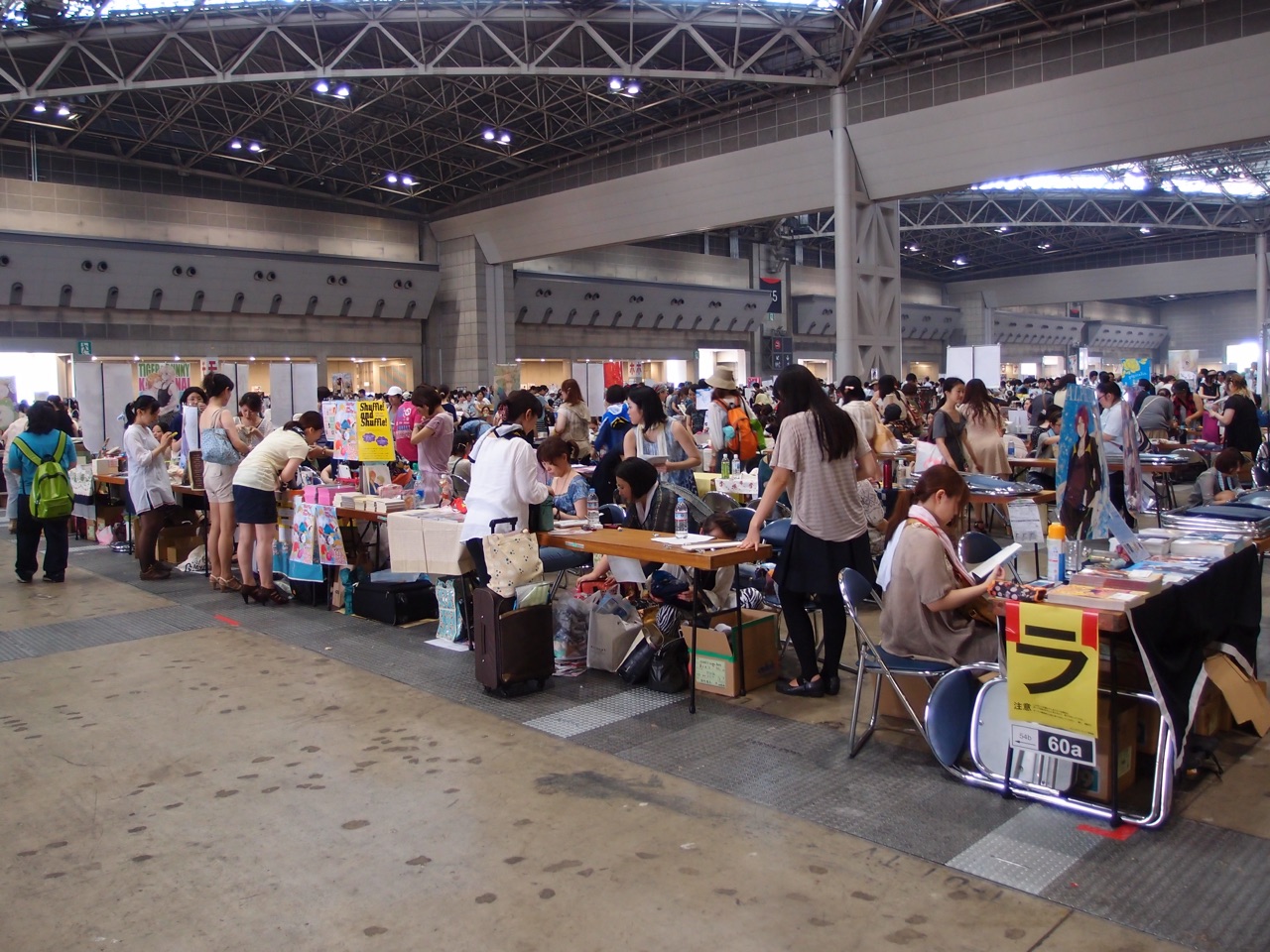
Doujinshi booths at Comiket 84 (Tokyo Big Sight, 2013) — the largest gathering of 同人 self-publishers. Photo: Guilhem Vellut, CC BY 2.0, via Wikimedia Commons.
Meaning
同人 (doujin) literally means "same person" or "like-minded people," but in modern usage refers to self-published works and the fan community that creates them. The term encompasses:
- 同人誌 (doujinshi) — Self-published magazines/manga
- 同人ゲーム (doujin game) — Independent video games
- 同人音楽 (doujin ongaku) — Independent music
- 同人サークル (doujin circle) — Creator groups
Types of Doujin Works
Fan Works (二次創作)
Derivative works based on existing media:
| Type | Description |
|---|---|
| Parody manga | Alternative stories with existing characters |
| Shipping works | Romantic pairings (often BL or yuri) |
| Alternate universe | Characters in different settings |
| Crossovers | Characters from different series together |
Original Works (一次創作/オリジナル)
Completely original creations:
- Original manga and novels
- Original games (visual novels, STGs, RPGs)
- Original music albums
- Original character designs
Comiket: The Heart of Doujin Culture
コミックマーケット (Comic Market), commonly called コミケ (Comiket), is the world's largest doujinshi fair:
- Held twice yearly at Tokyo Big Sight
- Over 500,000 attendees per event
- 35,000+ circles selling works
- Running since 1975
コミケに初参加してきた! Komike ni hatsu sanka shite kita! "I participated in Comiket for the first time!"
Other major events include:
- COMIC1 — Spring/fall doujinshi event
- 例大祭 (Reitaisai) — Touhou Project focused
- M3 — Music-focused event
The Doujin Economy
Pricing Culture
Doujin works are typically sold at modest prices:
- Manga (20-40 pages): ¥300-800
- Games: ¥500-2000
- Music CDs: ¥500-1500
The culture emphasizes passion over profit. Many circles break even or operate at a loss.
Professional Crossover
Many professional creators started in doujin:
- CLAMP — Started as doujin circle
- TYPE-MOON — Fate/stay night began as doujin game
- ZUN (Touhou) — Remains independent despite massive success
- Key — Visual novel company with doujin roots
Copyright: A Unique Relationship
Japan's doujin culture exists in a fascinating gray zone:
The Unwritten Rules
- Tacit permission — Most companies tolerate fan works
- Don't compete directly — Avoid selling at same retail channels
- Credit the original — Acknowledge source material
- Keep profits reasonable — Not seen as commercial competition
- Some series are off-limits — Certain companies actively prohibit doujin
Why It Works
Companies often see doujin as:
- Free marketing and community engagement
- A talent pipeline for future professionals
- A sign of a healthy, passionate fanbase
同人は許されてるからこそ、ルールを守ろう。 Doujin wa yurusareteru kara koso, ruuru wo mamorou. "Because doujin is tolerated, let us follow the rules."
Doujin Music Scene
The 同人音楽 scene has produced influential artists:
- Touhou arranges — Thousands of albums remixing ZUN's music
- Vocaloid producers — Many started in doujin circles
- Game soundtracks — Independent game music
Artists like IOSYS, ALiCE'S EMOTiON, and Sound Holic became famous through doujin releases.
Digital Age
While physical events remain central, digital distribution has expanded:
| Platform | Content |
|---|---|
| Booth.pm | General doujin sales |
| DLsite | Games, manga, voice works |
| Melonbooks | Manga, primarily |
| Toranoana | Physical and digital sales |
| Fantia | Subscription/patronage |
Cultural Significance
Doujin culture represents:
- Creative freedom — Making what you want, not what sells
- Community — Connecting with like-minded fans
- Skill development — A training ground for professionals
- Preservation — Keeping older series alive through fan works
- Diversity — Content for every niche interest
The doujin ecosystem demonstrates how fan communities and commercial industries can coexist productively, creating a unique cultural space found nowhere else in the world.