藤井風
fujii kazeA self-taught pianist and singer-songwriter from rural Okayama whose Okayama-dialect lyrics, soul- and gospel-inflected sound, and viral hit "Shinunoga E-Wa" carried him from YouTube piano covers to a 2026 Coachella debut.
Who He Is
藤井風 (Fujii Kaze), born June 14, 1997, in the small town of Satoshō in Okayama Prefecture, is one of the most acclaimed 歌手 (singers) and 作曲家 (songwriters) to emerge from Japan in the 2020s. He grew up surrounded by music — his father ran a jazz café and his mother taught ピアノ — and he began playing piano before he could read, teaching himself largely by ear rather than through formal training. At age 12 he started posting piano cover videos to YouTube, quietly building an audience for nearly a decade before his 2020 major-label debut turned him into one of Japan's defining new voices.
His stage name plays on the character 風 (kaze, "wind"), and he has cultivated a deliberately mysterious public image: long bleached hair, androgynous fashion, and very few interviews or televised appearances relative to his fame. Fans and press often describe him as an enigma who lets the music speak for itself.
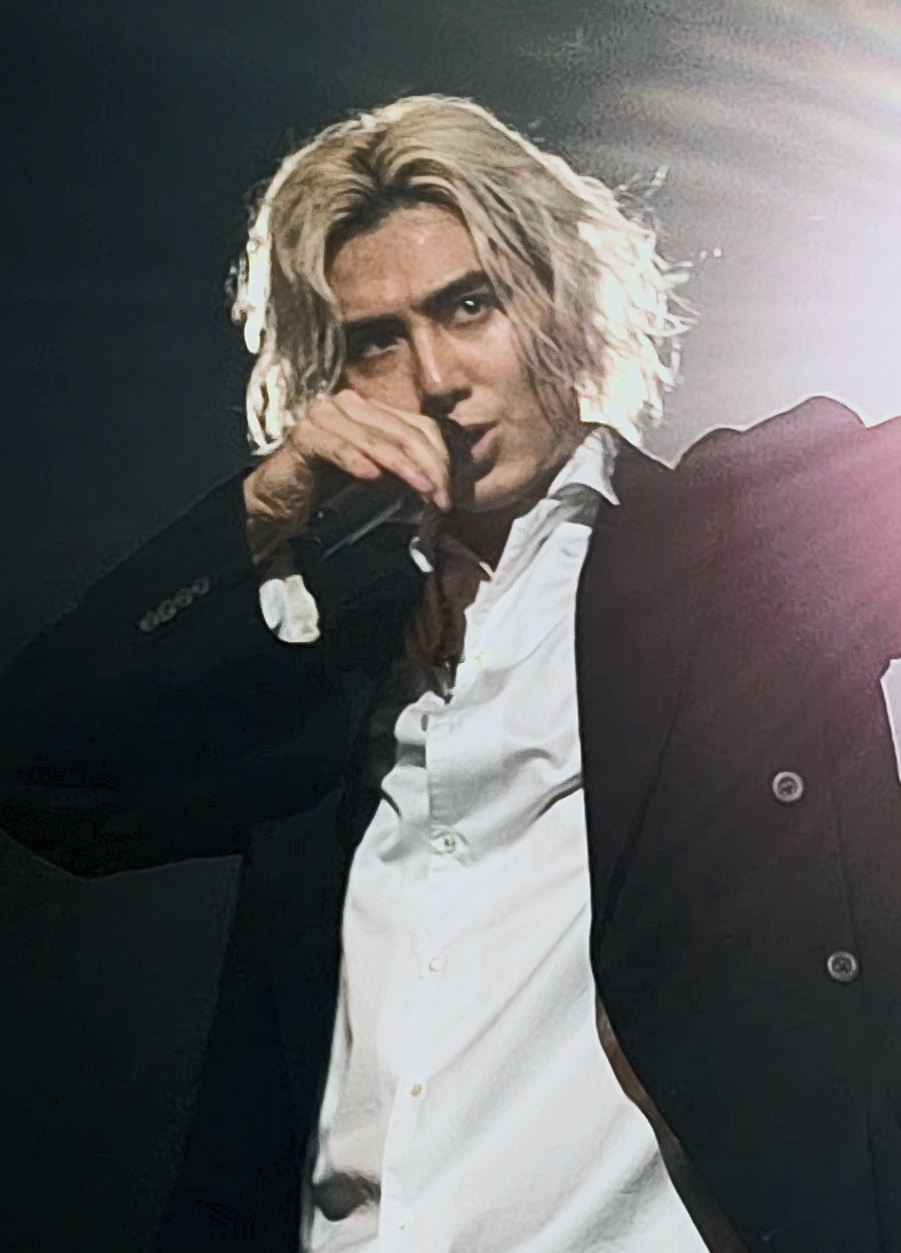
Fujii Kaze performing during his "Best Of Fujii Kaze 2020–2024" Asia tour in Kuala Lumpur. Photo: KazeQal, CC BY 4.0, via Wikimedia Commons.
Notable Works and Style
Fujii Kaze's sound blends American R&B, soul, gospel, and jazz piano with the melodic sensibility of Japanese 音楽 (music) — a combination critics have connected to the same crate-digging, groove-first spirit that fuels the international City Pop revival, even though his music sits closer to soul and gospel than to classic City Pop production. His self-produced piano playing, loose behind-the-beat phrasing, and falsetto vocals give his records a live, improvisational feel rare in mainstream J-pop.
His debut studio album, HELP EVER HURT NEVER (2020), reached No. 2 on the Japanese charts and went platinum. Its follow-up, LOVE ALL SERVE ALL (2022), cemented his crossover status. Both album titles are drawn from maxims of the Indian spiritual teacher Sathya Sai Baba — "Help Ever, Hurt Never" and "Love All, Serve All" — reflecting a spiritual, almost devotional undercurrent that runs through his lyrics about compassion, impermanence, and letting go.
Key songs include:
| Song | Year | Notes |
|---|---|---|
| 何なんw (Nan-Nan) | 2020 | Early breakout single, heavy Okayama dialect |
| 死ぬのがいいわ (Shinunoga E-Wa) | 2020 | "Dying would be nice" — became a global TikTok and streaming phenomenon years after release |
| まつり (Matsuri) | 2022 | Buoyant, festival-themed single from LOVE ALL SERVE ALL |
| Grace | 2022 | Music video filmed in India, referencing his spiritual influences |
何なん、そのカッコ 可愛いじゃん (Nan-nan, sono kakko, kawaii jan) "What's with that outfit — it's cute, isn't it"
This line from "Nan-Nan" shows his signature mix of playful 方言 phrasing and conversational, almost teasing delivery.
Cultural Context: Okayama-ben and a Global Crossover
One of the most distinctive things about Fujii Kaze is his use of Okayama-ben (岡山弁), the dialect of his home 岡山 prefecture, in songs otherwise built on cosmopolitan R&B and soul arrangements. Where standard Japanese pop lyrics are almost always written in standard Tokyo-accent Japanese, Fujii Kaze sings lines like 何なん (nan-nan, "what the heck") instead of standard 何なの, uses ワシ (washi) as a rustic first-person pronoun, and peppers songs such as "Nan-Nan," "Matsuri," and "もう得ぇよ (Mo-Eh-Yo)" with regional grammar. Professional pop musicians rarely sing in regional dialect at all, so hearing rural Okayama speech carried over gospel chords and City Pop-adjacent grooves is itself part of his appeal — it reads as unmistakably authentic rather than manufactured, and it has driven curious listeners across Japan, and now the world, to look up what the words actually mean.
That authenticity, paired with his 独学 (self-taught) musicianship, helped Fujii Kaze become one of the rare contemporary J-pop artists to break through internationally without an idol-group pedigree or a K-pop-style export strategy. "Shinunoga E-Wa," a deep cut from his 2020 debut album, went viral worldwide on TikTok roughly two years after release and became a fixture on global Spotify and Apple Music charts, introducing an international audience to an artist singing in a rural Japanese dialect they had never previously encountered. He signed with Republic Records for international releases, toured Asia for the first time in 2024, and made his Coachella debut in April 2026, performing on the Mojave Stage with a set that wove in traditional Japanese instrumentation — a temple bell and a shinobue flute — alongside his gospel-and-soul band, a striking symbol of how far his hyper-local Okayama roots have traveled.
Legacy and Ongoing Influence
Fujii Kaze is frequently cited alongside acts like YOASOBI and Ado as part of a new generation of Japanese artists achieving genuine global streaming success on their own terms, and his gospel-soul-meets-dialect sound has been credited with widening international listeners' image of what "J-pop" can mean beyond idol groups and anime tie-ins. His rare interviews, avoidance of typical celebrity media cycles, and album titles borrowed from spiritual teachings have also made him a subject of ongoing fascination in Japanese entertainment press, where he is often discussed as much for his philosophy and demeanor as for his music.