生き甲斐
ikigaiA Japanese word for one's reason for being or sense that life is worth living, popularly but inaccurately reduced in the West to a four-circle Venn diagram of purpose.
Meaning
生き甲斐 (ikigai) combines 生き (iki, "living") with 甲斐 (gai, "effect, worth, result" — the sense of a thing being worth doing). Put together, it means roughly "a reason for being" or "that which makes life worth living." It is not a formal philosophical system or a single goal to achieve; it is closer to a feeling — the quiet sense of purpose or satisfaction that comes from the small and large things that give your day-to-day existence meaning.
Crucially, ikigai in ordinary Japanese usage is modest in scale. It does not have to be a career, a life's mission, or anything grand. A grandmother's ikigai might be tending her vegetable garden every morning. A retired teacher's might be a weekly calligraphy class. A child playing with a pet, a train enthusiast photographing trains on weekends, a shop owner enjoying regular chats with customers — all of these are commonly described as someone's ikigai. The Japanese cognitive scientist Ken Mogi, who has written extensively on the concept for English-speaking audiences, emphasizes that ikigai is typically found in ordinary routines and small pleasures rather than in a single dramatic life purpose.
The Western Venn Diagram (and why it's not the original concept)
Many readers encounter ikigai through a widely shared diagram: four overlapping circles labeled "what you love," "what you are good at," "what the world needs," and "what you can be paid for," with "ikigai" placed at the intersection of all four.
This diagram did not originate in Japan.
Researchers and writers — including Nicholas Kemp, who has traced its history, and Ken Mogi himself — have pointed out that this framework was not created by a Japanese source at all. It appears to descend from a 2014 blog post by Spanish authors Héctor García and Francesc Miralles (who later wrote the bestselling book Ikigai: The Japanese Secret to a Long and Happy Life, 2016), which itself adapted an existing Venn diagram about "purpose" unrelated to Japan, created by American Marc Winn a few years earlier — which was itself based on career-coaching frameworks that had nothing to do with Japanese culture at all. Somewhere in the retelling, the diagram was relabeled with the word "ikigai" and presented as ancient Japanese wisdom.
The real, everyday Japanese concept is far less structured than a four-circle formula requiring a paying job at the intersection of talent and global need. Surveys conducted in Japan (frequently cited by Mogi and others) find that many people locate their ikigai in family, hobbies, small routines, or relationships — with no requirement that it intersect with income or world-changing impact at all. A useful contrast:
| Western "Ikigai Venn Diagram" | Everyday Japanese Ikigai | |
|---|---|---|
| Scope | A singular life mission/career | Any number of small, changeable sources of meaning |
| Requires income | Yes — must be "what you can be paid for" | No — a hobby or relationship counts |
| Structure | Strict 4-circle logical intersection | Loose, personal, often unspoken feeling |
| Origin | 2010s Western self-help/career-coaching blogs | Long-standing everyday Japanese vocabulary |
This doesn't mean the Western diagram is worthless as a self-reflection tool — many people find it genuinely useful for career planning. But it should be understood as a modern Western invention inspired by a borrowed Japanese word, not a direct transmission of a traditional Japanese framework.
Usage
In everyday conversation, ikigai is used the way English speakers might say something "gives my life meaning" or is "what I live for":
孫と過ごす時間が私の生き甲斐です。 (Mago to sugosu jikan ga watashi no ikigai desu.) "Time spent with my grandchildren is my ikigai."
仕事に生き甲斐を感じています。 (Shigoto ni ikigai wo kanjite imasu.) "I feel a sense of purpose in my work."
It's also common to ask someone directly what their ikigai is, as a way of asking what makes their life feel worthwhile — a question that assumes everyone has (or should look for) some kind of answer, however small.
Cultural Context: Okinawa and the Blue Zones Research
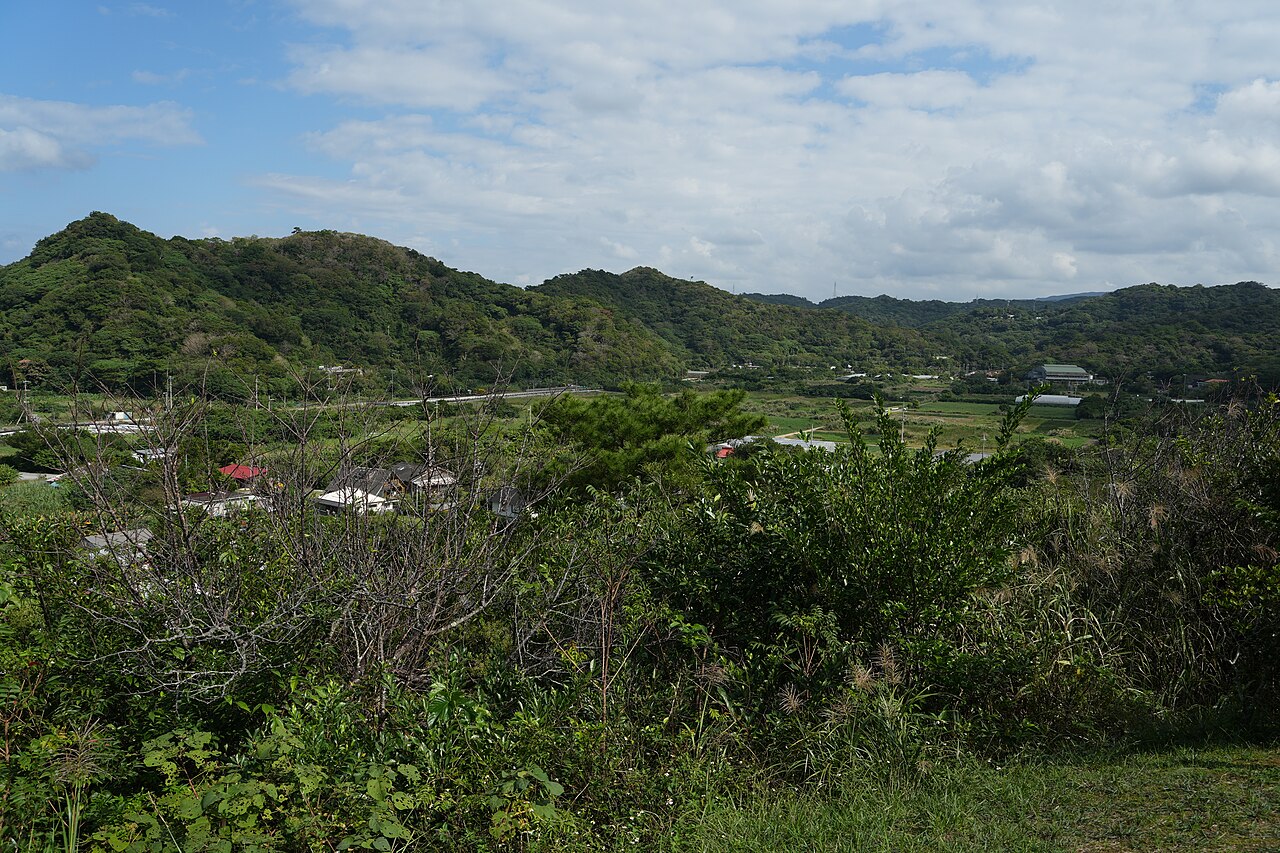
The village of Ogimi in northern Okinawa, nicknamed the "village of longevity," one of the communities studied in Dan Buettner's Blue Zones longevity research. Photo: Kugel~commonswiki, CC BY-SA 4.0, via Wikimedia Commons.
Ikigai gained international attention partly through the "Blue Zones" research popularized by National Geographic explorer Dan Buettner, which studies regions of the world with unusually high concentrations of people living past 100. Okinawa Prefecture — and villages like Ogimi in particular — is one of the five original Blue Zones identified, alongside Sardinia (Italy), Nicoya (Costa Rica), Ikaria (Greece), and Loma Linda (California).
Researchers working with elderly Okinawans found that many centenarians could immediately name their ikigai without hesitation, and that having a clear sense of purpose was correlated with a lower likelihood of health decline and a longer, more socially engaged old age. Local communities in Okinawa maintain strong intergenerational social ties (a support network sometimes called moai), regular physical activity woven into daily routines like gardening, and a cultural expectation of staying active and useful to others well into old age — all of which are thought to reinforce a felt sense of ikigai.
This is where the ikigai concept crosses over with the broader Japanese aesthetic of finding meaning in modest, ongoing things rather than singular achievements — a sensibility that also appears in concepts like wabi-sabi (beauty in imperfection and impermanence). Ikigai isn't about arriving at some final destination of purpose; it's closer to noticing, moment to moment, that a life has things worth continuing to live for.
Related Concepts
- 甲斐性 (kaishou) — having the resourcefulness or capability to provide for others; shares the 甲斐 root meaning "worth/effect."
- 天職 (tenshoku) — a "calling" or vocation, closer to the Western idea of a single life's work, and a narrower concept than ikigai.
- もったいない (mottainai) — a sense of regret over waste, reflecting a related cultural instinct to find worth and not let value go unused.
Related Dictionary Words
living; being alive
result (that makes an act worthwhile); worth (in doing something); value; effect; use; benefit; avail
purpose; goal; aim; objective; intention
(one's) life
happiness; good fortune; luck; blessing
hobby; pastime
vocation; lifework; calling
long life; longevity
Okinawa (city, prefecture)
health