お守り
omamoriSacred amulets sold at Japanese Shinto shrines and Buddhist temples, believed to channel divine protection toward specific goals such as love, health, traffic safety, or academic success.
Meaning
お守り (omamori) are small sacred amulets sold at 神社 (Shinto shrines) and お寺 (Buddhist temples) throughout Japan. The word comes from 守る (mamoru), meaning "to protect" or "to guard," with the honorific prefix o- added out of respect. Omamori are believed to channel the protective power of 神様 (kami, divine spirits) or Buddhist figures toward the person who carries them.
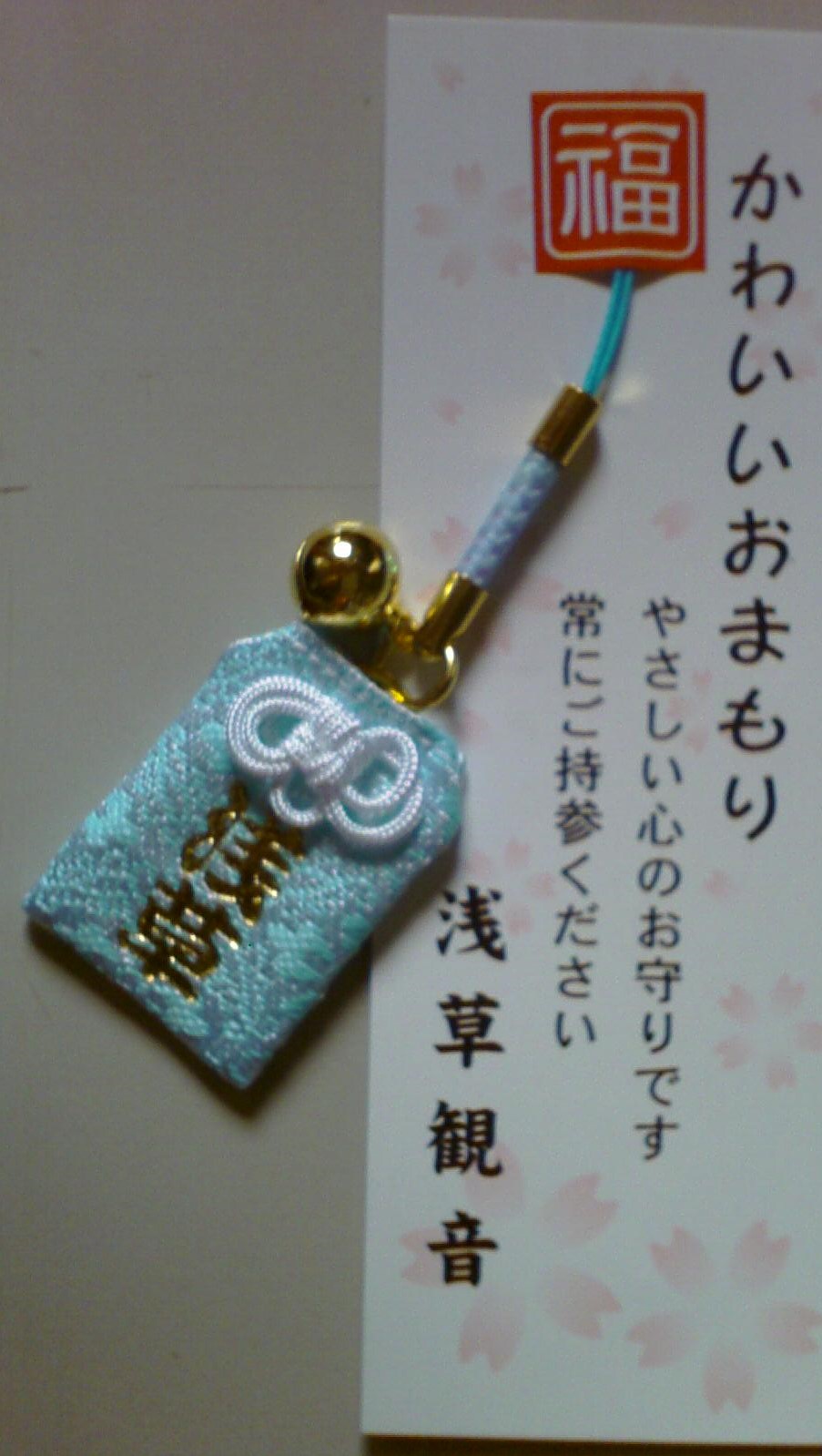
Physically, most omamori take the form of a small embroidered brocade bag — typically 4–8 cm tall — made of silk or polyester fabric and stitched shut with a cord. Inside the pouch lies a small piece of paper or wood called a naifu (内符), on which the name of the enshrined deity and a written 祈り (prayer) have been inscribed by a priest. The outer bag is usually decorated with the shrine's or temple's name, crest, and the specific purpose (e.g., 学業 for academic success). The brocade is not merely decorative: the sealed interior is considered the literal dwelling of the divine presence, which is why omamori must never be opened.
A selection of omamori for sale at Sensō-ji Temple in Asakusa, Tokyo. Photo: FlipTable, CC BY-SA 3.0, via Wikimedia Commons.
Types of Omamori
Modern shrines and temples offer omamori tailored to nearly every human concern. The most common types include:
| Japanese | Reading | Purpose |
|---|---|---|
| 交通安全 | こうつうあんぜん | Traffic safety |
| 縁結び | えんむすび | Love and finding a partner |
| 学業成就 | がくぎょうじょうじゅ | Academic success and passing exams |
| 健康祈願 | けんこうきがん | Good health |
| 家内安全 | かないあんぜん | Safety and harmony of the household |
| 安産祈願 | あんざんきがん | Safe childbirth |
| 合格祈願 | ごうかくきがん | Passing a specific exam or test |
| 商売繁盛 | しょうばいはんじょう | Business prosperity |
| 厄除け | やくよけ | Protection from evil or misfortune |
| 開運 | かいうん | General good fortune |
交通 安全 omamori — often hung from a car's rearview mirror — are among the most purchased in Japan, reflecting how deeply omamori are woven into everyday modern life. 縁結び amulets are especially popular at shrines dedicated to love deities, while 学業 omamori surge in popularity before university entrance exam season.
Beyond the classic cloth bag, omamori come in many forms: wooden tablets, arrow-shaped hamaya (for warding off evil at New Year), bell charms, card-sized versions that fit in a wallet, and even strap charms for mobile phones and bags. Contemporary shrines sometimes sell character-themed omamori featuring Hello Kitty or regional mascots alongside traditional designs.
Usage and Etiquette
Owning and carrying omamori comes with a set of widely observed customs:
Never open the bag. The sealed inner prayer is the source of the omamori's power. Opening the bag is believed to release the divine spirit and render the charm ineffective. The sealed state is the point — the 護符 (talisman) inside does its work unseen.
Keep it close to you. Omamori are meant to be near the person they protect. Carry them in a bag or pocket, hang them from a bag strap or keyring, or place them in a spot you interact with daily (a wallet, a car, a desk). Storing omamori in a drawer or giving them away is generally discouraged.
Return them after one year. Most omamori have a one-year lifespan. After that period — or once the purpose is fulfilled (an exam passed, a pregnancy completed) — the charm should be returned to the shrine or temple where it was purchased. A designated collection box (okitarisho) is set up for this purpose, and the returned charms are ritually burned in a sacred fire (otaki-age) to release the spirit and express gratitude.
Do not simply throw them away. Discarding an omamori in ordinary trash is considered disrespectful. If returning it to the original shrine is not possible, any nearby shrine or temple will typically accept it.
お守りは一年間持って、その後神社に返納しましょう。 "Carry your omamori for one year, then return it to the shrine."
Cultural Context
The roots of omamori stretch back over a thousand years. Amulets and protective talismans appear in Japanese records as early as the Nara period (710–794), when written charms (ofuda, 御札) were distributed by major shrines and the imperial court. During the Heian period (794–1185), gofu (護符) — protective papers inscribed by onmyoji (court divination masters) — became fashionable among the aristocracy. It was the Edo period (1603–1868), however, that shaped the omamori we recognize today. The rise of mass pilgrimage culture and the flourishing of both Shinto and Buddhist institutions created a demand for portable, purpose-specific protective charms that ordinary people could carry. The hon-in (本印) style of sealed brocade bags became standardized during this era.
Today, omamori sit comfortably at the intersection of sincere religious practice and cultural habit. Surveys consistently show that large numbers of Japanese people who do not consider themselves religiously observant still buy and carry omamori — particularly for practical life events like exams, travel, and childbirth. This reflects a broader Japanese attitude toward shrines and temples as sources of 御利益 (goriyaku — worldly benefits), rather than purely doctrinal belief.
Famous Shrines for Specific Omamori
Certain shrines have gained national reputations for the efficacy of particular omamori:
- Dazaifu Tenmangu (太宰府天満宮, Fukuoka) — Dedicated to Sugawara no Michizane, the deified patron of scholarship. Its academic success omamori are among the most trusted in Japan; students travel from across the country before entrance exam season.
- Meiji Jingu (明治神宮, Tokyo) — One of the most visited shrines in Japan. Known for omamori related to love, new beginnings, and general well-being. Receives over 3 million visitors during New Year (hatsumode).
- Fushimi Inari Taisha (伏見稲荷大社, Kyoto) — Dedicated to Inari, the 神 of foxes, rice, and commerce. Business prosperity omamori here carry strong cultural prestige.
- Izumo Taisha (出雲大社, Shimane) — Enshrines Okuninushi no Mikoto, the deity of 縁 (bonds and relationships). The shrine's en-musubi (love/fate) omamori are considered among the most powerful in the country.
- Naritasan Shinshoji (成田山新勝寺, Chiba) — A major Buddhist temple famous for traffic safety omamori; many professional drivers and taxi companies purchase them here.
How Omamori Differ from Western Lucky Charms
Western lucky charms (four-leaf clovers, horseshoes, rabbit's feet) are generally understood as secular objects whose "luck" is symbolic or superstitious. Omamori occupy a more spiritually specific space. Each omamori is ritually prepared: a priest performs a kito (祈祷, prayer ceremony) to invoke the enshrined deity, inscribes the naifu prayer, and seals the bag. The omamori is thus understood not as a symbol of luck but as a vessel — a physical container for divine will directed toward a specific purpose.
This distinction matters for etiquette. You would not hesitate to wash a lucky coin or replace a broken horseshoe. But mistreating or discarding an omamori without ritual return is seen as a breach of respect toward the 仏 or kami whose presence it holds. The relationship is more akin to a loan of divine protection than ownership of a lucky object.
Omamori also reflect Japan's longstanding tradition of shinbutsu-shugo — the syncretic blending of Shinto and Buddhism. A visitor to Japan may purchase a health-protection omamori at a Buddhist temple one day and a traffic safety omamori at a Shinto shrine the next, and neither purchase would be considered theologically inconsistent. The two traditions have coexisted in this ritual space for over a thousand years.
Related Terms
- Omikuji (おみくじ) — Fortune-telling paper strips drawn at shrines; a companion ritual to purchasing omamori
- Ema (絵馬) — Wooden votive plaques on which wishes are written and left at shrines
- Ofuda (御札) — Larger paper or wooden talismans designed to be displayed in the home rather than carried
- Goriyaku (御利益) — Worldly benefits or divine blessings believed to flow from worship and sacred objects