歌い手
utaiteAn amateur or semi-professional singer who posts cover versions of Vocaloid, anime, and pop songs to Niconico Douga and YouTube — a hobbyist scene that launched major-label careers like Ado and After the Rain.
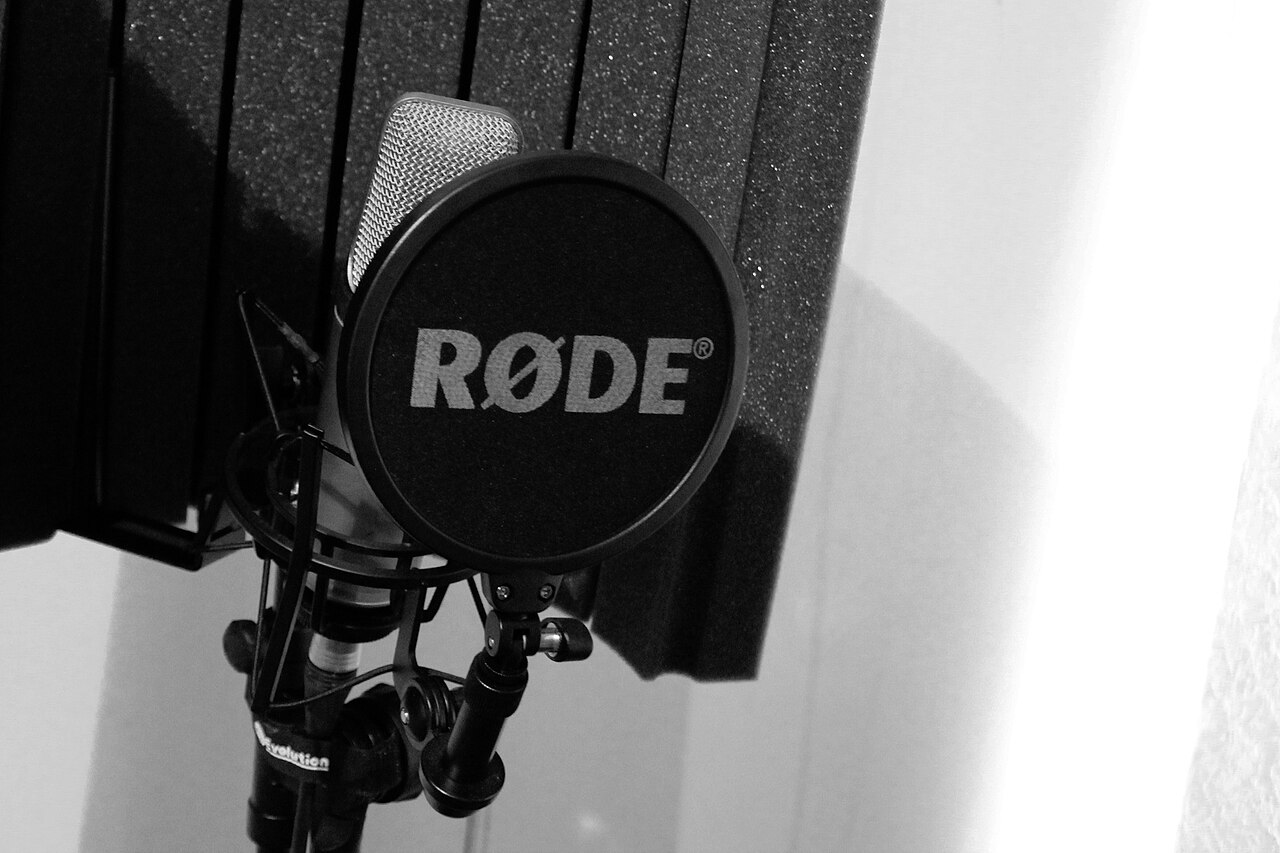
A representative home-recording setup — a condenser microphone with a pop filter and reflection shield, the kind of gear a bedroom utaite might use to record vocals in a closet or small room. Photo: Tim Sheerman-Chase, CC BY 2.0, via Wikimedia Commons.
Meaning
Utaite (歌い手) literally means "singer" or "one who sings" — it is simply the noun form of 歌う (to sing). In ordinary Japanese, 歌手 is the everyday word for "singer," so a native speaker seeing 歌い手 out of context might read it the same way. But since the mid-2000s, "utaite" has taken on a much narrower, internet-specific meaning: an amateur or semi-professional singer who posts cover versions of existing songs — most famously Vocaloid tracks originally "sung" by 初音ミク (Hatsune Miku) and her fellow synthetic voicebanks, but also anime themes, J-pop hits, and other utaite's own covers — to video platforms like Niconico Douga and YouTube.
The term is inseparable from the video genre that produces it: 歌ってみた ("tried singing it"). If 歌ってみた names the video format and the act of covering a song, "utaite" names the person doing it — the performer, as opposed to the 作詞/作曲 (lyricist/composer) who wrote the 原曲 (original song) in the first place.
The Credit Convention
A defining feature of utaite culture is how carefully a cover video separates who did what. Where a mainstream single credits a singer on the cover art and buries the songwriter in liner notes, an utaite's video description flips that emphasis: the song's original creator is prominently linked and thanked, and the utaite is credited only for the 歌う — the singing itself. A typical description reads something like:
歌:【ハンドル名】 本家:(原曲へのリンク) Mix:【ハンドル名】 Encode:【ハンドル名】
(Singing: [handle name] / Original: [link to the source video] / Mix: [handle name] / Encode: [handle name])
Beyond the singer, a finished cover often lists a separate mixing engineer, a video encoder, and sometimes an illustrator who drew original cover art — each an unpaid collaborator credited by their own online handle. This distributed, credit-everyone structure mirrors the 二次創作 (derivative fan work) norms that grew up around Vocaloid more broadly, where a song's illustrator, animator, and choreographer are all treated as co-authors of the finished video rather than invisible support staff.
Origin and History
Utaite culture traces back to karaoke-recording threads on the forum 2channel, but it crystallized as a recognizable genre on Niconico Douga starting around 2006–2007 — almost exactly the same moment Crypton Future Media released Hatsune Miku and touched off the VOCALOID boom. Niconico's scrolling, time-stamped comments turned watching a cover into a shared, communal event, and its ranking pages let a well-received utaite's video climb a visible weekly chart, giving amateur singers something close to real feedback and a fanbase.
Because so many of the earliest cover targets were VOCALOID songs, "utaite" and "ボーカロイド" culture grew up as close, overlapping communities — a VOCALOID producer (ボカロP) writes and releases a song sung by a synthetic voice, and an utaite then posts a human cover of the same track, sometimes within hours of the original going up. Many utaite built their following entirely on other people's Vocaloid songs long before writing or performing anything of their own.
Notable Utaite and Professional Debuts
For years, utaite performed anonymously or 匿名 behind a handle and an illustrated mascot rather than a photo — 顔出し (showing one's face) was, and often still is, optional. That anonymity did not stop a number of Niconico's most popular utaite from turning the hobby into a career:
- Soraru (そらる) — one of the longest-active utaite, uploading covers since 2008, and among the first to cross from Niconico into mainstream media when he performed an ending theme for the anime Danganronpa: The Animation in 2013.
- Mafumafu (まふまふ) — an utaite who is also a songwriter and producer in his own right, releasing original material alongside cover work.
- Amatsuki (天月) — known for his mascot character Masamune, illustrating the common utaite practice of adopting a drawn avatar as a stand-in identity.
- Ado — see the separate Ado article; she grew up watching faceless utaite as a young teenager, began posting her own covers in 2017, and signed to a major label in 2020, going on to become one of the best-selling and most recognized Japanese singers of the decade — all while keeping her face permanently hidden, a persona borrowed directly from utaite convention.
- Reol (レオル) — an utaite and composer who partnered with VOCALOID producer Giga and illustrator Okiku to form a three-person unit that signed to TOY'S FACTORY in 2016 and released its major-label debut single in 2018.
Utaite Units and Collaboration
Beyond solo covers, the scene is full of collaboration. Multiple utaite frequently record a 合唱 (gasshō, chorus/ensemble cover), splitting up verses and harmony parts of the same song. Some pairings became durable acts in their own right: Soraru and Mafumafu began covering songs together as a duo in 2014 and eventually formed the group After the Rain, which has contributed ending and theme songs to several anime series and consistently ranks near the top of Niconico's weekly utattemita charts. Reol's trio with Giga and Okiku is a similar case of a cover-culture friendship formalizing into a signed act.
Cultural Context
Utaite culture functions as a farm system for the Japanese music industry that barely existed before broadband video sharing: a teenager with a decent microphone, free editing software, and no formal training can post a cover, build an audience purely on merit and consistency, and — for a small number — parlay that following directly into a recording contract, an anime tie-in, or a touring career, all without ever attending a music school or auditioning for a label. It sits alongside VOCALOID producer culture (writing) and 踊ってみた dance-cover culture (choreography) as one of three closely linked, mutually reinforcing amateur pipelines that all trace back to the same Niconico moment in the late 2000s.
The convention of crediting the original songwriter above the performer, and of many utaite remaining anonymous behind an illustrated mascot rather than a photo, also reflects a different set of values than the mainstream idol or J-pop industry: the song and the performance are meant to be judged on their own terms, separate from a marketed face or public image. Ado's global stardom while performing completely faceless is the most visible proof that this ethos, born in an amateur hobbyist scene, can scale to arena tours and platinum records without ever being abandoned.
Related Terms
- 歌ってみた (utatte mita) — the cover-video genre and act of covering a song; utaite are the people who make these videos
- ボーカロイド (VOCALOID) — the singing-synthesis software and producer culture most utaite covers draw from
- ボカロP (bokaro P) — a VOCALOID producer, the songwriting counterpart to an utaite
- 踊ってみた (odotte mita) — the sibling dance-cover genre
- 中の人 (naka no hito) — "the person inside," used for the human behind an anonymous handle or avatar
Related Dictionary Words
singer; vocalist
to sing
singer
mask; veil; disguise
anonymity; using an assumed name
putting in an appearance; visiting; attending a meeting
(writing) song lyrics
composition (of music); setting; writing music
original song; original melody
derivative work (usu. unauthorized and produced by fans, e.g. dōjinshi, fanfiction)