バーチャルユーチューバー
baacharu yuuchuubaaVirtual YouTubers (VTubers) are online content creators who use 2D or 3D virtual avatars — often anime-styled — to stream, make videos, and interact with fans, a phenomenon that originated in Japan and became a global entertainment industry.
Meaning
A VTuber (ブイチューバー, Bui Chuubaa) is short for バーチャルユーチューバー (Baacharu Yuuchuubaa), or Virtual YouTuber. The term describes a content creator who performs using a real-time animated avatar — typically anime-styled in 2D or 3D — rather than appearing on camera in person. The performer's movements and facial expressions are captured via motion-tracking software and mapped onto the avatar, creating a virtual persona with its own name, backstory, and visual identity.
Although the name includes "YouTube," VTubers today stream on multiple platforms including YouTube, Twitch, Bilibili, and Niconico.
History
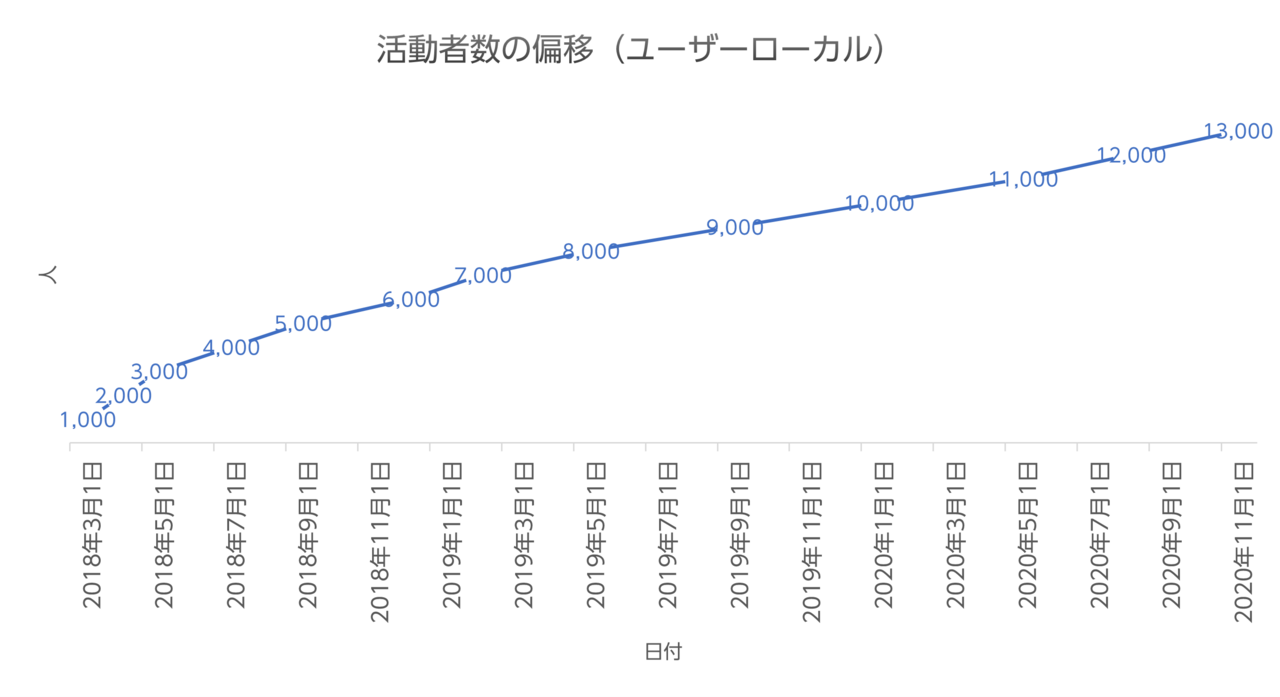
Growth in the number of active VTubers over time. Public domain, via Wikimedia Commons.
The concept of a virtual character hosting video content has roots in earlier Japanese internet culture — Vocaloid characters like 初音ミク demonstrated the public's appetite for virtual performers — but the modern VTuber format crystallized in 2016.
On November 29, 2016, Kizuna AI (キズナアイ) uploaded her first YouTube video and coined the term「バーチャルYouTuber」to describe herself. She used a cheerful AI character persona with a 3D model and quickly attracted millions of subscribers. Within two years, Kizuna AI had become one of the most-subscribed Japanese YouTubers, proving the format had genuine mass appeal.
The year 2018 saw a dramatic surge: the number of active VTubers grew from a few dozen to over 3,000, earning the nickname the "VTuber Boom" (バーチャルYouTuberブーム). Two agencies emerged that would define the industry:
- Hololive Production (ホロライブプロダクション) — run by COVER Corporation, debuting its first talent Tokino Sora in 2017 and growing into a global powerhouse with branches in Japan, Indonesia, and English-speaking markets.
- Nijisanji (にじさんじ) — launched by Anycolor (formerly Ichikara) in 2018, pioneering the shift from pre-edited videos toward live streaming and popularizing the cheaper, more expressive Live2D 2D avatar format.
By 2020–2021, the COVID-19 pandemic dramatically accelerated VTuber growth worldwide. Housebound audiences turned to VTuber streams for entertainment and parasocial connection. Hololive's English branch (hololive EN), debuting in September 2020, introduced VTubers to a massive Western audience and triggered a global wave of independent and agency-backed creators.
Notable VTubers and Agencies
| Name | Agency | Known For |
|---|---|---|
| Kizuna AI (キズナアイ) | Independent / Activ8 | Pioneer; coined the term VTuber |
| Gawr Gura (がうる・ぐら) | Hololive EN | Fastest VTuber to 1M / 4M subscribers |
| Inugami Korone (戌神ころね) | Hololive JP | Marathon retro game streams |
| Usada Pekora (兎田ぺこら) | Hololive JP | Comedic Minecraft streams; top viewership |
| Kuzuha (加賀美ハヤト) | Nijisanji JP | Male VTuber; competitive gaming |
| Ironmouse | VShojo | First Western-based major VTuber agency talent |
Beyond large agencies, thousands of indie VTubers (個人勢, kojinsei) operate independently using free tools like VTube Studio and Live2D rigs, lowering the barrier to entry considerably.
Cultural Impact
VTubers occupy a unique space at the intersection of anime culture, idol fandom, and live streaming. Several cultural dynamics make them distinctive:
The avatar as identity. Unlike conventional streamers, VTubers are defined by their character persona. The avatar grants performers a degree of privacy (they remain anonymous behind their character) while simultaneously allowing a form of self-expression that transcends physical appearance. Fans form deep attachments to the character rather than the performer — a relationship sometimes described as 「中の人」(naka no hito, "the person inside") culture.
Parasocial fandom. VTuber fandoms share structures with idol culture: fans support specific talents, buy merchandise, send superchats (paid live-stream messages called スーパーチャット), and follow fan-art communities. The term 推し — supporting your favorite — is central to VTuber fan culture.
Niconico and YouTube roots. The VTuber format drew heavily from Niconico Douga's culture of character-fronted content — MAD videos, 歌ってみた (cover singing), and 踊ってみた (dance covers) — all of which remain common VTuber activities today.
Global industry. By 2024, the global VTuber market was valued at approximately USD 2.54 billion, growing at over 20% annually. Brands like McDonald's Japan, Kura Sushi, and iBuyPower have signed sponsorship deals with VTubers. The Los Angeles Dodgers hosted official VTuber fan events in 2024, reflecting how deeply the format has penetrated mainstream culture outside Japan.
AI-powered VTubers. A growing subset of VTubers uses AI to generate responses in real time, operating autonomously without a human performer — a development that raises new questions about the nature of the parasocial bond.
Fan Terminology
| Term | Reading | Meaning |
|---|---|---|
| 配信 | はいしん (haishin) | Live stream |
| 切り抜き | きりぬき (kirinuki) | Clip / highlight video |
| コラボ | korabo | Collaboration between VTubers |
| 卒業 | そつぎょう (sotsugyou) | "Graduation" — a VTuber retiring |
| 転生 | てんせい (tensei) | "Reincarnation" — returning under a new identity |
| 個人勢 | こじんせい (kojinsei) | Independent VTuber |
| 箱推し | はこおし (hakooshi) | Supporting a whole agency rather than one talent |