初音ミク
hatsune mikuThe world-famous virtual singer created with Vocaloid voice synthesis software, who became a global cultural icon through fan-created music and holographic concerts.
Meaning
初音ミク (はつねみく, Hatsune Miku) is a virtual 歌手 — a singing synthesizer character developed by Crypton Future Media and released in August 2007. Her name is written with the kanji 初 (hatsu, "first"), 音 (ne, "sound"), and ミク (miku, a given name written in katakana), which together evoke the idea of "the first sound of the future." She is the most recognizable face of 音楽 synthesis software called Vocaloid (ボーカロイド, bōkaroido), developed by Yamaha Corporation.
Unlike a human アイドル, Miku has no physical body — she exists as a voice bank, a character design, and an idea. Anyone who purchases the software can compose 楽曲 and have Miku sing them, effectively making her a communal artistic creation owned by millions of fans worldwide.
Origin and Development
Vocaloid technology was first released by Yamaha in 2004, but it was Crypton Future Media's character packages that transformed it into a cultural phenomenon. Miku was the third Vocaloid product from Crypton but the first to explode in 人気. Her 音声 was sampled from voice actress Saki Fujita (藤田咲), and the character design — featuring twin turquoise pigtails, a futuristic school uniform, and a headset — was illustrated by KEI.
Within weeks of her August 31, 2007 release, Miku was everywhere on ニコニコ動画 (Niconico Douga), Japan's premier video-sharing platform at the time. Producers calling themselves P (プロデューサー, purodyūsā) uploaded original 創作 songs using Miku's voice, and the community exploded. Songs like Melt (メルト) by ryo and World is Mine (ワールドイズマイン) by ryo garnered millions of views and launched careers.
Crypton subsequently released a "family" of Vocaloid characters under the PIAPRO Characters umbrella:
| Character | Japanese | Reading | Voice |
|---|---|---|---|
| Hatsune Miku | 初音ミク | はつねみく | Saki Fujita |
| Kagamine Rin | 鏡音リン | かがみねりん | Asami Shimoda |
| Kagamine Len | 鏡音レン | かがみねれん | Asami Shimoda |
| Megurine Luka | 巡音ルカ | めぐりねるか | Yū Asakawa |
| MEIKO | MEIKO | めいこ | Meiko Haigou |
| KAITO | KAITO | かいと | Naoto Fūga |
Music Ecosystem
The Vocaloid scene gave rise to an entirely new model for music production and distribution. Amateur and semi-professional composers — known as ボカロP (Bokaro P, short for Vocaloid Producer) — could create polished songs without needing a human singer, a record label, or a studio budget. These songs spread virally on Niconico and later YouTube.
The 文化 around Vocaloid music is deeply collaborative:
- 歌ってみた (utatte mita, "tried singing it") — human vocalists on Niconico cover Vocaloid songs with their own voices, often gaining large followings.
- 踊ってみた (odotte mita, "tried dancing to it") — dancers perform choreography to Vocaloid tracks.
- MMD (MikuMikuDance) — a free 3D animation software that fans use to animate Miku and other characters performing songs.
- 同人音楽 (dōjin ongaku) — self-published music CDs sold at events like コミックマーケット (Comiket), often featuring Vocaloid arrangements.
Many major J-pop and anime artists began their careers writing Vocaloid songs. Producers like ryo (of supercell), livetune, wowaka, and DECO*27 all built large fanbases through Miku before transitioning to mainstream music.
初音ミクの歌は、世界中のファンに愛されています。 Hatsune Miku no uta wa, sekai-jū no fan ni aisareteimasu. "Hatsune Miku's songs are loved by fans all over the 世界."
Holographic Concerts
One of Miku's most spectacular achievements is her live performance career — as a hologram. Since 2009, Miku Expo and Magical Mirai concerts have been held worldwide, projecting a 3D animated Miku onto a translucent screen while a live band 演奏 her songs behind the stage. Audiences wave glow sticks (called サイリウム, sairyūmu) in her official turquoise color and sing along with full knowledge that their idol is virtual.
These events have sold out venues in Japan, the United States, Europe, and Southeast Asia, demonstrating that the barrier between "real" and "virtual" performers had effectively collapsed in the minds of her fans.
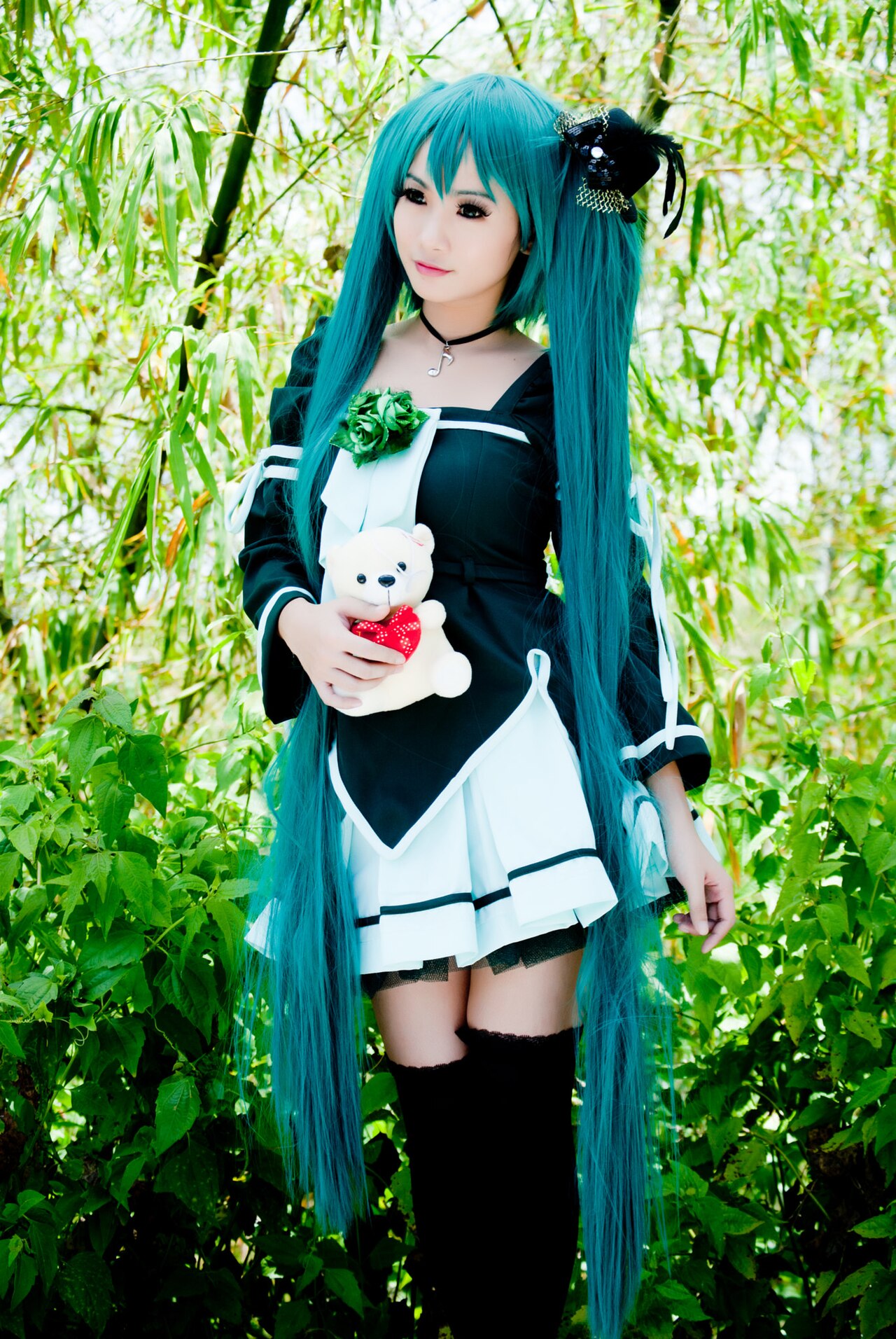
A collectible figure of Hatsune Miku. Public domain (CC0), via Wikimedia Commons.
Cultural Impact and Memes
Miku's cultural footprint stretches far beyond music. She has appeared in:
- Video games: The Project DIVA and Project SEKAI rhythm game series have sold millions of copies.
- Advertising: Toyota, Google, and Domino's Pizza have all used Miku in campaigns, particularly in Japan and the US.
- Fashion: Collaborations with brands like Uniqlo, Louis Vuitton, and countless streetwear labels.
- Art: Museum exhibitions in Tokyo, New York, and Paris have displayed Miku-inspired works.
She also spawned a rich meme ecosystem. The 「ネギを持つミク」 (negi wo motsu Miku, "Miku holding a leek") meme — derived from an early fan animation set to the Finnish folk song Ievan Polkka — became one of the internet's most recognizable early viral images. The leek (ネギ) remains her unofficial second symbol alongside her twin-tails.
In 2024, Miku was featured in the opening ceremony of the Paris Olympics in a brief appearance, signaling her acceptance into the global mainstream cultural canon.
Vocaloid and Virtual Singers Today
The success of Miku inspired a wave of competing voice synthesis products and characters. GUMI (グミ) from Internet Co., IA (イア) from 1st PLACE, and dozens of other Vocaloids followed. The technology also evolved — Synthesizer V, CeVIO AI, and NEUTRINO are modern neural-network-based alternatives offering even more realistic vocal synthesis.
Miku's influence can also be seen in the rise of VTubers (バーチャルユーチューバー), virtual YouTubers who use anime-style avatars to entertain audiences online. The idea that a non-human character can build genuine emotional connections with a global fanbase — pioneered by Miku — laid the philosophical groundwork for the VTuber phenomenon.
Crypton Future Media actively cultivates fan creativity through the PIAPRO (ピアプロ) platform, where fans can freely use Miku's image under a Creative Commons-like license, as long as the use is non-commercial. This open approach to intellectual property has been central to her longevity and the health of her creative community.
Why Miku Matters
Hatsune Miku is not just a product or a mascot. She represents a fundamental shift in how music, fandom, and creativity interact. She belongs to no single creator — she belongs to everyone who has ever written a song for her, drawn her picture, or danced to her music. In Japanese fan culture, this sense of communal ownership is expressed as 「みんなのミク」 (minna no Miku) — "everyone's Miku."
For students of Japanese 文化, Miku offers a window into the collaborative spirit of internet creativity (ネット文化), the intersection of technology and art, and the uniquely Japanese capacity to find profound emotional connection in fictional characters.