薬屋のひとりごと
kusuriya no hitorigotoThe Apothecary Diaries follows Maomao, a poison-obsessed former apothecary conscripted into a fictional Chinese-inspired imperial rear palace, who solves court mysteries through pharmacology — voted Japan's #1 favorite manga in Oricon's 2026 reader poll, ahead of Frieren.
Overview
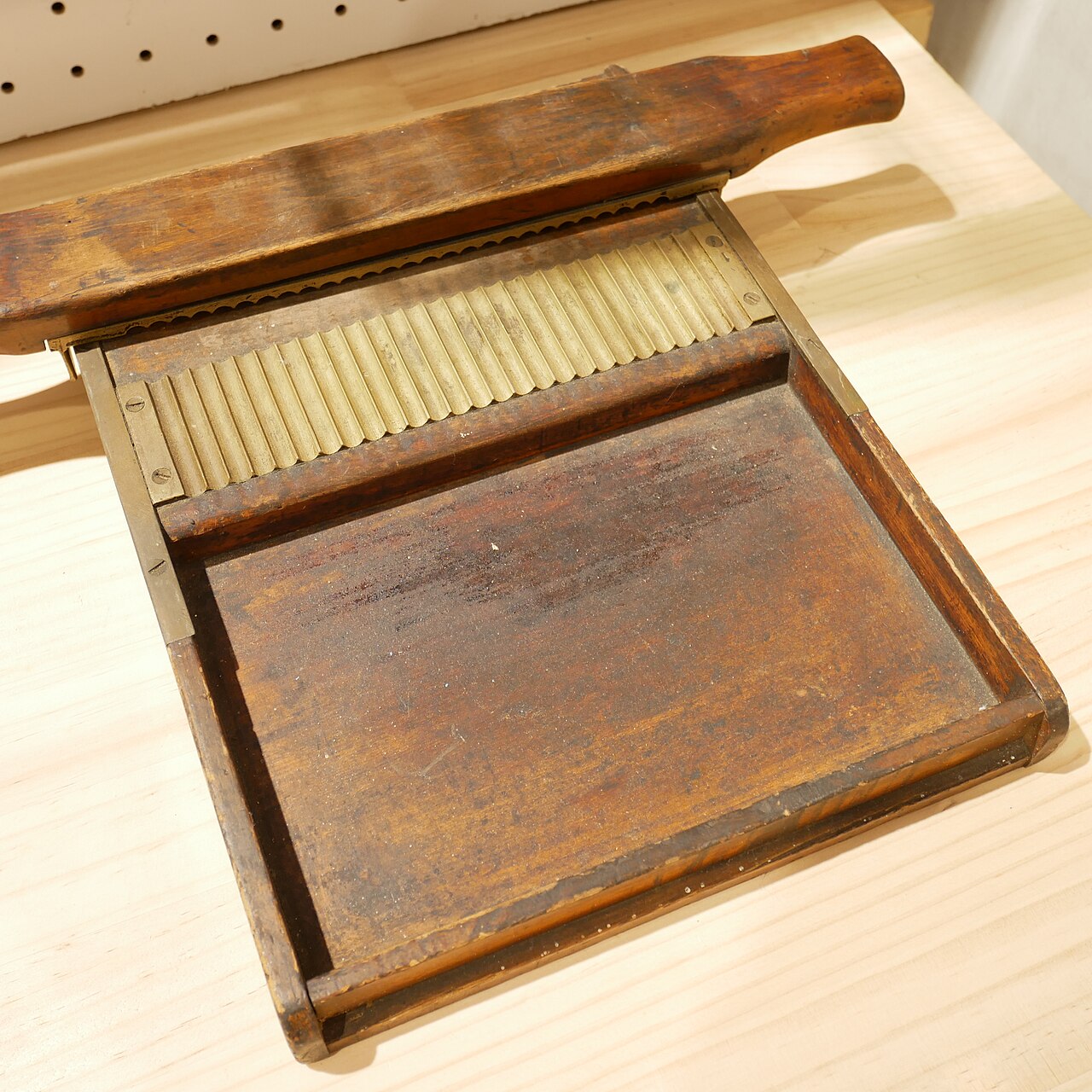
A pill-rolling machine at a historic Chinese herbal apothecary in Dadaocheng, Taipei — a representative image of the world of traditional medicine Maomao trained in, not a scene from the series. Photo: 氏子, CC BY-SA 4.0, via Wikimedia Commons.
薬屋のひとりごと (Kusuriya no Hitorigoto), published in English as The Apothecary Diaries, is a mystery and palace-drama series that in early 2026 was voted Japan's single favorite 漫画 in Oricon's annual readers' poll — narrowly edging out the reigning champion Sōsō no Frieren and leaving even One Piece far behind in the rankings. Over 10,000 readers voted, choosing from a shortlist of 2025's best-selling titles, and roughly 81% of the series' votes came from women, a striking figure for a story that began life as an obscure web novel.
The story follows Maomao, a sharp-tongued, 毒-obsessed young 薬師 (apothecary) from a red-light district who is kidnapped and sold into servitude inside a fictional emperor's 後宮 — the walled "rear palace" where hundreds of consorts and their attendants live, cut off from the outside world. All Maomao wants is to serve out her contract quietly and go home. But when infant princes in the palace start sickening under suspicious circumstances, her habit of muttering diagnoses under her breath gets her noticed — and dragged into one poison-laced mystery after another.
Premise
Maomao's gift is deduction through pharmacology: she reads symptoms, food, cosmetics, and incense the way a detective reads footprints and alibis. Early in the series she's promoted from laundry maid to unofficial poison taster for the emperor's favored 妃 (consort), Gyokuyou, using her knowledge of 薬草 (medicinal herbs) and toxins to protect the rear palace's most vulnerable residents. Her insight repeatedly exposes plots that look like curses or coincidences to everyone else but are, to Maomao, textbook cases of poisoning, contaminated water, or environmental illness.
She's aided — and endlessly needled — by Jinshi, a strikingly beautiful high-ranking official who oversees the rear palace in his role as a 宦官 (eunuch attendant). Jinshi quickly recognizes Maomao's abilities and keeps pulling her out of the laundry room and into palace intrigue, all while an unspoken tension builds between the two. Rounding out the cast are Gyokuyou's sharp 侍女 (lady-in-waiting) Hongniang, the mild-mannered strategist eunuch Gaoshun, and later Lihaku, a soldier who becomes one of Maomao's few genuine friends outside the palace walls.
From Web Novel to Global Hit
The series began in 2011 as a free web novel by author Natsu Hyūga (日向夏), posted chapter by chapter on the fan-fiction site Shōsetsuka ni Narō. Publisher Shufunotomo picked it up in 2012, first as a single novel and then, from 2014, as an ongoing light novel series illustrated by Touko Shino. In 2017 it received two separate manga adaptations: an artist known as Nekokurage began the main series in Square Enix's Big Gangan, while Itsuki Nanao launched a parallel adaptation, Maomao's Notes from the Inner Palace, in Shogakukan's Sunday Gene-X.
It was the 2023 anime adaptation, produced by OLM, that turned a solidly popular manga into a cultural phenomenon — praised for its meticulous mystery plotting, lush production, and refusal to rush its slow-burn central relationship. A second season followed in 2024, and the anime's success sent both the light novels and Nekokurage's manga rocketing up Japan's sales charts, introducing millions of new readers to a story that had quietly built an audience for over a decade.
Why It's Trending Now
Oricon's 2026 "Overall Recommended Manga Ranking" polled more than 10,000 readers on their favorite titles from a shortlist of 2025's best-sellers. The Apothecary Diaries took first place with 1,200 votes, narrowly ahead of Sōsō no Frieren (1,118 votes) and Spy × Family (831 votes) — a striking result for a series that built its audience almost entirely through word of mouth and streaming rather than a flagship weekly magazine serialization.
Key Terms and Characters
| Term | Reading | Meaning |
|---|---|---|
| 後宮 | こうきゅう | the rear palace — the secluded quarters where imperial consorts and their staff live |
| 妃 | きさき | consort; imperial concubine |
| 宦官 | かんがん | eunuch; a castrated male palace official, historically trusted with access to the women's quarters |
| 薬師 | くすし | apothecary; herbal pharmacist |
| 毒 | どく | poison — the series' central plot device and Maomao's specialty |
| 侍女 | じじょ | lady-in-waiting; female attendant to a noblewoman |
| 密偵 | みってい | spy; secret agent — a role Maomao is eventually drawn into |
| 陰謀 | いんぼう | conspiracy; plot |
The story is set in a fictional country modeled loosely on imperial China, so none of these terms describe real Japanese court positions — they're borrowed vocabulary that would have applied to a Chinese-style bureaucracy, used here inside a Japanese-language story.
Cultural Context: A "China" That Isn't Quite China
One of the more distinctive things about The Apothecary Diaries to non-Japanese readers is that a Japanese author, writing primarily for a Japanese audience, chose to set the story in an unnamed empire that strongly resembles historical China — likely a composite of Tang- and Ming-dynasty aesthetics — rather than Japan's own imperial past. This is a long-standing convention in Japanese fiction: building a fantasy or historical-flavored setting that evokes China without naming it lets the author borrow the visual and political grammar of Chinese court dramas (rank systems, eunuch officials, harem politics) while remaining free to invent geography, history, and rules as the plot demands.
That framework lets The Apothecary Diaries blend genres that rarely share space in Western media: a fair-play mystery procedural in the vein of Detective Conan (名探偵コナン), an accuracy-minded medical and forensic drama built on real historical pharmacology and toxicology, and a slow courtly romance, all wrapped inside palace-conspiracy stakes. The show's popularity also reflects a broader trend visible across Oricon's 2026 results: several of the top-ranked titles, including Frieren (葬送のフリーレン) and Delicious in Dungeon (ダンジョン飯), are series that built momentum gradually through manga and web serialization rather than being flagship weekly Shōnen Jump franchises — evidence that Japan's most-loved manga today are increasingly discovered through streaming anime and word of mouth rather than magazine sales alone.
Related Reading
Fans of the palace-mystery format may also enjoy 名探偵コナン for its mystery-of-the-week structure, or ダンジョン飯 as another manga-turned-breakout-anime that built its audience the same slow-burn way.
Related Dictionary Words
medicine; pharmaceuticals; (legal) drugs; pill; ointment; salve
poison; toxicant
inner palace (reserved for women); harem; seraglio
princess; consort
eunuch
lady attendant; female servant; lady's maid; waiting maid
doctor
spy; secret agent
red-light district; prostitution quarter; geisha quarter
plot; intrigue; scheme
medicinal herb
emperor (of Japan); mikado