イエロー・マジック・オーケストラ
Ierō Majikku Ōkesutora (YMO)The pioneering Japanese electronic trio of Haruomi Hosono, Ryuichi Sakamoto, and Yukihiro Takahashi, whose 1978 fusion of synthesizers, sampling, and pop hooks helped invent synth-pop, techno, and video game music.
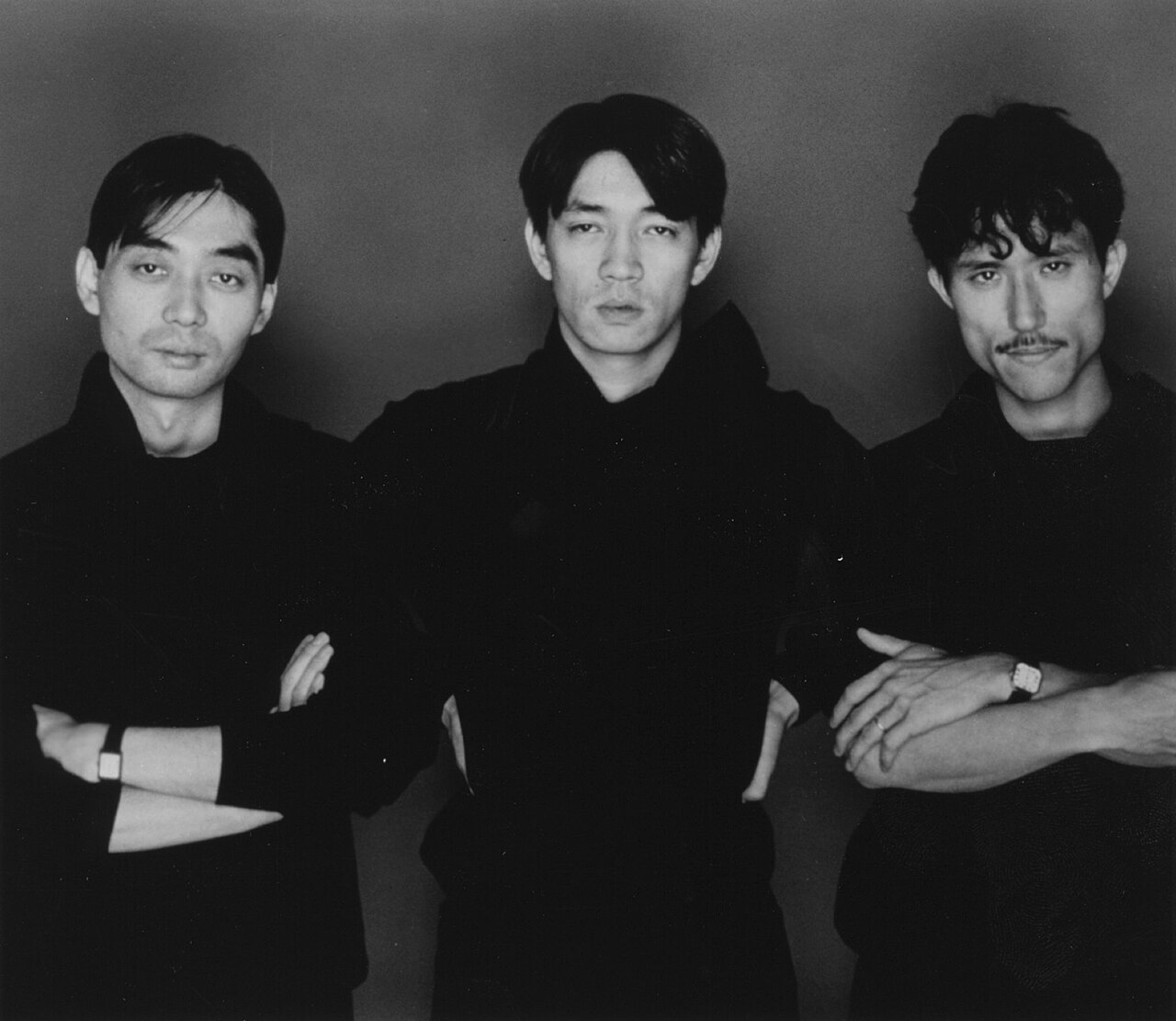
Yellow Magic Orchestra in a 1981 publicity photo distributed by A&M Records for the group's US releases. Photograph by Kenji Miura. Public domain (uncopyrighted US publicity still), via Wikimedia Commons.
Meaning
Yellow Magic Orchestra (イエロー・マジック・オーケストラ, commonly abbreviated YMO) was a Japanese 電子音楽 trio formed in Tokyo in 1978 by 作曲家 Haruomi Hosono (細野晴臣), keyboardist and film composer Ryuichi Sakamoto (坂本龍一), and drummer/vocalist Yukihiro Takahashi (高橋幸宏). Built almost entirely around synthesizers, sequencers, and — years before it was common practice — digital sampling and computer programming, YMO turned studio machinery into a pop instrument. The group is widely regarded as an 元祖 (originator) of synth-pop and techno, and its members' later solo and collaborative work shaped ambient, video game, and film music for decades afterward.
The band's name plays on the exoticized "Yellow Peril" stereotype of East Asians in Western pop culture — Hosono deliberately reclaimed and satirized it, presenting the trio as slick, deadpan technicians rather than a novelty act, even as their early promotion leaned into playful Orientalist imagery for Western audiences.
Sound and Innovations
YMO's self-titled 1978 debut album fused disco and exotica arrangements with early digital synthesizers (the Roland MC-8 Microcomposer, Korg and Moog synths) and one of the first uses of a computer sequencer to program an entire pop record. Later albums pushed further:
| Album | Year | Notable innovation |
|---|---|---|
| Yellow Magic Orchestra | 1978 | Sequenced synth-pop debut; reworked "Firecracker" became a US club hit |
| Solid State Survivor | 1979 | Breakout in Japan; "Rydeen" and "Technopolis" became genre-defining singles |
| BGM | 1981 | Early use of the LinnDrum-style サンプリング and darker, more experimental production |
| Technodelic | 1981 | Built around a custom PCM digital sampler, years ahead of mainstream sampling technology |
| Naughty Boys | 1983 | Polished new-wave sound before the group's first breakup |
The trio also popularized the term テクノポップ ("technopop") in Japan and directly influenced early hip-hop and electro through Afrika Bambaataa's use of a "Firecracker"-style riff, as well as UK synth-pop acts who cited YMO as a reference point.
Usage
In Japanese conversation and music writing, "YMO" functions like a genre marker as much as a band name — used to describe a lineage, not just three musicians.
YMOはテクノポップの元祖と言われている。 YMO wa tekunopoppu no ganso to iwarete iru. "YMO is said to be the originator of technopop."
坂本龍一はYMO解散後、映画音楽の分野で世界的に評価された。 Sakamoto Ryūichi wa YMO kaisan-go, eiga ongaku no bun'ya de sekaiteki ni hyōka sareta. "After YMO 解散, Ryuichi Sakamoto earned worldwide acclaim in the field of film scoring."
Cultural Context
YMO formed at a moment when Japan's consumer electronics industry — Roland, Korg, Yamaha, Casio — was beginning to lead the world in synthesizer and computer technology, and the band both showcased and satirized that identity, calling their approach "exotica for the future." Domestically, YMO's arrival on national television (including a famous 1980 New Year's Eve Kōhaku Uta Gassen appearance) helped move electronic and computer-driven music from the avant-garde into mainstream Japanese pop, laying groundwork for later J-Pop production, 渋谷系 (Shibuya-kei), and the digitally produced idol and ボーカロイド music of subsequent decades.
The trio's influence also runs directly into video games: YMO members and their studio techniques fed into the FM-synth aesthetic that would define 1980s arcade and console soundtracks, and "Rydeen" and "Technopolis" remain touchstones cited by chiptune and video-game composers worldwide. Outside Japan, YMO is frequently credited alongside Kraftwerk as a foundational influence on electro, techno, and synth-pop, and their catalog experienced a major streaming-era revival in the 2010s–2020s as digital crate-diggers connected it to シティポップ and vaporwave aesthetics.
Breakups, Reunions, and Legacy
YMO officially disbanded ("sanpaku" — technically a hiatus called "scattering," 散開) in 1984 after a farewell tour and film, though the three members continued collaborating individually and periodically reunited — as "YMO" for one-off shows in 1993, and later performing together informally as Human Audio Sponge and Sketch Show in the early 2000s before a formal "HASYMO"/YMO reunion around 2007–2008.
All three members went on to major solo careers: Hosono as a genre-hopping producer credited with pioneering city pop and ambient "environmental music"; Sakamoto as an Academy Award-winning film composer (The Last Emperor, The Revenant) and globally celebrated solo artist; and Takahashi as a solo pop artist, session drummer, and fashion figure. Ryuichi Sakamoto died of cancer in March 2023, and Yukihiro Takahashi died the following January 2023, effectively closing the group's history and prompting an outpouring of tributes and renewed international listening across streaming platforms. Haruomi Hosono remains active as the group's sole surviving member.
Related Terms
- テクノポップ (tekunopoppu) — "Technopop," the Japanese term for synth-driven pop that YMO helped define
- シティポップ (city pop) — The polished, disco- and funk-inflected Japanese pop genre Hosono helped pioneer alongside his work with YMO
- 渋谷系 (Shibuya-kei) — The 1990s Tokyo pop scene that treated YMO as a key reference point
- 散開 (sankai) — "Scattering," the term YMO used instead of "breakup" for their 1984 hiatus
Related Dictionary Words
music
electronic music
worldwide; global; international; universal
originator; pioneer; inventor; founder
musical instrument
composer
breaking up (a meeting, gathering, etc.); dispersal (e.g. of a crowd)
reforming; reuniting; getting back together (of a band, etc.)
death; decease; passing away
legend; folklore; tradition
debut; doing something for the first time
techno-pop
synthesizer; synthesiser
sampling; taking a sample