駅弁
ekibenRegional specialty bento boxes sold at train stations across Japan, prized as a travel ritual and a way to taste local ingredients from the platform or aboard the train.
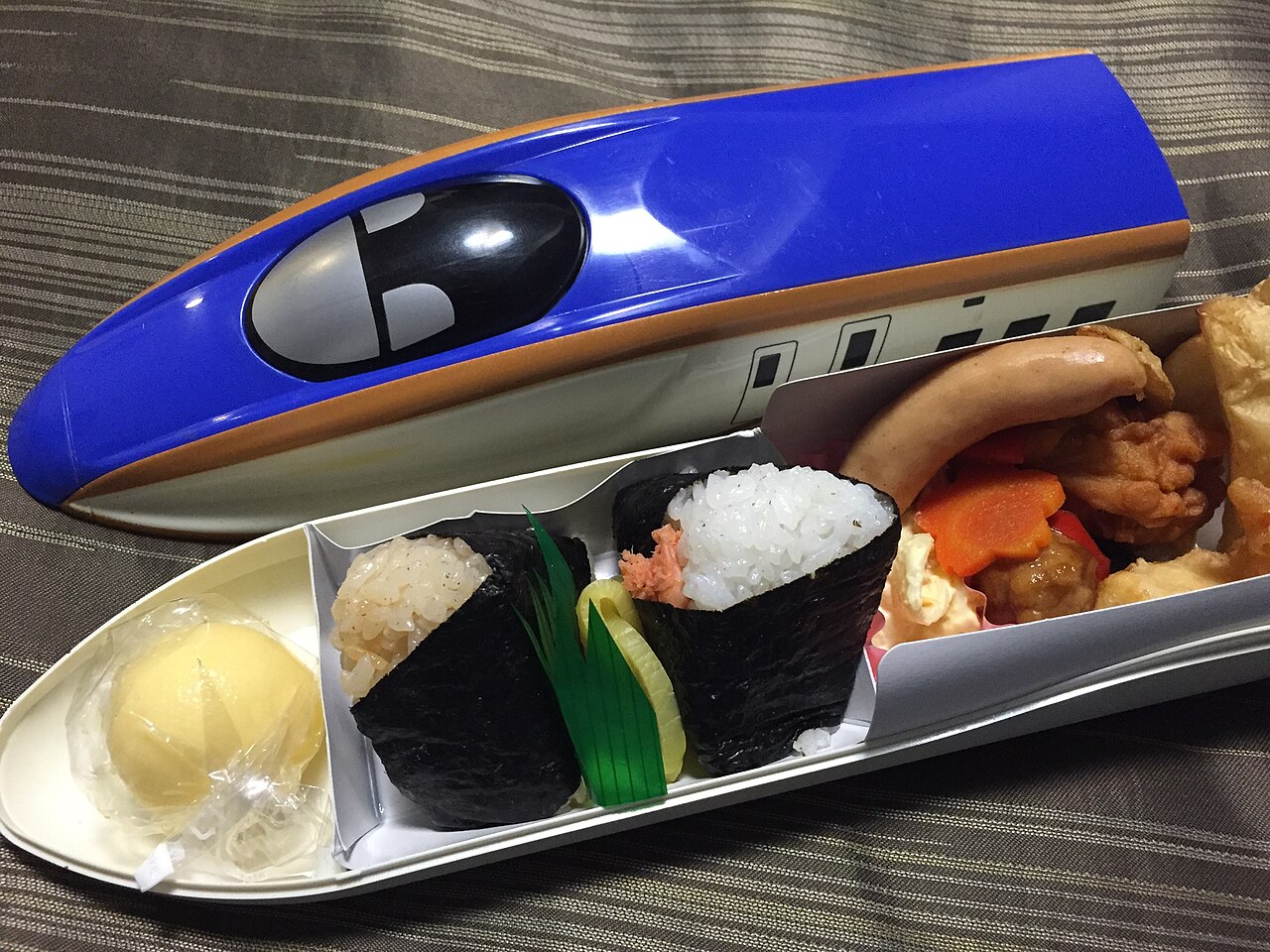
A typical ekiben, packed with rice and an assortment of regional dishes. Photo: masataka muto from japan, CC BY-SA 2.0, via Wikimedia Commons.
Meaning
駅弁 (えきべん, ekiben) is a portmanteau of 駅 (eki, "station") and 弁当 (bentō, "boxed meal"). It refers specifically to bento sold at or near train stations for travelers to eat on their journey — as opposed to a bento made at home or bought at a convenience store. While an ordinary bento can be almost anything, an ekiben is defined by its context: it is meant to be bought quickly on a platform or in a station concourse, carried onto a train, and eaten while the scenery rolls by.
What makes ekiben culturally distinct is regionality. Nearly every major station along Japan's rail network — and especially along the Shinkansen bullet-train lines — sells its own signature box built around local ingredients and specialties (地域の特産品, chiiki no tokusanhin), so that buying an ekiben is also a way of sampling a region's food culture without leaving the station.
Usage
Ekiben are typically bought moments before boarding a long-distance 列車 (ressha, train) or 新幹線 (shinkansen), either from a station kiosk, a walking vendor on the platform, or — increasingly — a dedicated ekiben shop or department-store food fair.
新幹線に乗る前に、駅弁を買いました。 Shinkansen ni noru mae ni, ekiben o kaimashita. "I bought an ekiben before boarding the Shinkansen."
この駅弁は牛肉がたっぷり入っていて美味しい。 Kono ekiben wa gyūniku ga tappuri haitte ite oishii. "This ekiben is delicious, packed with beef."
Some well-known regional examples:
| Station / Region | Ekiben | Notable feature |
|---|---|---|
| Yokokawa, Gunma | 峠の釜めし (Tōge no Kamameshi) | Rice and toppings served in a small reusable ceramic (陶器) pot |
| Kobe, Hyōgo | 神戸牛べんとう | Made with prized Kobe beef (牛肉) |
| Hokuriku (Fukui / Toyama / Ishikawa) | かにめし / 越前かにめし | Built around local crab (蟹) |
| Yokohama | シウマイ弁当 | Miniature shūmai dumplings alongside rice and sides |
| Sendai | 網焼き牛たん弁当 | Grilled beef tongue, a Sendai specialty |
Each box is essentially a portable advertisement for its home region, and the packaging — wooden trays, paper wrappers, or the Tōge no Kamameshi's collectible ceramic jar — is often part of the appeal.
Cultural Context
The first ekiben is generally credited to Utsunomiya Station in Tochigi Prefecture, which in 1885 began selling a simple meal of two rice balls (onigiri) wrapped in bamboo leaf with pickled daikon, aimed at passengers on the newly opened railway line. As Japan's national rail network expanded through the late Meiji and Taishō eras, stations up and down the country began competing to offer their own distinctive box, turning what began as travel food into a showcase of regional 名物 (meibutsu, local specialties). The custom grew alongside the railway itself, and by the postwar Shinkansen era ekiben had become inseparable from the experience of long-distance train travel.
Buying an ekiben on the プラットホーム (platform) just before departure, then opening it once the train pulls away and settling in to watch the 車窓 (shasō, view from the train window) go by, is a small but well-established ritual in Japanese travel culture — comparable to how people elsewhere might buy a coffee and snack for a flight, except the box itself is treated as a destination-worthy food experience rather than an afterthought.
Ekiben have also spawned their own enthusiast culture. Some rail fans and food lovers make a hobby of "ekiben hunting," deliberately routing trips to try boxes from stations they haven't visited, and collecting the empty containers (particularly ceramic ones like the Tōge no Kamameshi jar) as souvenirs. Department stores capitalize on this nationwide appetite with annual "ekiben fairs" (駅弁大会, ekiben taikai), most famously the one held every January at Keio Department Store in Shinjuku since 1966, where dozens of stations' ekiben are flown or shipped in and sold side by side — letting shoppers in Tokyo taste a box from Hokkaido or Kyushu without ever boarding a train. These fairs, alongside magazine and TV rankings that function like an unofficial "Ekiben Grand Prix," have turned ekiben into a genre of food tourism and popular culture in its own right, distinct from ordinary bento.
Ekiben vs. Ordinary Bento
| Ekiben | Ordinary bento | |
|---|---|---|
| Where sold | Train stations, platforms, station-linked shops | Home, convenience stores, restaurants, depachika |
| Purpose | Eating during train travel | Everyday meal (lunch, outing, school) |
| Identity | Tied to a specific station/region and its local ingredients | Generic or personal |
| Packaging | Often distinctive (wood, ceramic, regional design) as part of the appeal | Usually plain plastic or lacquered box |
| Collectability | Actively collected/hunted by enthusiasts | Not typically collected |
Related Dictionary Words
boxed lunch bought at a station (often a local specialty)
railway station; train station
bento; Japanese box lunch
Shinkansen; bullet train
train; railway train
travel; trip; journey
famous product; special product; speciality; specialty
pottery; earthenware; ceramics; (soft-paste) porcelain; china
beef
crab
platform
area; region; district; locality
local specialty; special product (of a region)
train window; car window
scenery; scene; landscape
lunch box; bento box