浦沢直樹
Urasawa NaokiAcclaimed Japanese manga artist behind Monster, 20th Century Boys, and Pluto, celebrated as one of the medium's greatest living storytellers for his intricate, suspenseful thrillers.
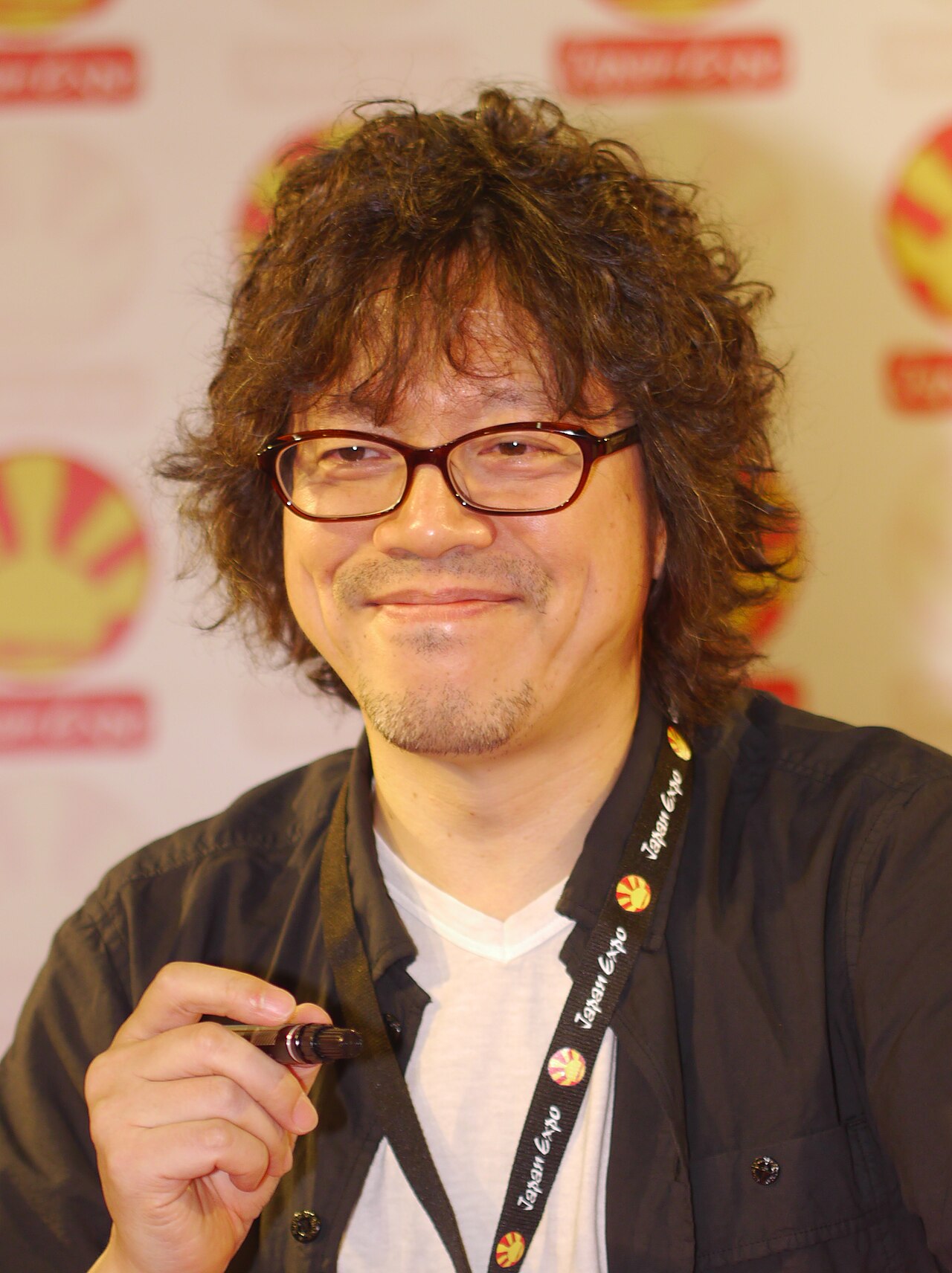
Naoki Urasawa in 2012. Photo: Yves Tennevin, CC BY-SA 3.0, via Wikimedia Commons.
Meaning
Naoki Urasawa (浦沢直樹, Urasawa Naoki, born January 2, 1960) is a Japanese 漫画家 (mangaka) widely regarded as one of the greatest living creators of 漫画. Working almost exclusively in intricately plotted サスペンス (suspense) and thriller storytelling, he is best known for the psychological thriller Monster (モンスター), the apocalyptic epic 20th Century Boys (20世紀少年), the Astro Boy reimagining Pluto (プルートウ), and the judo manga Yawara! (YAWARA!). His work is distinguished by novelistic pacing, richly drawn ensemble casts, cinematic panel composition, and a signature ability to sustain slow-burn dread and mystery across hundreds of chapters without losing narrative control.
Urasawa is unusual among top-tier mangaka in that his reputation rests almost entirely on critical and peer respect rather than the kind of mass merchandising franchise that drives series like One Piece or Dragon Ball — he is often described as a "manga artist's manga artist," as influential on other creators as he is popular with readers.
Career
Urasawa was born in Tokyo and grew up idolizing 手塚治虫, whose humanist storytelling and cinematic technique would shape his own style. He debuted professionally in 1983 while still a university student, and spent the 1980s drawing a range of genre work — including the soccer manga Beta!! and, notably, Yawara! (1986–1993), a judo comedy-drama that became a mainstream hit and was adapted into a long-running anime. Yawara! established Urasawa as a top-tier commercial talent well before the darker, more literary phase of his career began.
That turn came with Pineapple Army and especially Master Keaton (1988–1994, written with Hokusei Katsushika/Takashi Nagasaki), a globe-trotting insurance-investigator drama that showcased his growing interest in intricate, research-heavy plotting. It was Monster (1994–2001), serialized in Big Comic Original, that transformed him into a genre-defining figure: a sprawling, Cold War–haunted thriller about a Japanese neurosurgeon in Germany who saves a boy's life only to discover, years later, that the boy has grown into a serial killer. Monster won the 手塚治虫文化賞 manga award and was adapted into a 74-episode anime (2004–2005) and, in 2025, a live-action Netflix series.
Urasawa followed Monster with 20th Century Boys (2000–2006) and its sequel 21st Century Boys (2006–2007), an even larger-scale conspiracy epic about a group of childhood friends who must stop a cult leader from enacting a doomsday plan they unknowingly invented as kids. The series won the Eisner Award for Best Writer/Artist in 2011 and the Angoulême International Comics Festival's Prix Intergénérations, and was adapted into a live-action film trilogy (2008–2009).
In 2003 Urasawa began Pluto (2003–2009), a reimagining of Osamu Tezuka's 1964 Astro Boy story arc "The Greatest Robot on Earth," produced with Tezuka's own studio and writer Takashi Nagasaki. Pluto recast Tezuka's science-fiction detective story as a meditation on hatred, memory, and what separates humans from machines, and won an Eisner Award (2011) and the 手塚治虫 name's own culture award, closing a circle from the artist he grew up idolizing. Netflix produced a acclaimed anime adaptation of Pluto in 2023.
Since then Urasawa has continued to produce ambitious long-form work, including Billy Bat (2008–2016, a conspiracy thriller spanning decades of 20th-century history) and Asadora! (2018–2023, following a girl's life from World War II Japan into a science-fiction future). He remains one of the very few manga artists to have had extended, in-depth English-language interviews and lecture series (including at the Louvre and Angoulême) devoted specifically to his creative process.
Signature Style
Urasawa's manga are defined less by a visual gimmick than by structural mastery:
- Slow-burn suspense — Urasawa is famous for planting a mystery, a hidden identity, or a ticking-clock threat early and then patiently deferring the payoff across dozens or hundreds of chapters, using cliffhanger chapter endings to sustain tension.
- Ensemble casts and shifting protagonists — his stories frequently follow large casts across multiple timelines and locations, with the point-of-view character sometimes changing entirely partway through a series.
- Moral ambiguity over clear villains — antagonists like Monster's Johan Liebert are less cartoonish evil masterminds than products of trauma and ideology, forcing readers to sit with 悪 (evil) as something human rather than supernatural.
- Cinematic panel work — wide establishing shots, decompressed pacing, and expressive, realistically proportioned faces give his pages a filmic quality; he has cited Western cinema, particularly directors like Stanley Kubrick, as a major influence.
- Historical and geopolitical texture — many works are grounded in real 20th-century history (the fall of the Berlin Wall, Cold War espionage, postwar Japan, cult movements), lending his thrillers a documentary weight unusual for the genre.
- Recurring themes of identity and memory — questions of who someone really is beneath a fabricated past recur across Monster, 20th Century Boys, Pluto, and Billy Bat, often tied to 記憶 (memory) as an unreliable, manipulable thing.
Major Works
| Title | Serialized | Premise |
|---|---|---|
| Yawara! | 1986–1993 | A girl secretly trained to be a judo prodigy by her grandfather tries to live a normal teenage life instead. |
| Master Keaton | 1988–1994 | An Oxford-trained archaeologist and former SAS soldier works as an insurance investigator, solving mysteries across the world. |
| Monster | 1994–2001 | A Japanese neurosurgeon in Germany hunts down a former patient who has grown into a manipulative serial killer. |
| 20th Century Boys / 21st Century Boys | 2000–2007 | Childhood friends must stop a cult leader from realizing a doomsday scenario they invented as a game decades earlier. |
| Pluto | 2003–2009 | A reimagining of Tezuka's Astro Boy arc "The Greatest Robot on Earth" as a detective story about a robot investigating the murders of the world's most advanced robots. |
| Billy Bat | 2008–2016 | A manga artist discovers his own comic-book creation may be hiding a secret that spans centuries of history. |
| Asadora! | 2018–2023 | A girl's life story runs from World War II-era Japan through a science-fiction future involving giant kaiju-like creatures. |
Cultural Context and Influence
Urasawa emerged in an industry long dominated by 少年 (shōnen) action and fantasy, and by working primarily in seinen thriller and drama magazines like Big Comic Original and Big Comic Spirits, he helped prove that dense, adult-oriented, slow-building suspense manga could achieve mainstream commercial success on the scale of shōnen blockbusters. His success paved the way for other literary, thriller-oriented mangaka to find wide audiences both in Japan and internationally, and his work is frequently cited by Western comic and television writers as an influence on prestige serialized storytelling.
Urasawa has won the 手塚治虫文化賞 (Osamu Tezuka Culture Award) multiple times — the manga industry's most prestigious prize, named for the artist he considers his greatest inspiration — as well as the Shogakukan Manga Award, the Kodansha Manga Award, and two Eisner Awards (the top honor at the American comics industry's Comic-Con International). Monster, 20th Century Boys, and Pluto have each been adapted into anime and/or live-action, and Netflix's 2023 Pluto anime and 2025 Monster live-action series introduced his work to large new global audiences.
Beyond his own manga, Urasawa is known for his deep engagement with craft: he hosted Manben (漫勉), an NHK documentary series filming other famous mangaka at their drawing desks in real time, and has spoken extensively about how his early exposure to 手塚治虫's work shaped his belief that manga could tackle serious, humanist, even philosophical questions while remaining gripping popular entertainment — a synthesis widely seen as the throughline of his entire career.
Related Terms
- 原作 (gensaku) — original work; several Urasawa titles credit a co-writer (Takashi Nagasaki) for story collaboration
- 劇画 (gekiga) — the gritty, realistic "dramatic pictures" tradition of adult-oriented manga that influenced Urasawa's tone
- 手塚治虫文化賞 (Tezuka Osamu Culture Award) — Japan's top manga honor, awarded to Urasawa multiple times
Related Dictionary Words
cartoon; comic; comic strip; manga
cartoonist; comic book artist; manga artist; manga author; mangaka
reasoning; inference; deduction
suspense (esp. in a film, novel, etc.)
genius; prodigy; natural gift
plot; intrigue; scheme
justice; right; righteousness
evil; wickedness
boy
memory; recollection; remembrance
masterpiece; masterwork