水木しげる
Mizuki ShigeruThe manga artist and self-taught folklorist who survived World War II with the loss of his left arm, created GeGeGe no Kitaro, and became the person most responsible for how modern Japan visualizes yokai.
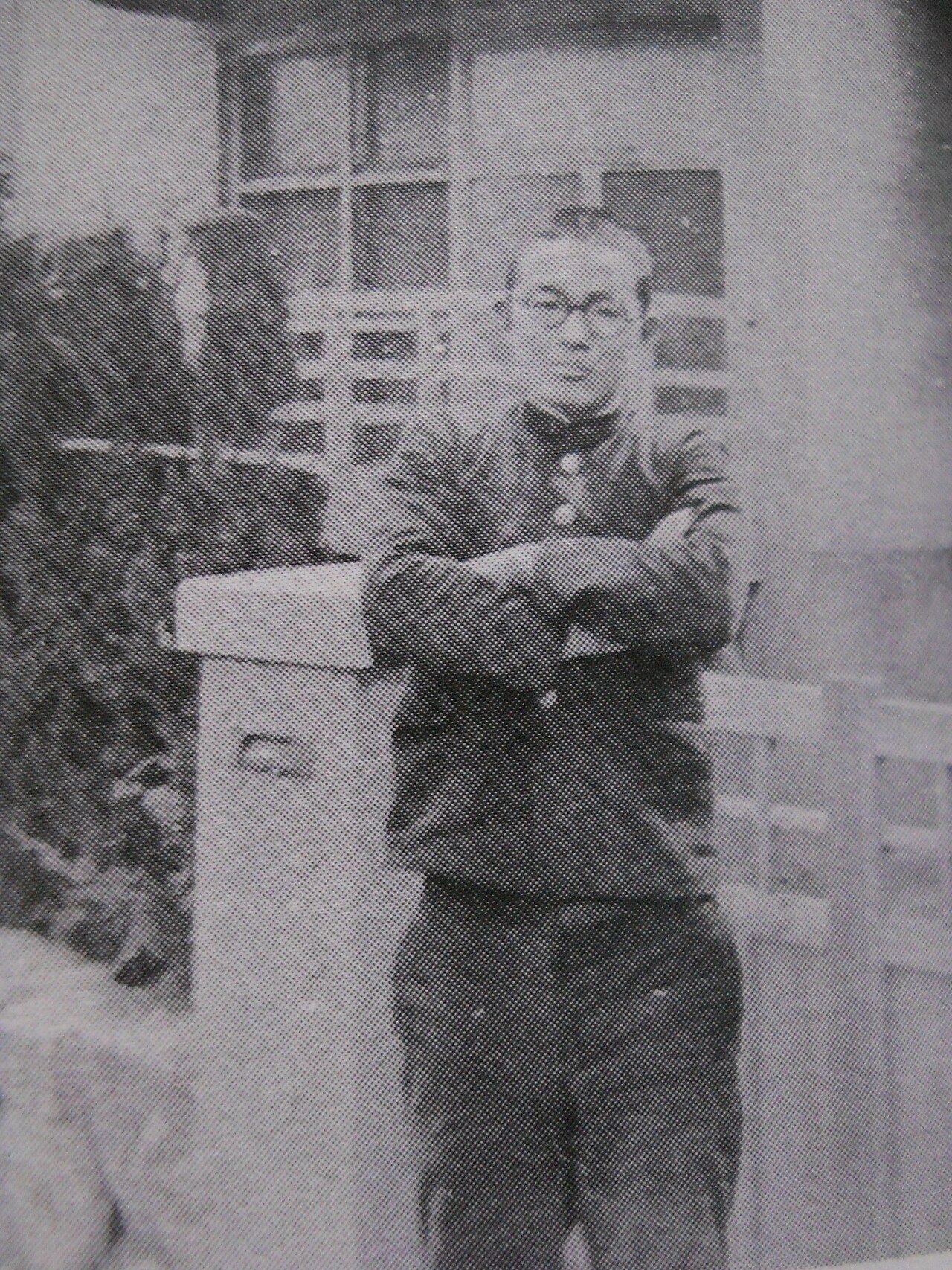
Shigeru Mizuki at around age 18, photographed circa 1940 — a few years before he lost his left arm in the Pacific War. Public domain, via Wikimedia Commons.
水木しげる (Mizuki Shigeru, March 8, 1922 – November 30, 2015) was a 漫画 artist, illustrator, and self-taught folklorist who spent much of his 70-year career tracking down, cataloguing, and drawing Japan's 妖怪 (yōkai) — the ghosts, monsters, and nature spirits of regional folklore. His signature series ゲゲゲの鬼太郎 (GeGeGe no Kitarō) turned obscure village legends into household names across Japan, and his illustrated encyclopedias of yōkai gave nearly every artist who came after him a visual vocabulary to draw from. He is widely regarded as the person most responsible for how modern Japan pictures its supernatural folklore.
Meaning
Mizuki was born Mura Shigeru (武良茂) in Osaka and raised in the port town of Sakaiminato, Tottori Prefecture, on the Sea of Japan coast. As a child he was informally cared for by an elderly local woman nicknamed のんのんばあ (Nonnonba), who filled his head with stories about yōkai, household gods, and the spirits believed to inhabit rivers, trees, and old objects — an oral folklore tradition Mizuki would spend the rest of his life trying to preserve on paper.
That project was interrupted by 戦争. Drafted into the Imperial Japanese Army in 1943 and shipped to the New Britain campaign in present-day Papua New Guinea, Mizuki survived Allied air raids that killed most of his unit, contracted malaria, and in 1943 lost his left arm after an air raid at his post near Rabaul. While recovering, he was cared for by local Tolai villagers, who nursed him back to health and reportedly invited him to stay and live among them permanently — an offer his commanding officers refused to allow. He returned to Japan in 1946, taught himself to draw and eat left-handed, and later wrote candidly and repeatedly about the absurdity and horror of the war for the rest of his career.
GeGeGe no Kitarō and the Postwar Career
戦後 Japan, Mizuki struggled for years to make a living — running a candy shop, working odd jobs, and drawing kamishibai (street paper-theater illustration) before breaking into 貸本 (kashihon), the cheap paperback rental-library market that also launched contemporaries like Osamu Tezuka. In 1960 he adapted a kamishibai horror story into Hakaba Kitarō (墓場鬼太郎, "Kitarō of the Graveyard"), a grim tale about the last survivor of a clan of ghosts living in a cemetery.
When the story moved to mainstream 出版 in Weekly Shōnen Magazine in 1967, it was retitled ゲゲゲの鬼太郎 and softened into a stranger-but-friendlier adventure series: Kitarō, a one-eyed yōkai boy, along with his father reincarnated as a talking eyeball (Medama Oyaji), the sneaky Nezumi Otoko (Rat Man), and Neko Musume (Cat Girl), mediate conflicts between the human and yōkai worlds — sometimes protecting people from malevolent spirits, sometimes protecting spirits from thoughtless or greedy humans. The manga became a massive hit and has been adapted into anime television series roughly once per decade since 1968 (1971, 1985, 1996, 2007, 2018, and a 2023 theatrical prequel), introducing new generations of Japanese children to yōkai 民話 their grandparents grew up with.
鬼太郎は妖怪と人間の間に立つ、不思議な存在だ。 Kitarō wa yōkai to ningen no aida ni tatsu, fushigi na sonzai da. "Kitarō is a strange being who stands between the world of yōkai and the world of humans."
The Folklorist: Cataloguing a Nation's Ghosts
What distinguished Mizuki from other horror-manga artists was his obsessive, near-academic approach to research. He traveled across Japan interviewing elderly residents about local legends, cross-referenced Edo-period yōkai scrolls and Meiji-era 民俗学 (folklore studies) texts, and spent decades compiling illustrated reference books — most famously Mizuki Shigeru's Yōkai Encyclopedia (図説日本妖怪大全) — that catalogued thousands of regional spirits, many of which had never been drawn or standardized before. Where earlier ukiyo-e artists like Toriyama Sekien had illustrated yōkai in the 18th century, Mizuki's 20th-century designs became the default modern image for creatures such as the 河童 (kappa, river imp) and countless more obscure figures — the version most Japanese people now picture when they hear a yōkai's name is very often Mizuki's.
He also turned his research and wartime experience toward serious historical work, most notably the eight-volume Comic Shōwa History (コミック昭和史), a graphic-novel account of Japan's 昭和 era — including his own time as a 兵士 — which won the Kōdansha Manga Award's grand prize in 1989 and is still cited as one of the most important nonfiction 作品 ever done in manga form.
Usage
In contemporary Japanese, Mizuki's name is now essentially synonymous with yōkai themselves:
水木しげるのおかげで、妖怪は怖いだけでなく、どこか愛らしい存在になった。 Mizuki Shigeru no okage de, yōkai wa kowai dake de naku, dokoka airashii sonzai ni natta. "Thanks to Shigeru Mizuki, yōkai became not just frightening, but somehow endearing too."
His work is also frequently invoked as the reference point whenever a new 精霊 (spirit) or yōkai character shows up in anime, games, or manga — reviewers and fans routinely compare new supernatural designs to "Mizuki-style" yōkai.
Legacy: Mizuki Shigeru Road
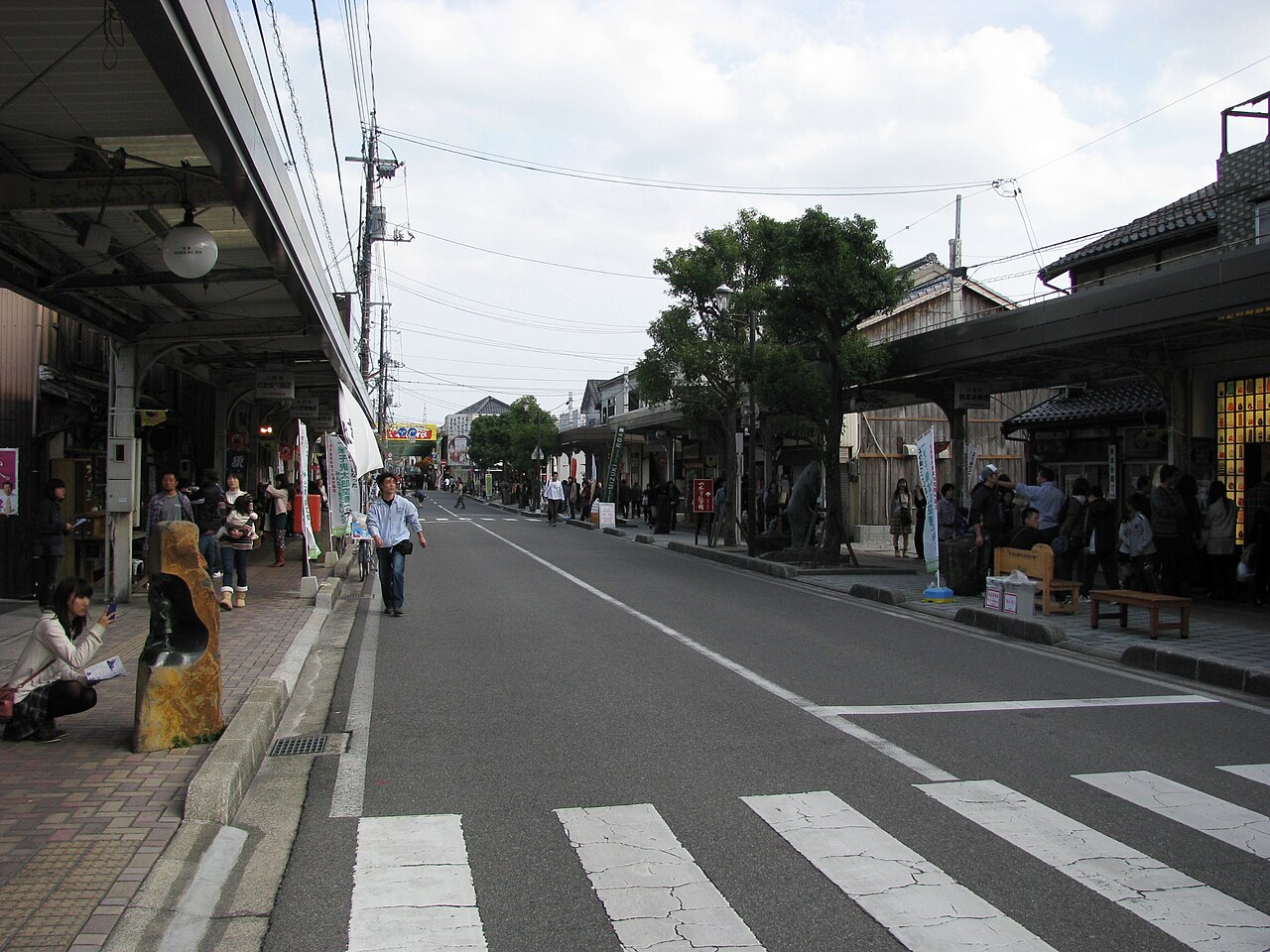
Bronze statues of yōkai characters from GeGeGe no Kitarō line the shopping street of Mizuki Shigeru Road in Sakaiminato, Tottori. Photo: Aimaimyi, CC BY-SA 3.0, via Wikimedia Commons.
Mizuki's 故郷 (hometown) of Sakaiminato has built its entire tourism identity around him. 水木しげるロード (Mizuki Shigeru Road), a roughly 800-meter shopping street running from Sakaiminato Station, is lined with more than 170 銅像 (bronze statues) of characters from GeGeGe no Kitarō and other Mizuki yōkai, along with themed shops, a "Kitarō train" line, and a shrine dedicated to the yōkai themselves. It draws well over a million visitors a year and is one of the most successful character-tourism sites in Japan. The 水木しげる記念館 (Mizuki Shigeru Museum), opened in Sakaiminato in 2003, displays original manuscripts, yōkai figures, and a recreation of his childhood home.
Mizuki continued drawing into his 90s, was named a Person of Cultural Merit by the Japanese government in 2010, and died in 2015 at age 93. His influence runs through nearly every subsequent work built around cataloguing supernatural creatures — from Inuyasha and Natsume's Book of Friends to Yo-kai Watch and the broader "monster encyclopedia" format used across anime, manga, and tokusatsu — and his illustrated designs remain the visual baseline against which nearly every new 妖怪 character in Japanese pop culture is still measured.
Related Terms
| Term | Reading | Meaning |
|---|---|---|
| 妖怪 | yōkai | Ghost, monster, or supernatural creature of folklore |
| 漫画 | manga | Comic, comic strip |
| 民俗学 | minzokugaku | Folklore studies, folkloristics |
| 貸本 | kashihon | Book-lending / rental library |
| 河童 | kappa | Water-dwelling yōkai imp |
| 銅像 | dōzō | Bronze statue |
Related Dictionary Words
ghost; apparition; phantom; spectre; specter; demon; monster; goblin; yōkai
cartoon; comic; comic strip; manga
folklore studies; folkloristics
war
kappa; mythical water-dwelling creature
books for loan
postwar period; period after Second World War
bronze statue
museum
hometown; birthplace; native place; one's old home
Shōwa era (1926.12.25-1989.1.7)
soldier
publication
work (e.g. book, film, painting, composition); piece; production; opus
folk tale; folktale; folk story; folklore
spirit; soul; ghost