スタジオジブリ
sutajio jiburiThe legendary Japanese animation studio founded in 1985 by Hayao Miyazaki, Isao Takahata, and Toshio Suzuki, whose hand-drawn films reshaped animation worldwide and remain a global cultural phenomenon.
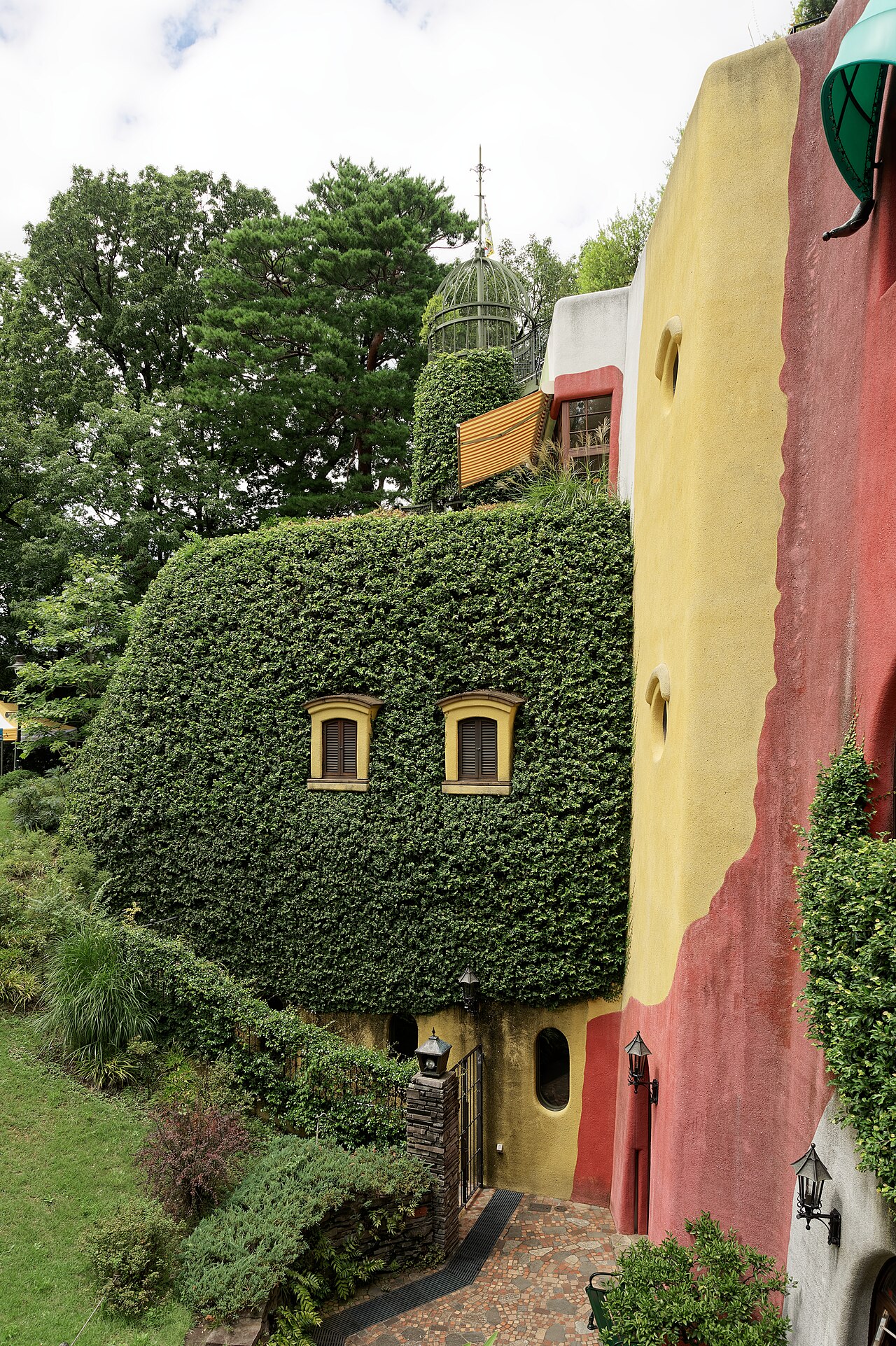
The Ghibli Museum in Mitaka, western Tokyo, designed with input from Hayao Miyazaki and opened in 2001. Photo: Jakub Hałun, CC BY 4.0, via Wikimedia Commons.
スタジオジブリ (Sutajio Jiburi, Studio Ghibli) is Japan's most celebrated アニメ スタジオ, founded in June 1985 by directors Hayao Miyazaki and Isao Takahata alongside producer Toshio Suzuki. Over four decades it has produced more than twenty feature 映画, including My Neighbor Totoro, Spirited Away, and Princess Mononoke, and has become a global institution whose influence extends into museums, theme parks, and even internet meme culture — while remaining almost defiantly committed to hand-drawn craft in an industry that moved to computers decades ago.
Meaning
"Studio Ghibli" refers both narrowly to the production company itself and, more broadly, to the distinctive style and sensibility associated with its films: watercolor-soft backgrounds, painstaking hand-drawn animation, unhurried pacing, morally complex worlds without clear villains, and a recurring reverence for 自然 (nature) and 平和 (peace). The studio's founding 監督 (director) Miyazaki has explained the name as coming from the Italian word for a hot Saharan wind — via the Caproni Ca.309 military aircraft nicknamed Ghibli — reportedly chosen as an ambition to "blow a new wind through the anime industry." The studio's initial funding came from the Tokyo publisher Tokuma Shoten, which backed the venture on the strength of Miyazaki's 1984 film Nausicaä of the Valley of the Wind, made just before Ghibli's official founding.
Unlike many animation houses that function purely as work-for-hire production companies, Ghibli has historically operated more like an auteur-driven studio, built almost entirely around the creative visions of two directors — Miyazaki and the more melancholic, realist Takahata (director of Grave of the Fireflies and The Tale of the Princess Kaguya) — with Suzuki as the producer who kept the business afloat between their infrequent, painstakingly hand-drawn productions.
Notable Works
| Film | Japanese Title | Year | Director |
|---|---|---|---|
| My Neighbor Totoro | となりのトトロ | 1988 | Hayao Miyazaki |
| Grave of the Fireflies | 火垂るの墓 | 1988 | Isao Takahata |
| Kiki's Delivery Service | 魔女の宅急便 | 1989 | Hayao Miyazaki |
| Princess Mononoke | もののけ姫 | 1997 | Hayao Miyazaki |
| Spirited Away | 千と千尋の神隠し | 2001 | Hayao Miyazaki |
| The Tale of the Princess Kaguya | かぐや姫の物語 | 2013 | Isao Takahata |
| The Wind Rises | 風立ちぬ | 2013 | Hayao Miyazaki |
| The Boy and the Heron | 君たちはどう生きるか | 2023 | Hayao Miyazaki |
Totoro, released the same year as Takahata's devastating Grave of the Fireflies on a now-legendary double bill, gave the studio its mascot: the round, sleepy forest 妖怪 has appeared on the company's logo ever since, arguably making it as internationally recognizable a symbol as any Disney or Pixar character. Spirited Away went on to win the Academy Award for Best Animated Feature in 2003 — the first hand-drawn, non-English-language film to do so — and for years held the record as the highest-grossing film in Japanese box-office history. Twenty years later, The Boy and the Heron won Ghibli a second Best Animated Feature Oscar in 2024.
Usage
In everyday Japanese, "ジブリ" functions as a genre and quality marker much the way "Pixar" or "Disney" does in English — used to describe not just the studio's own output but anything with a similar warm, painterly, nostalgic feel:
このアニメ、絵がジブリっぽいね。 Kono anime, e ga Jiburi-ppoi ne. "This anime's art style feels very Ghibli-esque."
子供の頃からジブリ作品を見て育った。 Kodomo no koro kara Jiburi sakuhin o mite sodatta. "I grew up watching Ghibli films since I was a child."
Cultural Context
Studio Ghibli emerged at a moment when Japanese animation was largely seen internationally as a niche, low-budget medium aimed at children or hardcore fans. Its insistence on feature-length, painstakingly hand-drawn films with adult emotional depth — grief and war in Grave of the Fireflies, environmental catastrophe in Princess Mononoke, capitalism and labor in Spirited Away — helped establish Japanese animation as a serious art form capable of rivaling live-action cinema, both domestically and abroad. Its 1996 distribution partnership with The Walt Disney Company for English-language releases (later succeeded by GKIDS in the US) introduced generations of Western audiences to films like Princess Mononoke and Spirited Away, profoundly shaping how anime is perceived outside Japan and directly influencing Western animators, including Pixar's John Lasseter, a vocal Miyazaki admirer.
The studio has also weathered real institutional uncertainty. With Miyazaki and Suzuki both in their eighties and no clear successor willing to run the company (Miyazaki's son, director Goro Miyazaki, repeatedly declined the role), Studio Ghibli sold a controlling 42.3% stake to the broadcaster Nippon Television (Nippon TV) in September 2023 — becoming a subsidiary while both companies pledged to preserve its creative independence and craftsmanship. Miyazaki became chairman emeritus, Suzuki chairman of the board, and Goro Miyazaki a managing director.
Ghibli Museum
The 三鷹の森ジブリ美術館 (Mitaka no Mori Ghibli 博物館, Ghibli Museum) opened in 2001 in Mitaka, western Tokyo, in a 公園 designed almost entirely by Miyazaki himself as a deliberately labyrinthine, non-linear space rather than a conventional exhibition hall — spiral staircases, hidden nooks, a rooftop garden with a life-size robot soldier statue from Castle in the Sky, and a life-size Catbus for young children to climb on. Photography is banned inside, tickets are capped and sold in advance, and it remains one of Tokyo's hardest-to-book attractions.
Ghibli Park
Opened on 1 November 2022 within the grounds of the 2005 World Expo site in Nagakute, Aichi Prefecture, ジブリパーク (Jiburi Pāku, Ghibli Park) is a very different kind of experience from the museum: an open-air park built into existing forest rather than a purpose-built attraction complex, deliberately avoiding roller coasters or thrill rides in favor of walkable, immersive recreations of film settings. It opened in phases — Ghibli's Grand Warehouse, Hill of Youth, and Dondoko Forest in 2022, Mononoke Village in November 2023, and Valley of Witches (featuring Howl's Moving Castle) in March 2024 — and continues to expand, cementing Ghibli's presence as a physical, visitable destination well beyond its film catalog.
The "Ghibli Style" AI Trend
In March 2025, Studio Ghibli's visual style became the center of a massive, unplanned viral moment when OpenAI's updated ChatGPT image generator made it trivially easy to convert any photo into Ghibli-style アニメ art. Social media was flooded with "Ghiblified" selfies, memes, and even news photographs, and OpenAI's own CEO joined in. The trend drew sharp backlash from animation fans and artists, who pointed to a widely circulated 2016 documentary clip in which Miyazaki, shown an AI animation demo, called it "an insult to life itself." The episode — equal parts tribute and controversy — underscored just how instantly recognizable and culturally embedded Studio Ghibli's 世界観 (sekaikan, "worldview"/visual universe) has become worldwide, nearly four decades after its founding.
Legacy
Studio Ghibli's refusal to abandon 手描き (hand-drawn) animation even as the rest of the industry digitized helped preserve traditional animation craft as a commercially and artistically viable art form into the 21st century. Its films are now taught in film schools, screened in retrospectives worldwide, and streamed on Netflix and Max outside Japan and the US. With two Best Animated Feature Oscars, a physical museum, an expanding theme park, and a visual style so recognizable it can spark a global internet trend on its own, Studio Ghibli occupies a rare position: a single mid-sized animation studio whose body of work is discussed in the same breath as Disney and Pixar, despite having released a fraction of the films.
Related Terms
| Term | Reading | Meaning |
|---|---|---|
| アニメ | anime | Animation; anime |
| 映画 | eiga | Movie; film |
| 監督 | kantoku | Director |
| 手描き | tegaki | Hand-drawn |
| 世界観 | sekaikan | Worldview; visual universe of a work |
Related Dictionary Words
animation; animated film; animated cartoon; anime
movie; film; motion picture
supervision; control; superintendence; direction
studio
ghost; apparition; phantom; spectre; specter; demon; monster; goblin; yōkai
museum
(public) park
hand-drawn; drawn by hand; hand-painted; painted by hand
worldview; outlook on the world; Weltanschauung
peace; harmony
nature