宮崎駿
Miyazaki HayaoThe visionary co-founder of Studio Ghibli and two-time Academy Award-winning director whose hand-drawn films — Spirited Away, My Neighbor Totoro, Princess Mononoke — reshaped animation worldwide.
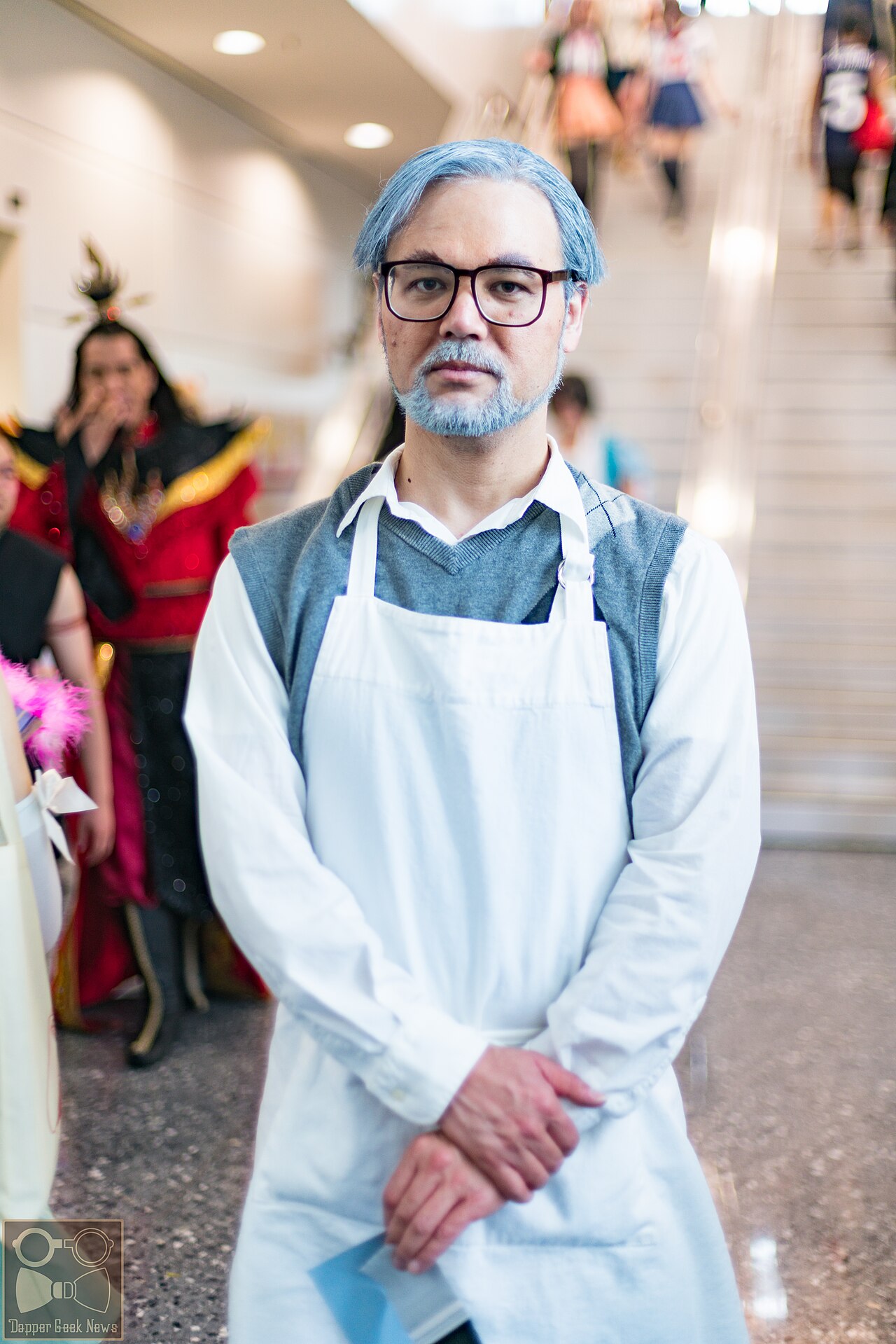
Hayao Miyazaki, founder of Studio Ghibli, photographed in January 2016. Photo: Oliver Ayala, CC BY 2.0, via Wikimedia Commons.
宮崎駿 (Miyazaki Hayao, born January 5, 1941) is Japan's most celebrated animation 監督 (kantoku, "director") and co-founder of スタジオジブリ (Sutajio Jiburi, Studio Ghibli), the アニメ studio behind My Neighbor Totoro, Spirited Away, Princess Mononoke, and Howl's Moving Castle. Over a career spanning more than five decades he has become, alongside Walt Disney, one of the two figures most responsible for shaping what feature animation can be — and arguably the single most influential filmmaker in the history of Japanese cinema, animated or otherwise.
Meaning
Miyazaki began his career in 1963 as an in-between animator at Toei Animation, working his way up through key animation and directing on television series before his feature directorial debut, The Castle of Cagliostro (1979). His first fully original feature, Nausicaä of the Valley of the Wind (1984), was successful enough that its profits funded the founding of Studio Ghibli in 1985, together with producer Toshio Suzuki and fellow director Isao Takahata (高畑勲). The studio's name is reportedly borrowed from an Italian word for a hot Saharan wind (via the Caproni Ca.309 military aircraft nicknamed Ghibli) — a fitting choice for a studio whose founder is obsessed with flight and the wind itself.
Since then Miyazaki has written and directed eleven feature films at Ghibli, nearly all of which he also storyboards personally, drawing thousands of key frames by hand even into his eighties. He has repeatedly announced retirement — after Princess Mononoke (1997), after The Wind Rises (2013) — only to return to the studio each time, most recently for The Boy and the Heron (君たちはどう生きるか, 2023), which he has again suggested might be his last.
Major Works
| Film | Japanese Title | Year | Notes |
|---|---|---|---|
| Nausicaä of the Valley of the Wind | 風の谷のナウシカ | 1984 | Pre-Ghibli; established his ecological themes |
| My Neighbor Totoro | となりのトトロ | 1988 | Totoro became Studio Ghibli's mascot |
| Kiki's Delivery Service | 魔女の宅急便 | 1989 | Coming-of-age story of a young witch |
| Princess Mononoke | もののけ姫 | 1997 | Epic environmental conflict; then Japan's highest-grossing film |
| Spirited Away | 千と千尋の神隠し | 2001 | Won the Academy Award for Best Animated Feature |
| Howl's Moving Castle | ハウルの動く城 | 2004 | Anti-war fantasy, adapted from Diana Wynne Jones's novel |
| Ponyo | 崖の上のポニョ | 2008 | Loosely based on "The Little Mermaid" |
| The Wind Rises | 風立ちぬ | 2013 | Fictionalized biography of Zero fighter designer Jiro Horikoshi |
| The Boy and the Heron | 君たちはどう生きるか | 2023 | Won a second Academy Award for Best Animated Feature |
Recurring Themes
Miyazaki's 作品 return again and again to a small set of preoccupations, which is part of why his body of work feels so unified despite covering witches, warrior princesses, fish-girls, and fighter-plane designers.
Flight. Nearly every Miyazaki film features flying machines, birds, or characters soaring through open 空 (sky) — gliders in Nausicaä, a broomstick in Kiki's Delivery Service, the castle itself in Howl's Moving Castle, and the aircraft designs at the center of The Wind Rises. Miyazaki's father ran a factory that manufactured parts for Zero fighter planes during World War II, and his lifelong fascination with aviation carries both childlike wonder and an awareness of flight's history as a tool of war.
Strong girl and young-woman protagonists. Unlike the classic Disney model built around a princess awaiting rescue, Miyazaki's central characters — Nausicaä, Kiki, San in Princess Mononoke, Chihiro in Spirited Away, Ponyo — are typically resourceful 少女 (young girls) or young women who solve problems through courage, competence, and empathy rather than romance alone. Miyazaki has spoken openly about wanting to give young female audiences protagonists who are neither passive nor sexualized.
Environmentalism and the natural world. Nausicaä and Princess Mononoke are explicitly built around conflicts between industrial expansion and 自然, often refusing simple villains — the forest gods and human settlers in Mononoke both have legitimate claims, and 森 (forests) are treated as living, sometimes vengeful, entities inhabited by 神 and 精霊 (spirits). This ecological anxiety, present since the early 1980s, has aged into some of the most prescient environmental storytelling in mainstream cinema.
Anti-war sentiment. Having grown up during and just after World War II, Miyazaki weaves pacifist and anti-militarist themes throughout his work, most directly in Howl's Moving Castle (an allegory for the Iraq War era in which it was made) and The Wind Rises, which is torn between admiration for engineering brilliance and grief over the weapons that brilliance produced.
Usage
Miyazaki's name and Ghibli's titles function as widely recognized cultural shorthand in Japanese, much as "Disney" does in English:
千と千尋の神隠しは宮崎駿監督の最高傑作だと言われている。 Sen to Chihiro no Kamikakushi wa Miyazaki Hayao kantoku no saikō kessaku da to iwarete iru. "Spirited Away is said to be director Hayao Miyazaki's masterpiece."
ジブリ作品を見て育った世代は世界中にいる。 Jiburi sakuhin o mite sodatta sedai wa sekaijū ni iru. "There are generations all over the world who grew up watching Ghibli films."
Academy Awards and Global Recognition
Spirited Away won the Academy Award for Best Animated Feature in 2003 — the first (and, for two decades, only) hand-drawn and non-English-language film to do so — and remains the highest-grossing film in Japanese box office history among Ghibli releases for years after its release. Twenty years later, The Boy and the Heron won Miyazaki a second Best Animated Feature Oscar in 2024, making him one of very few directors to win the category twice. Miyazaki also received an Honorary Academy Award in 2014 for his body of work, and Princess Mononoke, Howl's Moving Castle, and Ponyo have each been nominated for or won major international festival prizes, including a Golden Bear nomination and Venice honors.
The Ghibli Museum
Studio Ghibli operates the 三鷹の森ジブリ美術館 (Mitaka no Mori Ghibli Museum) in Mitaka, western Tokyo, which opened in 2001 and was itself designed with substantial input from Miyazaki. Rather than a conventional exhibition hall, it is built as an immersive, deliberately labyrinthine space — spiral staircases, hidden rooms, a rooftop garden with a life-size robot soldier statue from Castle in the Sky — intended to feel like stepping inside a Ghibli film rather than viewing one from outside. Tickets are sold in advance and capped, and the museum has become one of Tokyo's most sought-after attractions for both domestic visitors and international fans.
Cultural Impact: The "Ghibli Style" AI Trend
In March 2025, a wave of AI-generated images mimicking Studio Ghibli's signature hand-painted look — soft watercolor backgrounds, rounded character faces, warm pastoral lighting — went viral worldwide after OpenAI's ChatGPT image tool made "Ghiblify my photo" a mass trend, with users transforming selfies, memes, and even news photographs into Ghibli-style renders. The trend generated both enormous engagement and considerable controversy: critics pointed out the irony that Miyazaki, in a widely circulated 2016 documentary clip, had once called AI-generated animation "an insult to life itself" after being shown an AI demo. The episode became one of the clearest real-world illustrations of Miyazaki's global cultural reach — few living directors' visual style is so instantly recognizable that an entire internet meme cycle could be built on imitating it, even as it reopened debates about AI, copyright, and artistic labor that Miyazaki himself had anticipated years earlier.
Legacy
Miyazaki's influence extends well beyond Studio Ghibli's own catalog. His insistence on hand-drawn animation and minimal use of CGI, even as the rest of the industry digitized, helped preserve traditional animation craft as a viable art form into the 21st century. Directors from Pixar's John Lasseter to countless anime creators cite him directly as a formative influence, and Totoro — Studio Ghibli's soft-spoken forest spirit mascot — has become one of the most recognized characters in animation worldwide, appearing on the studio's own logo. Combined with his environmentalist and pacifist themes, his emphasis on capable girl protagonists, and his rare distinction of directing two Academy Award winners two decades apart, Miyazaki's body of work is widely regarded as the high-water mark of what Japanese animation can achieve as cinema.
Related Terms
| Term | Reading | Meaning |
|---|---|---|
| 監督 | kantoku | Director (of a film) |
| 作品 | sakuhin | A work (of art, film, etc.) |
| 手描き | tegaki | Hand-drawn (animation) |
| 巨匠 | kyoshō | Master, great artist |
| 反戦 | hansen | Anti-war |
Related Dictionary Words
supervision; control; superintendence; direction
movie; film; motion picture
animation; animated film; animated cartoon; anime
animation; animated film; animated cartoon
environment; surroundings; circumstances
nature
girl (usu. between 7 and 17); young lady
flight; flying; aviation
emptiness; being empty
peace; harmony
anti-war
hand-drawn; drawn by hand; hand-painted; painted by hand
master; masterhand; maestro
work (e.g. book, film, painting, composition); piece; production; opus
winning (a prize); receiving (an award); being awarded
forest
god; deity; divinity; spirit; kami
spirit; soul; ghost
retirement
Ghibli (Studio)