ロフト
rofutoLoft is a nationwide Japanese chain of lifestyle and variety-goods stores beloved for its enormous selection of stationery, zakka, cosmetics, and seasonal novelty gifts.
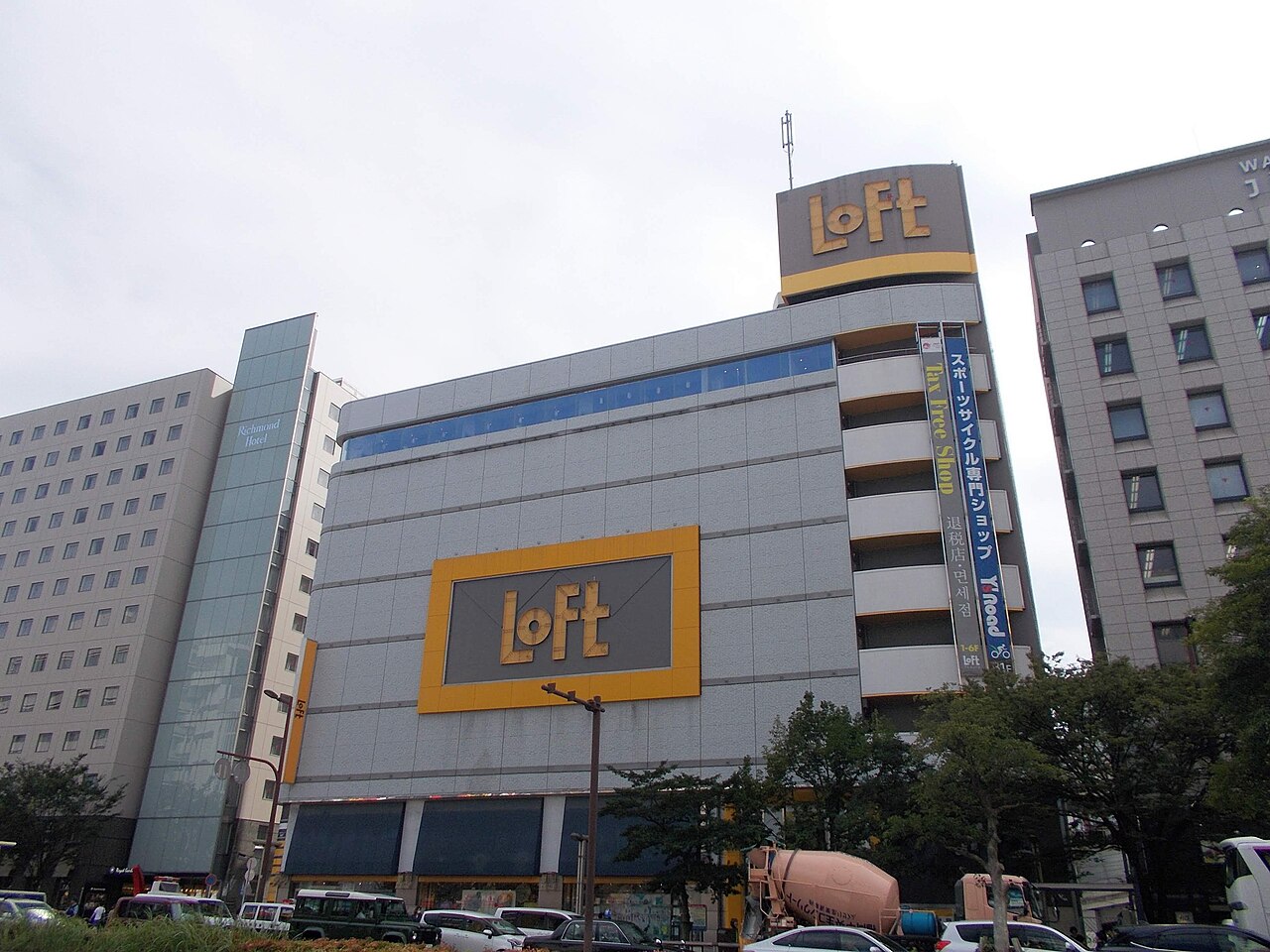
A Loft branch in the Tenjin district of Fukuoka. Photo: STA3816, CC BY-SA 4.0, via Wikimedia Commons.
Meaning
ロフト (Loft) is a major Japanese retail chain specializing in 文房具 (stationery), 雑貨 (zakka, or miscellaneous lifestyle goods), cosmetics, and seasonal or novelty items. The name comes from the English word "loft," evoking the open, warehouse-like floors of the original store, and the brand is operated by Loft Co., Ltd., a subsidiary of the department store group 西武 (Seibu).
A typical Loft branch is several floors packed floor-to-ceiling with an almost overwhelming variety of small goods: pens and notebooks, planners, greeting cards, wrapping paper, kitchen tools, bath and beauty products, travel accessories, home fragrance, party supplies, and seasonal decorations for events like Christmas, Halloween, and Valentine's Day. It occupies a retail niche similar to a few other well-known Japanese specialty chains, but with its own distinct personality — Loft leans toward stationery, cosmetics, and cute or novelty items, while a store like 東急ハンズ (Tokyu Hands) leans more toward DIY, hobby, and hardware goods.
Usage
Loft is used both as a store name and as shorthand for a certain kind of shopping trip — hunting for a nice notebook, a small gift, or a cute new piece of stationery.
今度の誕生日プレゼント、ロフトで探そうかな。 Kondo no tanjōbi purezento, Rofuto de sagasō kana. "Maybe I'll look for the birthday present at Loft."
ロフトの手帳コーナー、今年も種類がすごい。 Rofuto no techō kōnā, kotoshi mo shurui ga sugoi. "Loft's planner section has an amazing variety again this year."
Japanese speakers sometimes describe ロフト巡り (rofuto meguri, "making the rounds of Loft"), meaning to browse an entire store methodically floor by floor, since the sheer density of small items rewards slow exploration rather than a quick errand.
Cultural Context
Loft traces its roots to 1978, when the first store opened as a specialty section inside a Seibu department store in Shibuya, Tokyo, aimed at a new generation of urban, design-conscious shoppers who wanted stylish everyday goods rather than formal department-store fare. The chain was spun off as an independent company, Loft Co., Ltd., in 1987, and its landmark flagship, Shibuya Loft, became a fixture of the neighborhood's shopping culture, within easy reach of 渋谷 station and often paired with a browse through nearby Tokyu Hands. Loft has since expanded to well over 100 stores across Japan, from large flagship branches in Tokyo, Osaka, and Fukuoka's Tenjin district to smaller outlet-style formats, and it also operates an active online store.
Loft and Japan's stationery culture
Japan has an unusually rich culture around paper goods and writing instruments, and Loft is one of its central marketplaces. The store is famous above all for its 手帳 (techō, planner) section — an annual ritual, especially heavy from autumn through the New Year, of choosing next year's planner from dozens of formats: weekly, monthly, vertical, horizontal, with or without moon phases and holidays marked. Loft stocks entire walls of pens, 文具 accessories, washi tape, stickers, seals, and notecards from Japanese stationery makers, making it a favorite stop for students and self-described stationery lovers alike. This depth of selection has helped popularize niche Japanese stationery brands with overseas fans too, since Loft is often one of the first places international visitors encounter the full breadth of Japanese paper-goods design.
A destination for gifts and kawaii goods
Because its shelves are organized around small, giftable, beautifully packaged items, Loft is deeply woven into Japanese 贈り物 (gift-giving) culture. Shoppers browse Loft for birthday presents, seasonal gift exchanges, housewarming presents, and omiyage (souvenirs), and the store leans hard into seasonal merchandising, rotating entire sections for Halloween, Christmas, and other events months in advance. Loft is also strongly associated with 可愛い (kawaii) and character-goods culture — branches regularly host collaborations and pop-up corners tied to popular anime, manga, and mascot characters, alongside its everyday beauty and cosmetics lines, which range from mass-market Japanese brands to imported niche labels.
Loft compared to similar chains
| Chain | Primary focus | Typical shopper |
|---|---|---|
| Loft | Stationery, zakka, cosmetics, seasonal gifts | Gift shoppers, stationery fans, planner enthusiasts |
| Tokyu Hands | DIY, hobby crafts, hardware, home improvement | Hobbyists, makers, home-improvement shoppers |
| Don Quijote | Discount variety, imported snacks, novelty | Bargain hunters, tourists, late-night shoppers |
| MUJI | Minimalist household goods, clothing, furniture | Design-minded shoppers seeking simplicity |
| 100-yen shops | Ultra-cheap everyday goods | Budget shoppers, quick errands |
Tokyo residents and visitors alike often treat Loft and Tokyu Hands as complementary rather than competing destinations — one for craft supplies and tools, the other for polished, giftable stationery and lifestyle items — and the two chains' Shibuya flagships sit close enough together that a single afternoon can easily include both.
Popularity
Loft is a near-universal name in Japan, recognized across generations, and it has become a fixture on tourist itineraries for its dense, browsable selection of uniquely Japanese stationery, character goods, and gifts that are easy to pack home. Its instantly recognizable yellow shopping bag has become something of a cultural shorthand: spotting one on a train signals that the owner has just come from an afternoon of careful, unhurried browsing through a store built entirely around small, thoughtfully designed things.
See Also
Related Dictionary Words
loft
stationery
notebook; memo pad; (pocket) diary
miscellaneous goods; general goods; sundries
Seibu
Shibuya City (special ward of Tokyo); Shibuya
cosmetics; beauty products; toiletries; makeup
cute; adorable; charming; lovely; pretty
stationery
present; gift
Tokyu Hands (Japanese department store chain)