ロリータファッション
roriita fasshonAn elaborate Japanese street fashion inspired by Victorian and Rococo aesthetics, emphasizing doll-like elegance through petticoats, lace, and frills — a statement of personal identity, not sexuality.
Meaning and Philosophy
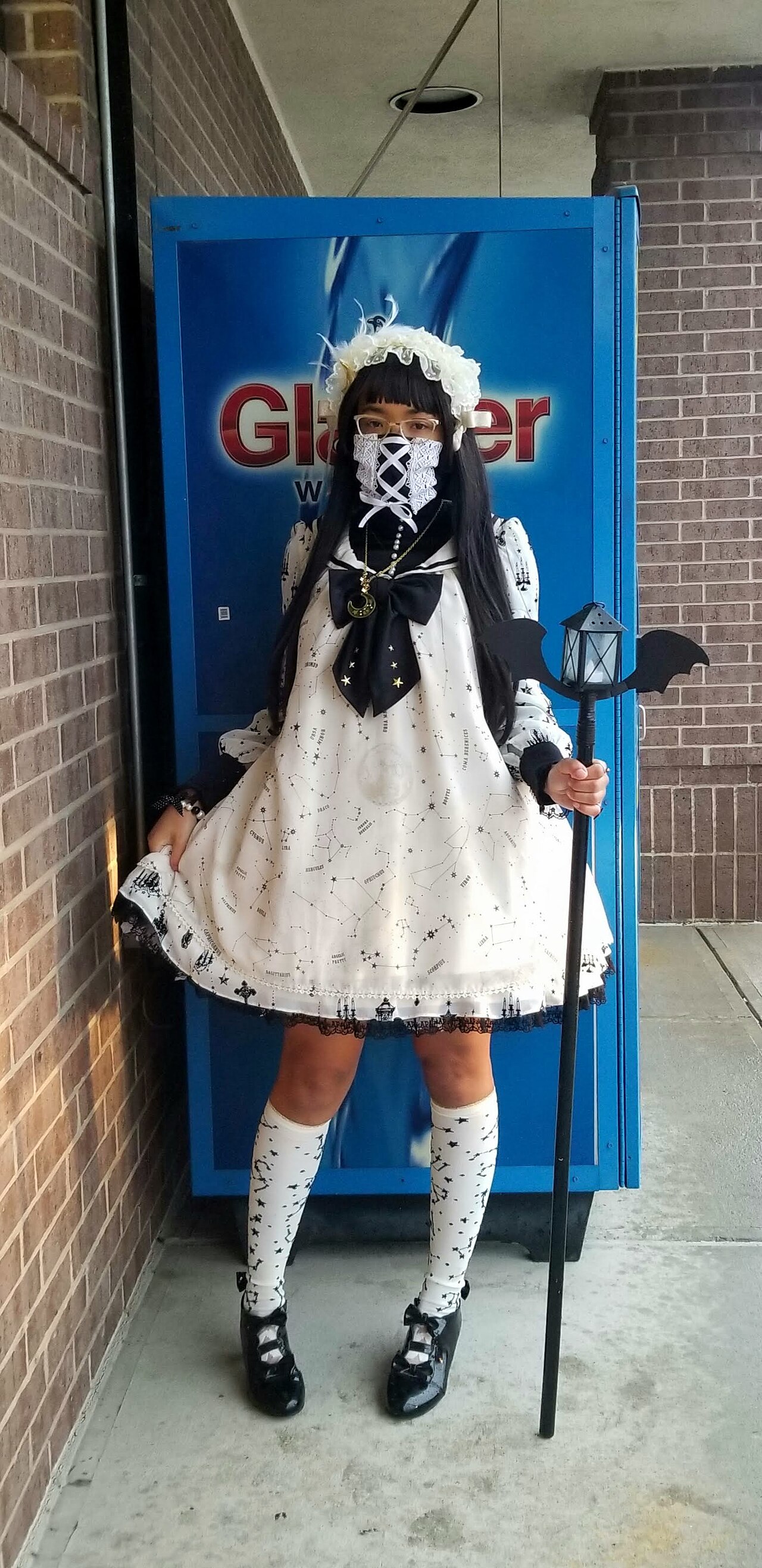
Lolita fashion at Harajuku. Photo: Toastchan, CC BY-SA 4.0, via Wikimedia Commons.
ロリータファッション (Lolita fashion) is a meticulously constructed Japanese ファッション subculture built around a single guiding principle: transforming the wearer into a living 人形. Drawing on 18th-century European court fashion — Rococo silhouettes, Victorian children's dress, and Edwardian lace-work — Lolita wearers (ロリータ) layer bell-shaped petticoats, フリル, レース, and elaborate headdresses into an aesthetic that is deliberately, emphatically 上品 and 美しい.
The philosophy at the heart of the style is often summarized by practitioners as 「かわいくあること」 — the act of being 可愛い as a form of self-表現, independent of the male gaze. This is a crucial cultural distinction: ロリータファッション has no connection to the sexualized usage of the word "lolita" in Western contexts. Within the community, practitioners are quick to explain: "ロリータは性的なものではなく、あくまでもファッションです" ("Lolita is not sexual — it is purely fashion").
The 個性 the style expresses is one of お嬢様-like refinement: the idealized aesthetic of a young noblewoman lifted out of time, エレガント and untouchable.
Origins
The roots of Lolita fashion trace to the late 1970s and early 1980s in Harajuku, Tokyo's creative fashion district. Designers like Chiho Amatsu of Pink House and the founders of Milk began producing frilly, doll-inspired 洋服 that rejected the minimalism of mainstream Japanese fashion in favor of ornate volume and femininity. These boutiques clustered around the Harajuku pedestrian zone known as Takeshita-dori (竹下通り) and the nearby LaForet department complex, creating an incubator for avant-garde street style.
The term "ロリータ" as a fashion label crystallized through 1980s punk-influenced offshoots. Bands in the Visual Kei scene (see: Visual Kei) adopted heavy lace and Victorian elements for stage costumes, and fan girls began incorporating the same elements into streetwear. By the mid-1990s, dedicated Gothic Lolita magazines — most famously Gothic & Lolita Bible (ゴシック&ロリータバイブル), launched in 2000 — codified the aesthetic, gave it vocabulary, and allowed the community to recognize itself as a distinct 文化.
Major Substyles
Lolita fashion is not a single look but a family of substyles, each with its own color palette, mood, and design rules.
| Substyle | Japanese | Key Colors | Aesthetic Mood |
|---|---|---|---|
| Sweet Lolita | 甘ロリ (あまろり) | Pastel pink, lavender, mint | Childlike, dessert-inspired, 甘い |
| Gothic Lolita | ゴスロリ | 黒, deep purple, crimson | Dark, romantic, elegantly macabre |
| Classic Lolita | クラシカルロリータ | Ivory, burgundy, dusty rose | Victorian restraint, literary, grown-up |
| Wa-Lolita | 和ロリ (わろり) | Traditional Japanese | Lolita silhouette meets 着物 elements |
| Sailor Lolita | セーラーロリータ | Navy, 白, red | Naval/school uniform influence |
| Punk Lolita | パンクロリータ | Black, plaid, silver | Safety pins, chains, rebellious edge |
| Hime Lolita | 姫ロリ (ひめろり) | Blush pink, gold | Princess (姫) inspired, ultra-feminine |
甘ロリ (Sweet Lolita / Ama-loli) is perhaps the most globally recognizable face of the style, associated with brands like Angelic Pretty and featuring elaborate prints of cakes, toys, and fairy-tale imagery. ゴスロリ (Gothic Lolita) fuses dark Romanticism with the doll silhouette and was the first substyle to reach Western audiences, partly through the anime Rozen Maiden (ローゼンメイデン). クラシカルロリータ targets a slightly older aesthetic vocabulary — muted tones, high necklines, floral jacquards — evoking Victorian literature rather than a children's birthday party.
Key Brands
A handful of Tokyo-based brands have defined the aesthetics of each substyle and remain the aspirational benchmarks of the community.
| Brand | Japanese | Founded | Known For |
|---|---|---|---|
| Baby, the Stars Shine Bright | ベイビー、ザ スターズ シャイン ブライト | 1988 | Classic Sweet and Gothic; heritage brand |
| Angelic Pretty | アンジェリックプリティ | 2001 | Ultra-sweet prints; pastel maximalism |
| Innocent World | イノセントワールド | 1994 | Classic Lolita; understated elegance |
| Metamorphose temps de fille | メタモルフォーゼ | 1993 | Pioneer of Sweet Lolita; novelty fabrics |
| Moi-même-Moitié | モワメムモワティエ | 1999 | Founder: Mana; Elegant Gothic Lolita/Aristocrat |
| Victorian Maiden | ヴィクトリアンメイデン | 1999 | Victorian-authentic Classic; subtle refinement |
Garments from these brands are expensive — a single 衣装 can cost ¥30,000–¥80,000 — which makes secondhand markets (フリマ) and online auctions (ヤフオク) central to community economics. Sewing your own pieces (handmade / ハンドメイド) is also deeply respected.
Community and Culture
Lolita practitioners socialize through お茶会 (ocha-kai / tea parties), informal gatherings modeled on Victorian tea culture where participants meet in refined venues, compare coordinates ([コーデ]), and discuss brands. Larger events like Kera Style magazine meetups or international conventions draw hundreds of wearers.
The community has its own code of conduct. "Ita-loli" (イタいロリータ, from イタい) is a pointed label for outfits judged poorly executed — too cheap, mismatched, or misunderstanding the rules. Proper Lolita requires:
- A petticoat (ペチコート) maintaining the A-line or bell silhouette
- Bloomers (ブルマー) underneath for modesty
- Matching headwear (headdress, bonnet, or bow)
- Coordinated bag and shoes
Online, communities flourish on platforms like Lolita Fashion Amino and dedicated subreddits, with Japanese-language forums on Ameba Blog historically dominant. The magazine KERA covered the style from 1998 until its print discontinuation in 2017.
Usage
In conversation, practitioners refer to themselves simply as 「ロリータ」 or specify their substyle:
私は甘ロリが好きで、毎週末コーデを考えています。 I love Sweet Lolita and spend every weekend planning my coordinates.
今日のお茶会のために、アンジェリックプリティの新作ワンピースを着るつもりです。 For today's tea party, I'm planning to wear Angelic Pretty's new dress.
ゴスロリは見た目は暗いけど、着物と同じように日本の文化の一つだと思います。 Gothic Lolita looks dark, but I think it is one part of Japanese culture, just like the kimono.
The abbreviation 「ゴスロリ」 is common in everyday speech. Saying someone "looks like a ロリータ" is a straightforward style description within Japan, without the negative connotations the word "lolita" can carry in Western contexts.
Global Influence
Lolita fashion reached international audiences through several simultaneous vectors in the early 2000s: the Gothic & Lolita Bible began publishing English-language editions; the anime Rozen Maiden (2004) and Kamikaze Kaitou Jeanne embedded the aesthetic into global fandom; and travelers photographing Harajuku street fashion posted images that spread virally before social media formalized the process.
Today the style has active communities across Europe (particularly Germany and France), North America, Brazil, and China. International brands like Aatp (Alice and the Pirates, a Baby sub-brand) hold runway shows in Paris. Chinese Lolita brands such as Boguta and Fantastic Wind have gained 人気 comparable to Japanese originals.
Japan's Ministry of Foreign Affairs has occasionally promoted Lolita fashion as part of "Cool Japan" cultural diplomacy, and wearers like Misako Aoki have served as official Kawaii Ambassadors abroad.
Within Japanese popular culture, the Lolita aesthetic continues to 流行 in idol costuming, anime character design (particularly the "gothic lolita" character archetype — see お嬢様), and visual-kei band styling. Its core promise — that 少女-like elegance is a complete and autonomous aesthetic identity — has proven durable across four decades.