ラーメン
ramenJapan's most beloved noodle dish — a bowl of wheat noodles in rich broth that evolved from Chinese origins into a celebrated cornerstone of Japanese food culture.
Meaning
ラーメン (ramen) refers to a Japanese noodle dish consisting of wheat-based 麺 (noodles) served in a スープ (broth), typically topped with sliced pork, soft-boiled 卵 (egg), 海苔 (nori seaweed), bamboo shoots, and green onions. The word itself is borrowed from the Chinese lāmiàn (拉麺), meaning "pulled noodles." In Japan, however, ramen has been transformed so thoroughly that it is now considered a distinctly Japanese 料理 (cuisine).
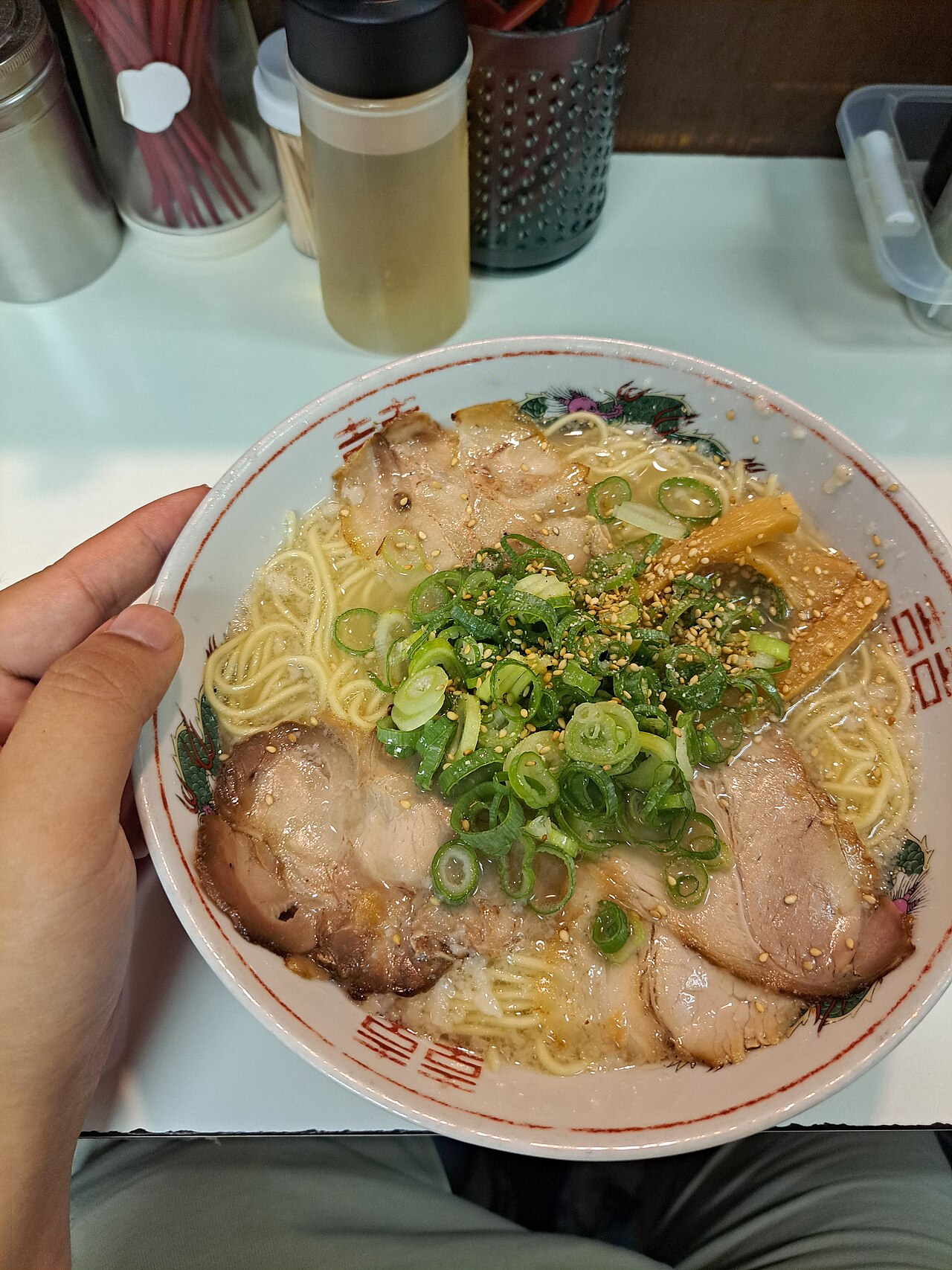
A bowl of shio ramen with pork, egg, and nori. Public domain, via Wikimedia Commons.
History
Ramen's story in Japan begins in the late 19th century, when Chinese immigrants brought wheat noodle soups to port cities like Yokohama and Kobe. Early versions were sold from 屋台 (food stalls) and eaten primarily by laborers. The dish was known as shina soba (支那そば, "Chinese soba") for much of the early 20th century.
The pivotal moment in ramen's history came after World War II, when Japan faced severe food shortages. Wheat flour flooded the market through American aid programs, and cheap noodle soups became a vital source of sustenance. Street-stall ramen flourished across the country, and by the 1950s the dish had woven itself into everyday Japanese 文化 (culture).
The single greatest revolution in ramen came in 1958, when Momofuku Ando of Nissin Foods invented instant ramen (インスタントラーメン) — pre-cooked, dried noodles with a flavor packet that needed only boiling water. This 発明 (invention) democratized ramen globally, making it the world's most-consumed packaged food. Ando followed this in 1971 with Cup Noodles (カップヌードル), the portable single-serve format that became an icon of convenience eating worldwide.
Regional Styles
One of ramen's great strengths is its extraordinary regional diversity. Each area of Japan has developed its own signature style, reflecting local ingredients, climate, and culinary tradition. The four major soup bases (スープのベース) define the landscape:
| Style | Base | Region | Character |
|---|---|---|---|
| 醤油 (しょうゆ) | 醤油 soy sauce | Tokyo / Kanto | Clear, brown broth; delicate and savory |
| 塩 (しお) | 塩 salt | Hakodate, Hokkaido | Lightest style; pale golden, clean-tasting |
| 味噌 (みそ) | 味噌 fermented soybean paste | Sapporo, Hokkaido | Rich, hearty, slightly sweet; developed in the 1950s |
| 豚骨 (とんこつ) | Pork bone | Hakata (Fukuoka), Kyushu | Opaque, creamy white; intensely savory; long-simmered |
Sapporo miso ramen (札幌味噌ラーメン) is famous for its corn, butter, and bean sprout toppings — additions that cut through the cold Hokkaido winters. Hakata tonkotsu (博多豚骨) is boiled for 12 to 18 hours until the collagen-rich broth turns milky white, then finished with thin, straight noodles and pickled ginger. Tokyo shoyu strikes a balance between clarity and depth, usually using a chicken-and-pork broth base. Kyoto-style ramen tends toward a heavier tonkotsu-shoyu hybrid, often served with thick green onions and back fat (背脂, seabura).
Beyond these four bases, regional variations continue to multiply: tsukemen (つけ麺, dipping ramen where noodles and broth are served separately), mazesoba (まぜそば, brothless "mixed soba"), and tantanmen (担々麺, Japanese adaptation of Sichuan dan dan noodles) have each built devoted followings.
Ramen Shop Culture
The experience of 食べる ramen in Japan is inseparable from its social rituals. A typical ramen shop (ramen-ya, ラーメン屋) is a small, intimate space, often with counter seating along a bar facing the kitchen. Ordering is frequently done through a 券売機 (けんばいき, ticket vending machine) — you select and pay for your bowl before sitting down, handing the ticket to the cook without a word exchanged.
The culture prizes focus and efficiency. Diners are expected to eat their bowl while it's hot and leave promptly — lingering is uncommon. Slurping (すする) is not just acceptable but encouraged, as it aerates the broth and signals appreciation. Many shops offer kaedama (替え玉, extra noodles added to the remaining broth), particularly common in Hakata-style restaurants.
A visit to Ichiran (一蘭), the globally famous Fukuoka chain, takes this solo dining culture to its extreme: individual bamboo partitions separate each diner, orders are placed by paper form slid under a bamboo blind, and the bowl appears through a small curtained window — maximum ramen focus, minimal human interaction. Ippudo (一風堂), another Hakata institution founded in 1985, took a more accessible approach and helped internationalize tonkotsu ramen.
Cultural Significance
Ramen has transcended food to become a cultural institution and a lens through which Japan examines craftsmanship, regional pride, and obsession. The archetype of the ramen shokunin (ラーメン職人, ramen artisan) — a chef who spends years perfecting a single bowl — reflects the same pursuit of mastery seen in sushi, sake brewing, and sword-making.
The Shin-Yokohama Ramen Museum (新横浜ラーメン博物館), opened in 1994, was one of the world's first food-theme museums. It recreates a 1958 Japanese streetscape housing eight regional ramen shops, letting visitors travel Japan through their bowls. Similar facilities have opened across the country, including ramen theme parks in Tokyo and Osaka.
Ramen also occupies a central place in Japanese pop culture. It appears constantly in anime, manga, and film — the iconic scene of a tired salaryman slurping a late-night bowl at a counter is shorthand for the honest, comforting rhythms of Japanese daily life. The dish appears in works from Naruto (whose protagonist Naruto loves ichiraku ramen) to Juzo Itami's 1985 film Tampopo, a comedic meditation on the pursuit of the perfect bowl.
New styles continue to emerge: a new wave of jiro-kei (次郎系) ramen shops serve towering mounds of vegetables, garlic, and thick noodles in enormous bowls; health-conscious tori paitan (鶏白湯, creamy chicken broth) has exploded in popularity; and vegan ramen (ビーガンラーメン) shops have opened in major cities to serve international visitors.
Instant Ramen's Global Legacy
The 即席 (instant) ramen invented by Momofuku Ando in 1958 is arguably Japan's single most globally influential food product. Today, over 100 billion servings of instant noodles are consumed worldwide each year. In Japan, the original Nissin Chicken Ramen and the Space Ramen (developed for Japanese astronaut Soichi Noguchi's 2005 ISS mission) are celebrated artifacts of 発明 culture. The Cup Noodles Museum in Yokohama lets visitors design their own cup noodle flavors — it attracts over 500,000 visitors annually.
Ramen's journey from Chinese immigrant street food to global pop-culture phenomenon is one of the great stories of culinary adaptation. A bowl of ラーメン is simultaneously humble and refined — a dish that feeds late-night workers, celebrates regional identity, and inspires chefs to devote their lives to perfecting a single recipe.
Related Dictionary Words
rigid frame
noodles
(Western) soup
pork bones
soy sauce; soya sauce; shoyu
miso; fermented condiment usu. made from soybeans
salt; common salt; table salt; sodium chloride
eggs; egg; spawn; roe
nori; laver; edible seaweed, usu. Porphyra yezoensis or P. tenera, usu. dried and pressed into sheets
cart (esp. a food cart); stall; stand
cooking; cookery; cuisine; food; dish
invention
impromptu; improvised; extempore; ad-lib; off-the-cuff