歌舞伎
kabukiJapan's classical all-male theater form, famous for elaborate kumadori face paint, flamboyant costumes, and stylized performances — a UNESCO Intangible Cultural Heritage since 2008.
Meaning
歌舞伎 (kabuki) is one of Japan's great classical theatrical arts, combining 演劇 (drama), 踊り (dance), and 音楽 (music) into a single dazzling stage spectacle. The word is written with three kanji that capture the art's essence: 歌 (ka, song), 舞 (bu, dance), and 伎 (ki, skill or acting). Together they suggest a performance where singing, dancing, and theatrical skill are inseparable.
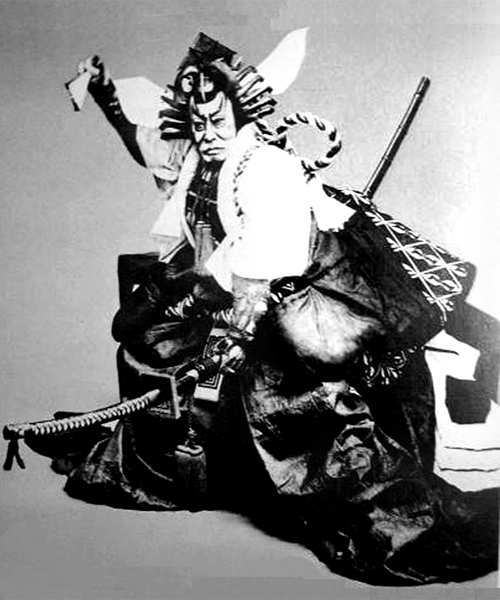
Danjūrō Ichikawa IX in the classic play Shibaraku, wearing the bold red kumadori makeup of a heroic character. Public domain, via Wikimedia Commons.
The name may also derive from the verb kabuku (傾く), meaning "to tilt" or "to deviate from the norm" — a fitting description for the flamboyant, rule-bending style that shocked and captivated Edo-period audiences.
Origins
Kabuki was founded around 1603 by Izumo no Okuni (出雲の阿国), a female dancer said to have served at the Izumo Grand Shrine. Okuni performed lively, irreverent dances on a makeshift stage beside the Kamo River in Kyoto, blending religious ritual with comic sketches and contemporary fashion. Her troupe — all women at first — caused a sensation and is considered kabuki's birth moment.
However, the government grew alarmed at the social mixing and perceived impropriety of female performers. In 1629, the Tokugawa shogunate banned women from the kabuki 舞台 (stage). Young male performers (wakashu kabuki) took their place, but were also banned shortly after for similar reasons. By the mid-1600s only adult men (yarō kabuki) were permitted, establishing a tradition that largely persists today.
Under the patronage of Edo's prosperous merchant class, kabuki flourished through the 17th and 18th centuries, developing its signature visual style, repertoire of plays, and acting dynasties that continue to the present day.
The Stage and Its Elements
The kabuki 舞台 is an architectural marvel designed for maximum theatrical impact.
花道 (hanamichi — the flower path): A raised walkway extending from the stage through the audience to the back of the theater. 役者 (actors) make grand entrances and exits along this runway, passing within arm's reach of the audience. The hanamichi is one of kabuki's most distinctive features, breaking the boundary between performer and spectator.
廻り舞台 (mawari butai — revolving stage): Kabuki theaters pioneered the revolving stage in the 18th century, allowing instantaneous scene changes that amazed audiences long before Western theaters adopted the technique.
黒衣 (kuroko — black-robed stagehands): Stagehands dressed entirely in black move props and assist actors mid-scene. By theatrical convention, the audience treats them as invisible — a fascinating example of Japanese theatrical storytelling through agreed-upon fiction.
見得 (mie — dramatic pose): At climactic moments, an actor freezes in an exaggerated pose, eyes crossed in an intense glare (nirami), while the musicians strike a sharp beat. This mie pose crystallizes the emotion of the scene and often draws a shout of appreciation (kakegoe) from knowledgeable audience members who call out the actor's family name.
Kumadori — The Painted Face
Perhaps the most iconic visual element of kabuki is 隈取 (kumadori) — the dramatic face makeup applied over a white base. Kumadori patterns are not decorative but semantic: each color and line type communicates a character's nature and moral alignment.
| Color | Meaning | Role type |
|---|---|---|
| Red (紅) | Virtue, strength, passion | Hero, righteous warrior |
| Blue / Indigo (藍) | Evil, fear, jealousy | Villain, demon, ghost |
| Black (墨) | Wild strength, supernatural power | Fearsome fighter, spirit |
| Brown / Purple | Stubbornness, arrogance | Older villain, prideful lord |
| Pink / Light red | Youth, beauty | Young hero, romantic lead |
The bold red kumadori of the hero Kamakura Gongoro in the play Shibaraku has become the single most recognizable image of kabuki worldwide. Kumadori patterns were developed and codified by the Ichikawa Danjūrō lineage, and each family line may have its own distinctive designs.
Applying kumadori is itself a ritual: actors begin with a white base, then use fingertips to press and blend pigment into the skin, building the pattern from the inside out. The 化粧 (makeup) process can take an hour or more.
Onnagata — Men Who Play Women
Because women have been banned from the kabuki stage since 1629, all female roles are played by men called 女形 (onnagata), also written oyama. Far from a mere workaround, onnagata became a highly refined specialty. Practitioners study feminine movement, vocal quality, and emotional expression for decades, often arguing that male actors — freed from biology — can embody an idealized femininity more completely than women themselves.
The greatest onnagata are celebrated as living national treasures. The Nakamura lineage has produced many renowned onnagata across the centuries, and today actors such as Nakamura Jakuemon IV and Bandō Tamasaburō V are revered for their mastery of the form.
Famous Plays
The kabuki repertoire spans hundreds of plays, but a few are considered essential:
仮名手本忠臣蔵 (Kanadehon Chūshingura) — Known in English as The Treasury of Loyal Retainers, this epic play dramatizes the true story of the 47 rōnin who avenged their lord's death in 1703. It remains the most-performed kabuki 物語, a tale of loyalty, sacrifice, and honor that resonates deeply in Japanese culture.
助六由縁江戸桜 (Sukeroku Yukari no Edo Zakura) — A swaggering story of a dandy hero in the pleasure quarters of Edo, this play is famous for its witty dialogue, colorful costumes, and iconic purple headband.
勧進帳 (Kanjinchō) — A thrilling story of loyalty and deception in which the warrior Benkei shields his lord Yoshitsune at a checkpoint. One of the most beloved plays in the repertoire.
The 歌舞伎十八番 (Kabuki Jūhachiban) — the Eighteen Best Kabuki Plays — is a canon established by the Ichikawa Danjūrō VII in 1840, representing the signature pieces of that family's tradition.
Acting Dynasties
Kabuki is deeply dynastic. Actors belong to lineages (yagō) passed from master to apprentice or father to son, and each family name (haimyō) carries centuries of performance history.
市川 (Ichikawa) family — The most famous kabuki dynasty, associated with the bold aragoto (rough business) style of powerful heroes. The Ichikawa Danjūrō name is the most prestigious in all of kabuki, currently held by Ichikawa Danjūrō XIII.
中村 (Nakamura) family — Associated with both male and female roles, including a long tradition of celebrated onnagata.
松本 (Matsumoto) family — Known for their nuanced, realistic wagoto (soft business) acting style.
Young actors enter the profession through a formal ceremony (お披露目, ohirome) in which they take on a stage name. Achieving one of the great names — like Danjūrō or Kanzaburō — is a major life event celebrated publicly.
Where to See Kabuki
歌舞伎座 (Kabukiza) in Ginza, Tokyo is the spiritual home of kabuki. Rebuilt and reopened in 2013, it hosts performances nearly year-round. Single-act tickets (hitomakumi) allow casual visitors to experience one act without committing to a full day's program.
南座 (Minamiza) in Kyoto — the oldest theater site in Japan, with roots in the early 17th century — hosts the famous Kaomise performances every December.
English audio guides are available at major venues, making kabuki accessible to international visitors.
Modern Kabuki
Kabuki has never stopped evolving. スーパー歌舞伎 (Super Kabuki), pioneered by Ichikawa Ennosuke III in 1986, blends classical kabuki technique with spectacular stagecraft, modern lighting, flying wire stunts, and contemporary storylines including manga and anime adaptations. Super Kabuki II productions have staged One Piece and Nausicaä of the Valley of the Wind to sold-out theaters, drawing younger audiences who might never otherwise encounter the 伝統 art form.
In 2008, UNESCO inscribed kabuki on its Representative List of the Intangible Cultural Heritage of Humanity, recognizing it as a performing art of outstanding universal value and supporting preservation efforts for future generations.
Cultural Significance
Kabuki is inseparable from the broader culture of the Edo period (1603–1868), when it thrived as the popular entertainment of the merchant and artisan classes — a counterpoint to the aristocratic 能 theater. Kabuki actors were the celebrities of their day; their faces appeared on woodblock prints (浮世絵), their fashion choices set trends, and their love lives were gossip fodder.
Today kabuki occupies an unusual double role: it is simultaneously a living 芸術 form performed by dedicated professionals and a cherished symbol of Japanese cultural identity recognized worldwide. The 着物 costumes, the kumadori faces, and the stylized poses have permeated Japanese visual culture, appearing in advertising, manga, anime, and festival imagery far beyond the theater itself.
Related Dictionary Words
kabuki; traditional form of drama and music performed by male actors wearing makeup mainly in white and red
stage (of a theatre, concert hall, etc.)
kimono; Japanese traditional clothing (esp. full-length)
make-up; makeup; cosmetics
actor; actress
onnagata; male actor in female kabuki roles
drama; theatre; theater; play
shamisen; samisen; three-stringed Japanese lute
tradition; convention
art; the arts
elevated walkway through the audience to the stage
story; tale; narrative; account; fable; legend
dance
talent; gift; function