御朱印
goshuinA hand-written seal and calligraphy stamp given at Shinto shrines and Buddhist temples as proof of a visit, collected in a dedicated stamp book called a goshuin-cho.
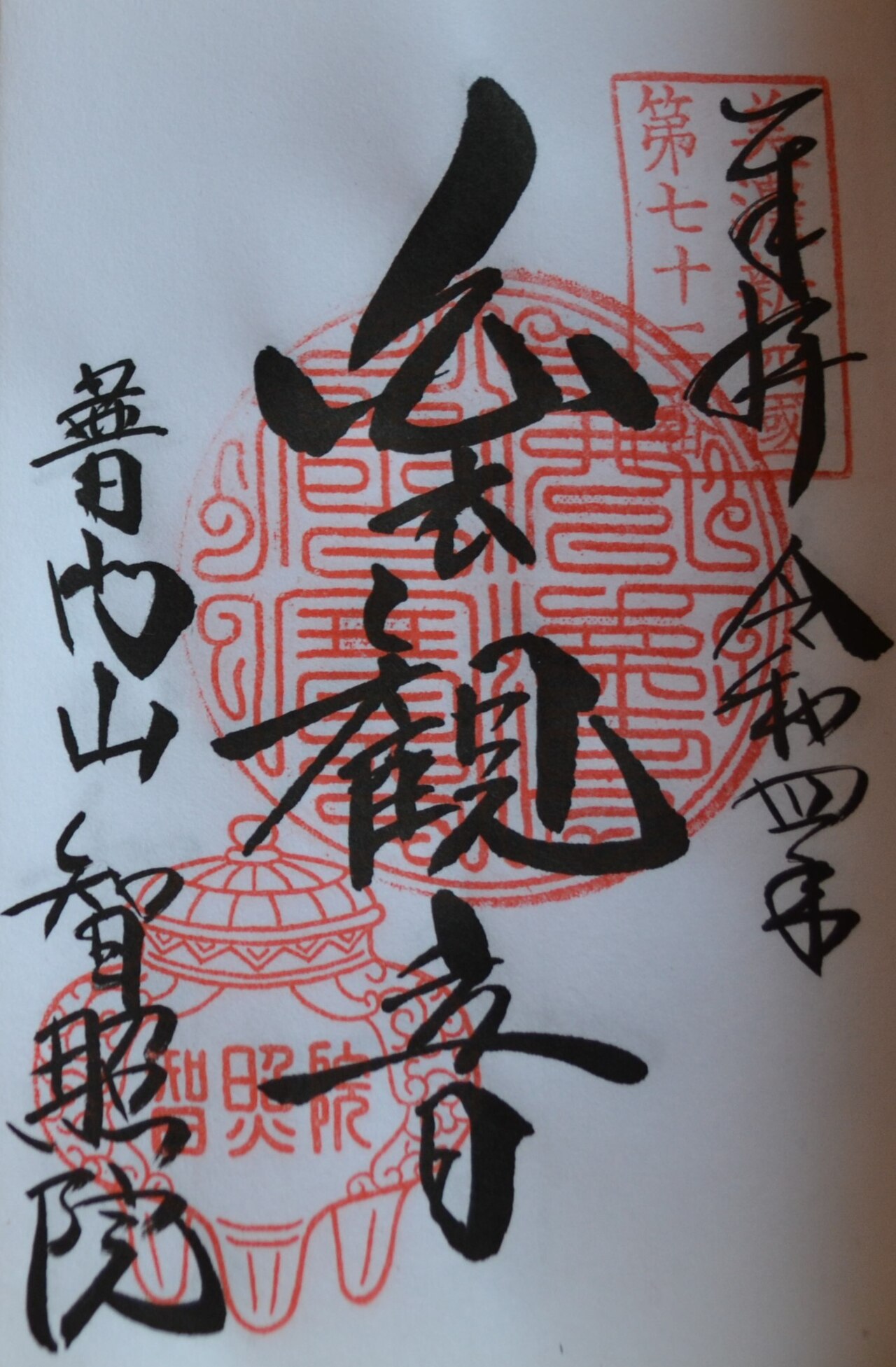
A goshuin page: red name and deity seals combined with hand-brushed calligraphy noting the date of the visit. Photo: 先従隗始, public domain (CC0), via Wikimedia Commons.
Meaning
御朱印 (goshuin) literally means "honorable red seal." It refers to the stamped and hand-brushed inscription that priests or staff at a 神社 (Shinto shrine) or 寺 (Buddhist temple) will write directly into a visitor's stamp book when asked. A goshuin is not a mass-printed souvenir sticker — each one is created on the spot, combining:
- One or more 朱印 (shu-in) — red ink stamps, usually including the shrine or temple's name seal and sometimes a seal representing the enshrined deity or principal Buddhist image
- Hand-brushed 書 calligraphy in black sumi ink, typically the name of the shrine/temple, the deity or hall being worshipped, and the date of the visit
Because every inscription is written by hand, no two goshuin are ever perfectly identical, even from the same location — the brushstrokes vary with the writer, the season, and sometimes the specific event being commemorated.
The Goshuin-cho
Goshuin are not collected on loose paper; they go into a dedicated accordion-bound book called a 御朱印帳 (goshuin-cho). These books are sold at most shrines and temples, at stationery shops, and online, often featuring beautiful covers of washi paper, brocade, or seasonal artwork. A goshuin-cho typically opens like a folding screen so ink can be applied to one side of a page at a time without smudging the facing page.
Many devoted visitors keep separate books for shrines and temples, since some (though not all) locations prefer their pages not be mixed with those of the other tradition.
Usage: How to Receive a Goshuin
Receiving a goshuin follows a fairly consistent etiquette across Japan:
- 参拝 first. Always pay your respects at the main hall — bowing, offering a coin at the 賽銭 box, and praying — before requesting a goshuin. Asking for one without worshipping first is considered poor form, since the goshuin is meant to certify a completed visit, not a transaction.
- Find the stamp counter, usually near the shrine office or temple reception, sometimes marked 御朱印所.
- Present your open goshuin-cho to the staff member, often already turned to a blank page.
- Pay the fee, typically ¥300–¥500, sometimes more for elaborate or limited designs.
- Wait quietly while the calligrapher writes and stamps your page — this can take a few minutes, especially at popular sites during busy seasons.
「御朱印をお願いします。」 "I would like a goshuin, please."
Some very popular shrines and temples, overwhelmed by demand, now offer pre-written goshuin on paper slips (書き置き, kakioki) that visitors paste into their own books themselves, rather than a live, on-the-spot inscription.
Cultural Context: More Than a Souvenir
Goshuin trace back centuries to the practice of pilgrims hand-copying and offering Buddhist sutras (納経, nokyo) at a temple in exchange for a receipt-like seal confirming the offering had been made. Over time the custom relaxed into today's practice, where simply visiting and worshipping — rather than copying an entire sutra — is enough to receive one, and Shinto shrines adopted the practice as well.
This history is why a goshuin is treated with more reverence than an ordinary souvenir stamp. It is considered to carry a trace of the shrine's or temple's spiritual character, and etiquette reflects that:
- A goshuin-cho should never be treated as scrap paper or set on the floor
- Some households store finished books on a 神棚 or altar rather than an ordinary bookshelf
- It is considered rude to request one purely for the design without having worshipped
- Goshuin are not for sale or resale — each is tied to the individual visit that earned it
In this sense, a goshuin functions like a certificate of pilgrimage — proof that you were physically present and paid respect — closer in spirit to a stamped passport at a sacred border than to a postcard.
The Modern Goshuin Boom
What began as a quiet devotional custom has become one of Japan's most visible grassroots hobbies over the past decade. Several forces have driven the trend:
Social media sharing. Photogenic goshuin — with elaborate multicolor calligraphy, gold leaf, or illustrated stamps of local mascots, seasonal flowers, or anime tie-ins — spread widely on Instagram and X (Twitter), turning goshuin-cho pages into a form of collectible art people show off online.
Seasonal and limited-edition designs. Many shrines now rotate special goshuin for New Year's (初詣-season), cherry blossom season, Tanabata, autumn leaves, or shrine anniversaries — sometimes stamped in seasonal colors of ink rather than the standard black and red. Collectors will plan trips specifically around a limited run, some of which sell out or are only available for a single day.
Stamp rallies (goshuin junpai). Groups of shrines or temples — such as the traditional 33-temple Saikoku Kannon pilgrimage, or modern regional tourism campaigns — encourage visitors to collect a full set across multiple locations, sometimes rewarding a completed book with a certificate or a special commemorative seal.
Collaboration goshuin. Some shrines partner with anime, games, or local tourism boards for special stamps referencing pop culture, drawing younger fans and international tourists who might not otherwise visit a shrine for purely religious reasons.
| Then | Now |
|---|---|
| Proof of sutra offering | Proof of visit/worship |
| Plain black ink + red seal | Multicolor ink, gold leaf, seasonal art |
| Local pilgrims only | Domestic tourists + international visitors |
| Rarely discussed publicly | Actively shared on social media |
The boom has occasionally drawn criticism from traditionalists who worry it turns a solemn religious practice into a checklist-driven collecting hobby, and some shrines have had to limit how many goshuin per person they issue during peak times, or pause issuing entirely when overwhelmed. Even so, most shrines and temples have embraced it as a meaningful way to bring — often first-time — visitors through their gates, and goshuin collecting remains one of the most approachable ways for both Japanese people and travelers to engage with Shinto and Buddhist sites.
Related Terms
- 朱印 (shu-in) — the red seal stamp itself
- 御朱印帳 (goshuin-cho) — the dedicated stamp book
- 書き置き (kakioki) — a pre-written goshuin on a loose paper slip, given out when live calligraphy isn't available
- お守り (omamori) — protective amulets, a related but distinct shrine souvenir
- おみくじ (omikuji) — paper fortune slips, another common shrine/temple visit ritual
Related Dictionary Words
goshuin; seal stamp given to worshippers and visitors to shrines and temples
red seal
goshuin booklet; book for receiving seal stamps at shrines and temples
Shinto shrine
temple (Buddhist)
going and worshipping (at a shrine or temple); visit (to a shrine or temple to worship)
miko; shrine maiden; young girl or woman (trad. an unmarried virgin) who assists priests at shrines
charm; amulet; talisman
Shinto; Shintoism
Buddhism
presenting a hand-copied sutra to a temple (or money, etc. in its place)
kamidana; household shrine; home shrine
note (letter) left behind; will